

2-2 Beginning with Sumitomo Shunsui
It is often said that history is like a tapestry woven from “chance” and “necessity.” Although it was a matter of chance, the Sumitomo family faced the situation where its direct male line was about to end, and thus the seed known as Shunsui was sown in the soil of the Sumitomo family. This Shunsui Sumitomo played a crucial role in the establishment of the Sumitomo Main Store’s Temporary Construction Department, which served as the origin of Nikken Sekkei.
Sumitomo Shunsui and Noblesse Oblige (The Noble Duty)
In Meiji 23 (1890), the Sumitomo family suffered the misfortune of the sudden, successive deaths of the 12th head of the family, Tomochika, and the 13th head, Tomotada. It became an urgent matter to quickly select a suitable husband for Masu, the younger sister of the 13th head, and appoint him as the 15th head of the family.The man who was invited to join the Sumitomo family at that time was Takamaro Tokudaiji, the sixth son of the Tokudaiji family—a noble family renowned for its wisdom.In Meiji 25 (1892), Takamaro was welcomed into the Sumitomo family, succeeded to the family headship, and became the 15th head of the Sumitomo family, Kichizaemon Tomoi (1864–1926).Incidentally, Kinmochi Saionji—a Meiji-era statesman who studied in France for many years and later served as Prime Minister—was a member of the Tokudaiji family and was the older brother of Takamaro, or Sumitomo Kichizaemon Tomoi.
Tomoito used the pen name “Shunsui” throughout his life, and the name Sumitomo Shunsui is frequently used in later literature and other sources.Shunsui entrusted the management of the Sumitomo business to the executive team, including the General Director. However, when it came to major issues, he would set forth the company’s philosophy and standards for the management team, and his conduct was reminiscent of the European aristocratic ideal of “noblesse oblige” (the duty of the noble).
At the same time, he possessed a deep appreciation for the arts and was known as a collector of various artworks.In particular, the collection of ancient Chinese bronze artifacts currently housed at the Senoku Hakuko Museum is world-renowned as the Sumitomo Collection. Shunsui, who actively embraced Western culture while also possessing a deep appreciation for Japan’s traditional aesthetics, would go on to exert a significant influence on the newly established Temporary Construction Department.
Tomoito used the pen name “Shunsui” throughout his life, and the name Sumitomo Shunsui is frequently used in later literature and other sources.Shunsui entrusted the management of the Sumitomo business to the executive team, including the General Director. However, when it came to major issues, he would set forth the company’s philosophy and standards for the management team, and his conduct was reminiscent of the European aristocratic ideal of “noblesse oblige” (the duty of the noble).
At the same time, he possessed a deep appreciation for the arts and was known as a collector of various artworks.In particular, the collection of ancient Chinese bronze artifacts currently housed at the Senoku Hakuko Museum is world-renowned as the Sumitomo Collection. Shunsui, who actively embraced Western culture while also possessing a deep appreciation for Japan’s traditional aesthetics, would go on to exert a significant influence on the newly established Temporary Construction Department.
-
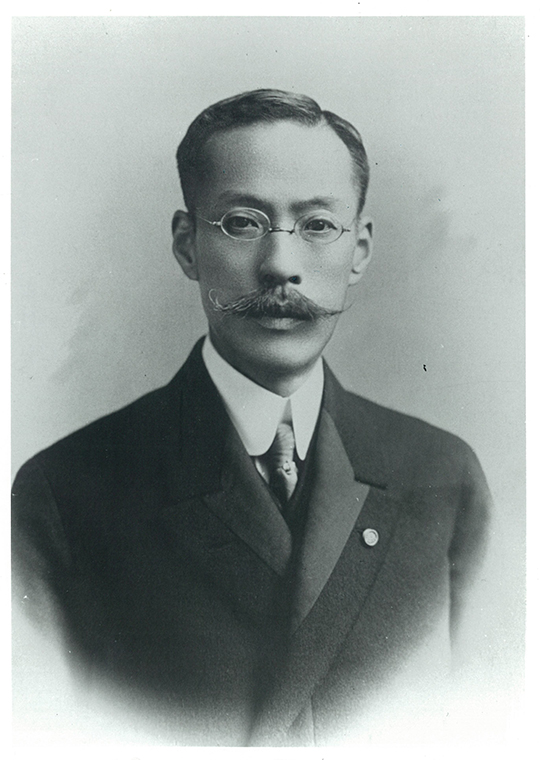 2-8: Sumitomo Kichizaemon Tomozumi, 15th Head of the Sumitomo Family
Pen name: Sumitomo Shunsui -
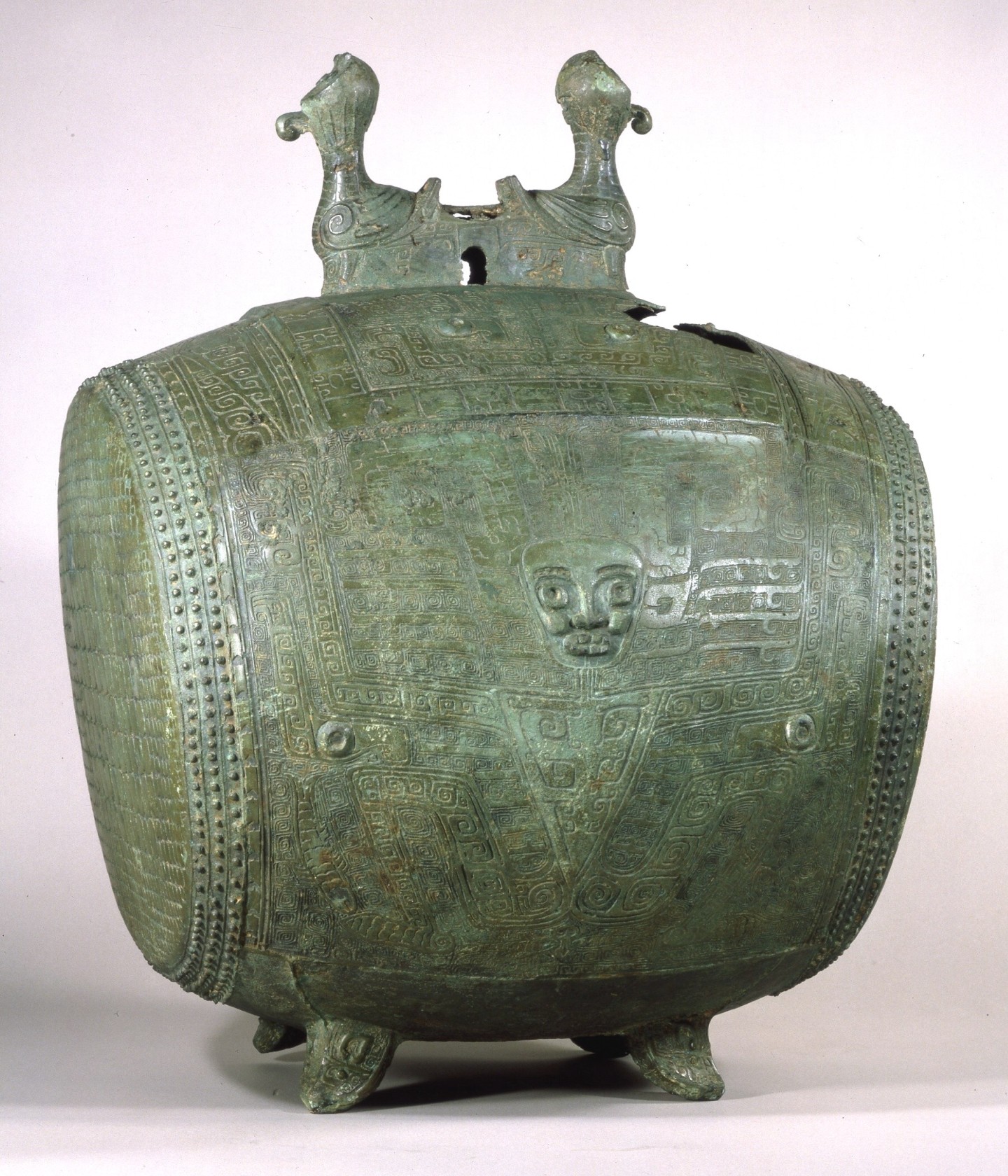 2-9: Ancient Chinese Bronze Artifact—Divine Drum, 11th century B.C.
(2-9–2-11: Part of the Sumitomo Collection) -
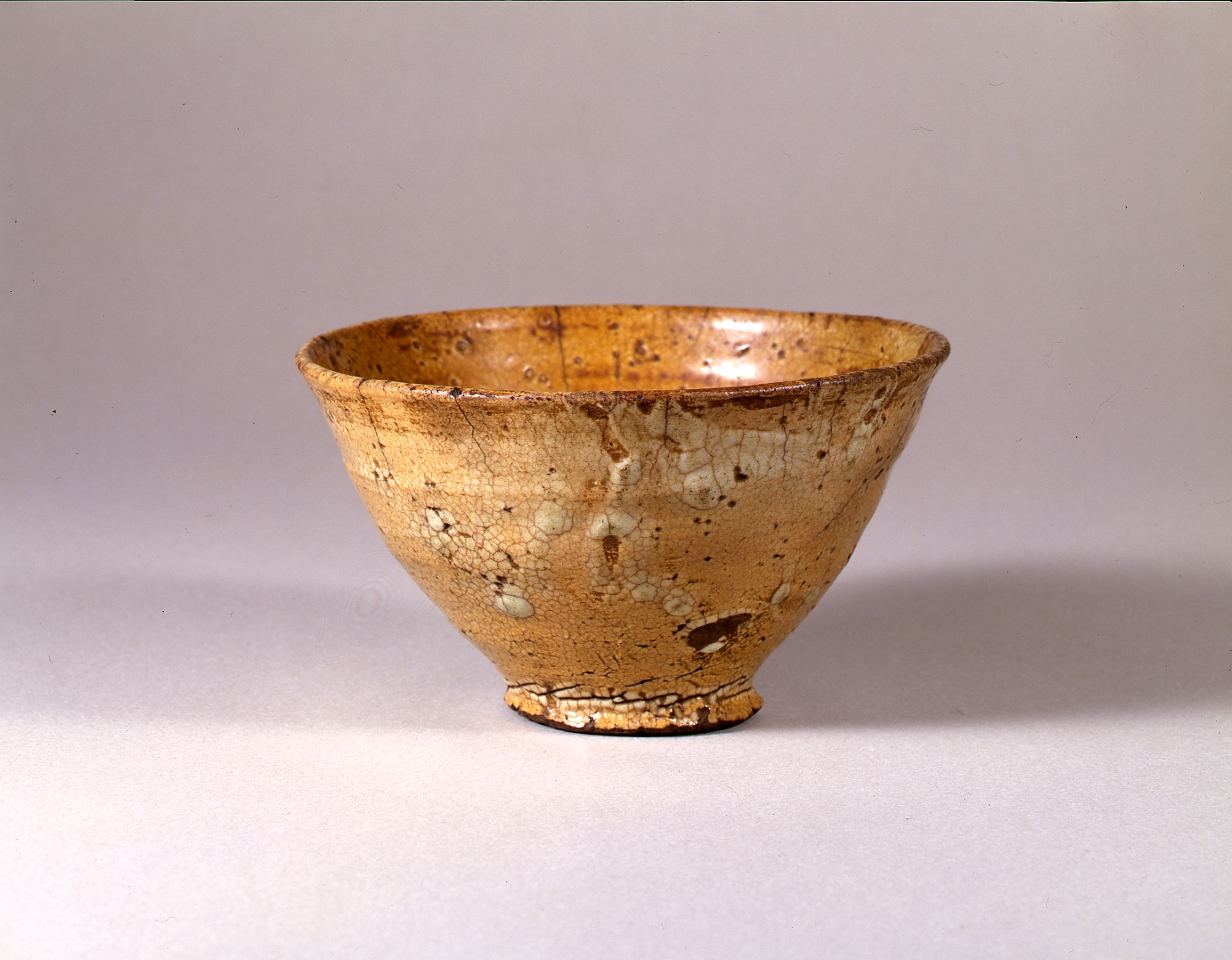 2-10 Koido Tea Bowl, Inscribed "Rokujizo"
-
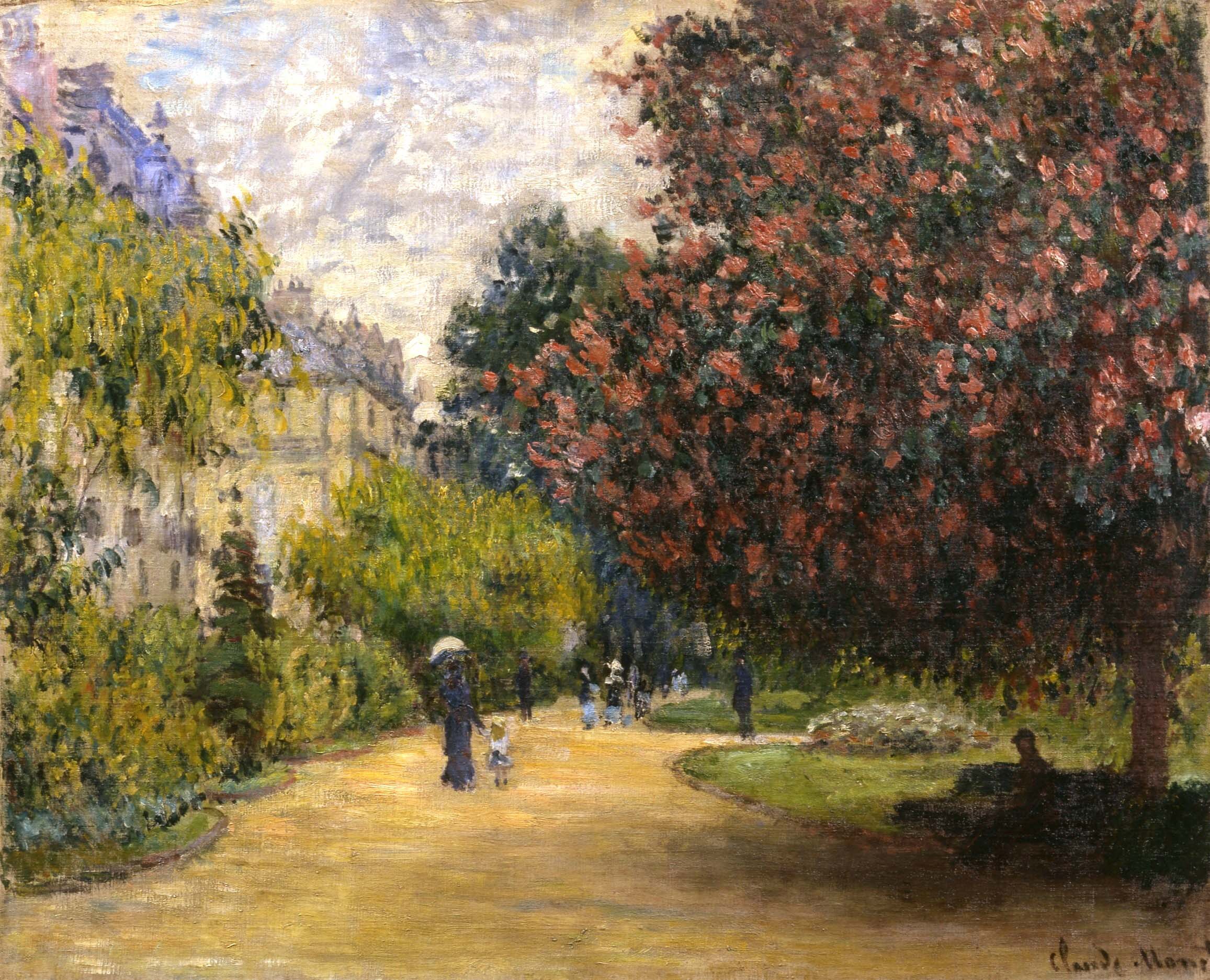 2-11 Claude Monet, “Parc Monceau”
The establishment of the modern banking industry served as the impetus for the creation of the Temporary Construction Department.
During the Edo period, Sumitomo opened a branch in Kuramae, Asakusa, and engaged in the financial business of the time known as “fudasashi,” which involved lending secured by rice reserves. However, with the advent of the Meiji era’s monetary economy, launching a modern banking business became a key priority for Sumitomo.
In Meiji 28 (1895), at the first meeting of the board of directors convened in Onomichi, Hiroshima, as an advisory body to Shunsui, a decision was made to establish a modern bank.At the same time, the meeting resolved to construct a building to serve as both the Sumitomo Head Office and the Bank’s headquarters, specifying that “construction work should take several years to complete, resulting in a structure that is sufficiently sturdy and built to last a hundred years.” In accordance with this decision, a construction organization—the Sumitomo Head Office Temporary Construction Department—was established to oversee the construction of the Sumitomo Head Office and the Bank’s headquarters.
In Meiji 28 (1895), at the first meeting of the board of directors convened in Onomichi, Hiroshima, as an advisory body to Shunsui, a decision was made to establish a modern bank.At the same time, the meeting resolved to construct a building to serve as both the Sumitomo Head Office and the Bank’s headquarters, specifying that “construction work should take several years to complete, resulting in a structure that is sufficiently sturdy and built to last a hundred years.” In accordance with this decision, a construction organization—the Sumitomo Head Office Temporary Construction Department—was established to oversee the construction of the Sumitomo Head Office and the Bank’s headquarters.
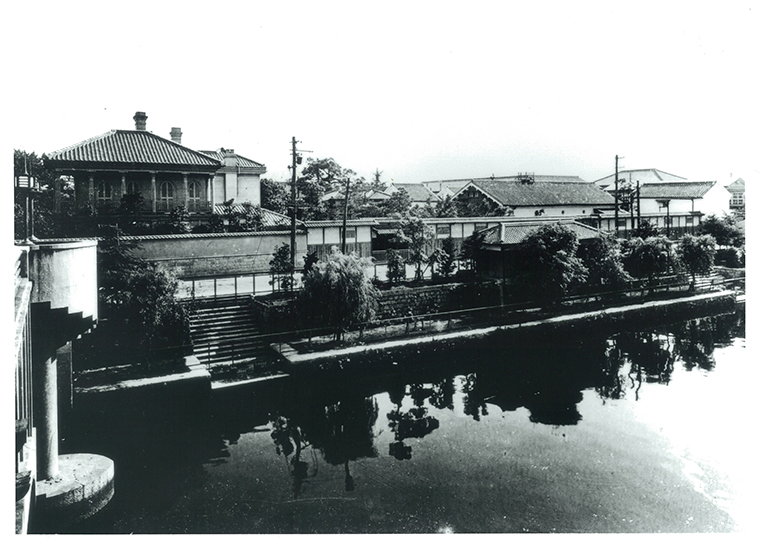 2-12 The Former Sumitomo Family Main Residence in Unagidani, Located Along the Nagahori River in Osaka
Donating to Libraries as a Form of Social Contribution
In Meiji 30 (1897), Shunsui undertook a seven-month study tour of Europe and the United States.In Chicago, he was deeply impressed by the fact that an art museum had been preserved through a donation from Marshall Field, who had made his fortune in the department store business. Shunsui learned that in Europe and the United States, successful businesspeople invested their personal wealth to support charitable causes and public facilities.
After returning to Japan, Shunsui resolved to donate a library to Osaka Prefecture and proposed to the prefectural government that he donate the building, the books, and a book endowment fund. This led to the completion in Meiji 37 (1904) of the Osaka Library—now known as the Osaka Prefectural Nakanoshima Library—which was designed and supervised by the Sumitomo Head Office’s Temporary Construction Department.
After returning to Japan, Shunsui resolved to donate a library to Osaka Prefecture and proposed to the prefectural government that he donate the building, the books, and a book endowment fund. This led to the completion in Meiji 37 (1904) of the Osaka Library—now known as the Osaka Prefectural Nakanoshima Library—which was designed and supervised by the Sumitomo Head Office’s Temporary Construction Department.
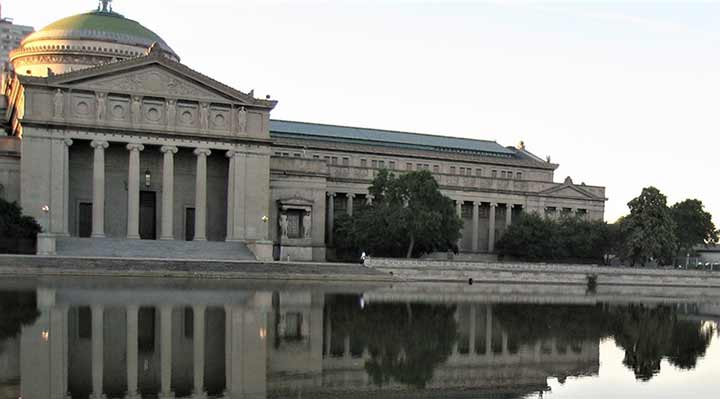 2-13 The art museum from the Chicago World's Fair was preserved thanks to a donation from Marshall Field and is now the Museum of Science and Industry in Chicago.
Establishment of Osaka North Port Co., Ltd.
Convinced that port construction was essential to the development of Osaka’s trade, commerce, and industry, Shunsui established a temporary Civil Engineering Division within the Sumitomo Head Office in Taisho 8 (1919) and launched the Osaka North Port project.That same year, to advance the project, the Temporary Civil Engineering Division was spun off as an independent entity, leading to the establishment of Osaka North Port Co., Ltd. in collaboration with relevant landowners’ associations. After the war, Sumitomo Corporation succeeded Osaka North Port Co., Ltd., the operating company. Sumitomo Corporation traces its founding to Taisho 8 (1919).
Meanwhile, the civil engineering expertise of Osaka North Port Co., Ltd. was passed on to the civil engineering division of Nikken Sekkei Construction after the war. This is the origin of Nikken Sekkei Civil, which is now a member of the Nikken Group.
Meanwhile, the civil engineering expertise of Osaka North Port Co., Ltd. was passed on to the civil engineering division of Nikken Sekkei Construction after the war. This is the origin of Nikken Sekkei Civil, which is now a member of the Nikken Group.
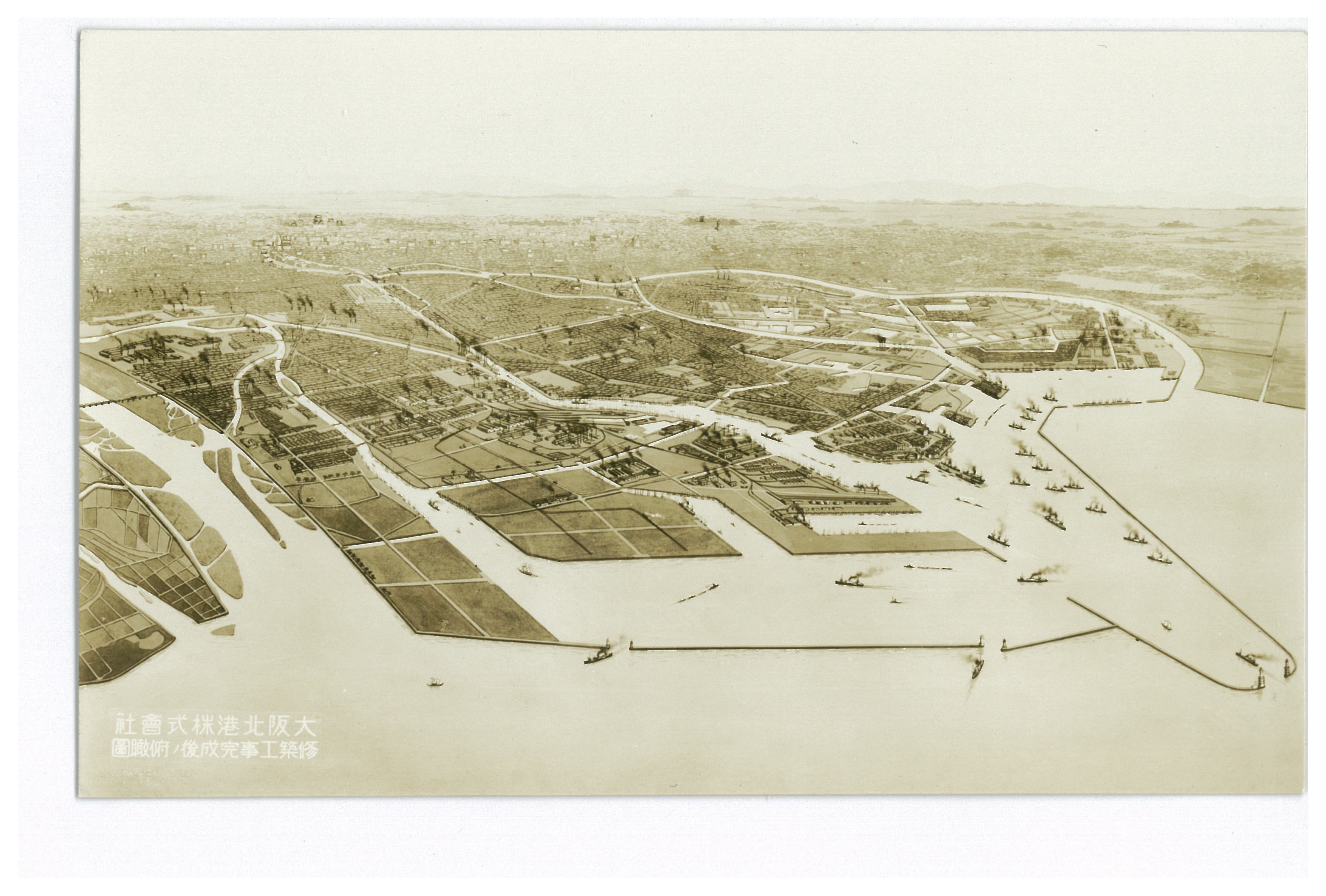 2-14 Aerial View of Osaka North Port
"One must value trust and strive for reliability."
“Be attuned to the trends of the times and adjust your business operations so as not to fall behind societal progress.”
“Under no circumstances should one pursue fleeting profits or proceed rashly.”
The above words are excerpts from the Sumitomo Family Code, established in Meiji 24 (1891). This Family Code traces its origins to the philosophy of the “Monju-in Shigaki” (Monju-in Declaration), written around 1650 by the first-generation founder, Masatomo Sumitomo.This spirit, passed down since Masatomo’s time, has become the “soil” of Sumitomo, and from the “seed of Shunsui” sown in this “soil,” many great trees have now grown.
“Be attuned to the trends of the times and adjust your business operations so as not to fall behind societal progress.”
“Under no circumstances should one pursue fleeting profits or proceed rashly.”
The above words are excerpts from the Sumitomo Family Code, established in Meiji 24 (1891). This Family Code traces its origins to the philosophy of the “Monju-in Shigaki” (Monju-in Declaration), written around 1650 by the first-generation founder, Masatomo Sumitomo.This spirit, passed down since Masatomo’s time, has become the “soil” of Sumitomo, and from the “seed of Shunsui” sown in this “soil,” many great trees have now grown.
(References)
'Sumitomo Shunsui' Editorial Committee (1955) 'Sumitomo Shunsui' Sumitomo Shunsui Editorial Committee
Tetsuo Fujimoto (1993) 'Besshiko and Sumitomo in the Meiji Era - The Philosophy and Actions of Modern Entrepreneurs' Ochanomizu Shobo
Sumitomo Corporation (1985) 'The Climate of Sumitomo' Sumitomo Corporation
(1972) 'Sumitomo Corporation Company History' Sumitomo Corporation
Supervised by Naohiro Asao, Sumitomo Historical Archives (2013), 'History of Sumitomo, Volume 1', Shibunkaku Publishing
Supervised by Naohiro Asao, Sumitomo Historical Materials Museum (2014), 'History of Sumitomo, Volume II' Shibunkaku Publishing
'Sumitomo Shunsui' Editorial Committee (1955) 'Sumitomo Shunsui' Sumitomo Shunsui Editorial Committee
Tetsuo Fujimoto (1993) 'Besshiko and Sumitomo in the Meiji Era - The Philosophy and Actions of Modern Entrepreneurs' Ochanomizu Shobo
Sumitomo Corporation (1985) 'The Climate of Sumitomo' Sumitomo Corporation
(1972) 'Sumitomo Corporation Company History' Sumitomo Corporation
Supervised by Naohiro Asao, Sumitomo Historical Archives (2013), 'History of Sumitomo, Volume 1', Shibunkaku Publishing
Supervised by Naohiro Asao, Sumitomo Historical Materials Museum (2014), 'History of Sumitomo, Volume II' Shibunkaku Publishing
Source
2-8, 2-12, 2-14: From the Sumitomo Historical Archives
2-9–2-11: From the collection of the Sen-oku Hakuko Museum
2-13: The free encyclopedia “Wikipedia”
2-8, 2-12, 2-14: From the Sumitomo Historical Archives
2-9–2-11: From the collection of the Sen-oku Hakuko Museum
2-13: The free encyclopedia “Wikipedia”