

7-1 The Era of the Technological Big Bang: 1970–2000 —The Realization of “The Limits to Growth” Begins—
-
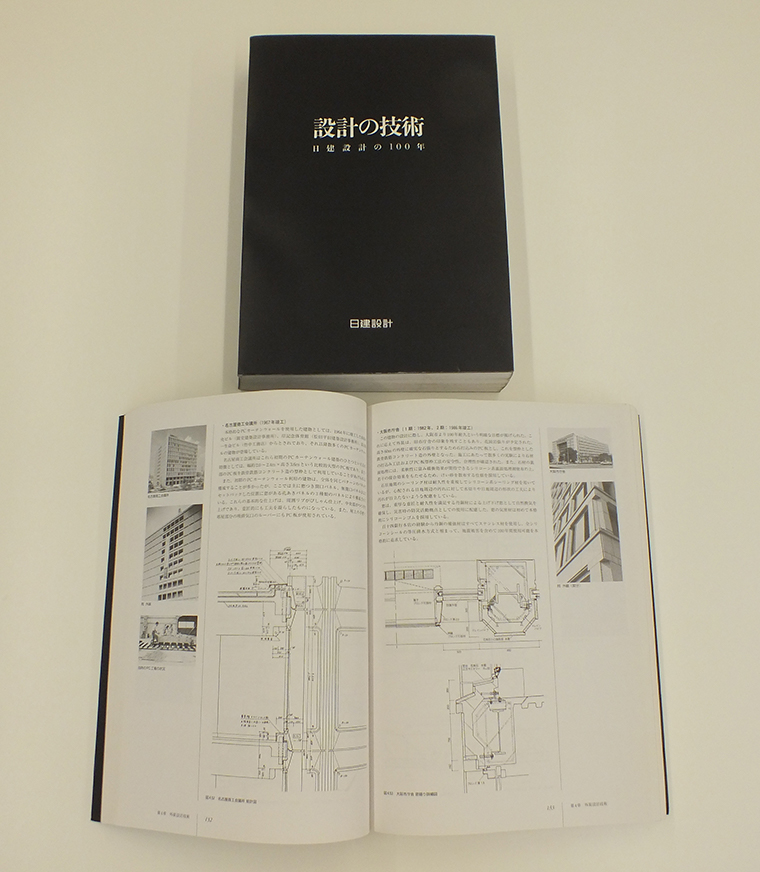 7-1 “The Art of Design: 100 Years of Nikken Sekkei,” General Supervising Editor: Professor Yoshiya Uchida
-
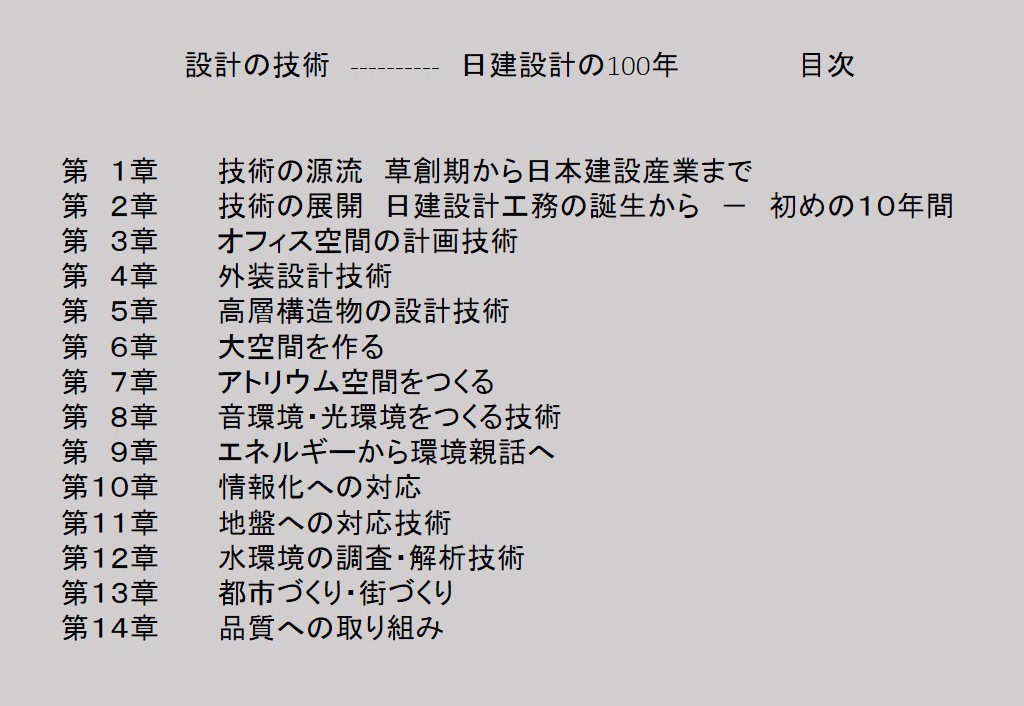 7-2 “The Art of Design: 100 Years of Nikken Sekkei”—Table of Contents
In Heisei 12 (2000), Nikken Sekkei published *The Technology of Design: 100 Years of Nikken Sekkei*. This book compiles the technical initiatives in various fields of urban planning and architectural design accumulated from the 1970s through the 1990s; the table of contents is shown in the upper right.
Professor Emeritus Yoshichika Uchida of the University of Tokyo, who served as the general supervisor for this book, stated: “Beyond being merely the technical history of a single architectural firm, this book examines the history of Japanese architectural technology from a fixed perspective.”The book attempts to provide as comprehensive a technical history as possible—from the modern to the contemporary era—regarding cities and architecture, while highlighting the values and social demands of the time.
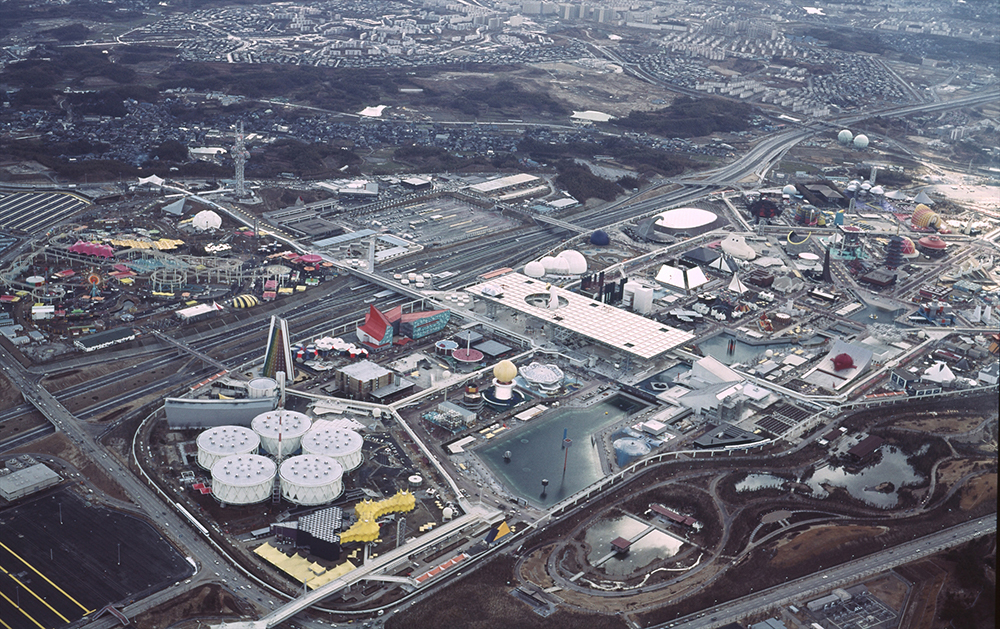 7-3: The World Exposition Held at the Senri Hills in Osaka, Showa 45 (1970)
Nikken Sekkei Construction planned the layout of the core facilities based on a pilot plan developed by Kenzo Tange, then a professor at the University of Tokyo. The company also provided design supervision for the Japan Pavilion, the Local Government Pavilion, and the Ricoh Pavilion, and collaborated on the realization of the Canada Pavilion, which was based on a master plan by Arthur Erickson.
The world became aware of "environmental issues" for the first time.
The challenge of “how to utilize the Earth’s resources while maintaining a comfortable living environment” has led to the development of various energy-saving technologies.In large-scale planning initiatives such as urban development, district heating and cooling systems—which enable efficient energy use—have become widely adopted. Furthermore, drawing on the lessons learned from the Great Hanshin-Awaji Earthquake in Heisei 7 (1995), efforts are now being made toward urban disaster prevention, the preservation of aquatic environments, and the creation of green cities.
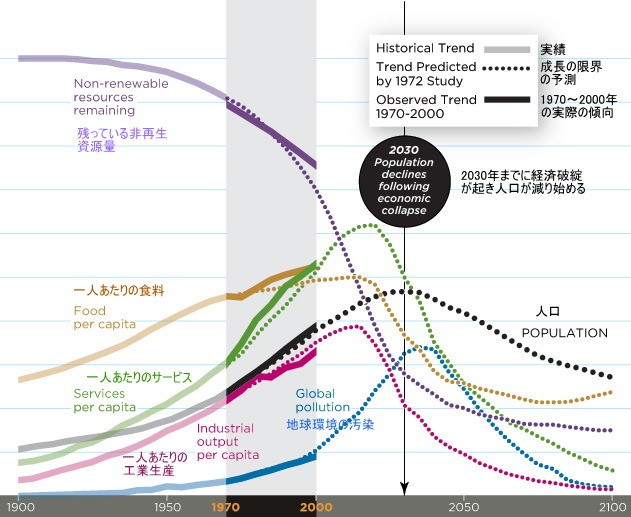 7-4 Excerpt from The Club of Rome’s *The Limits to Growth* (1972)
Large-Space Technology Made Necessary by the Expansion of Society
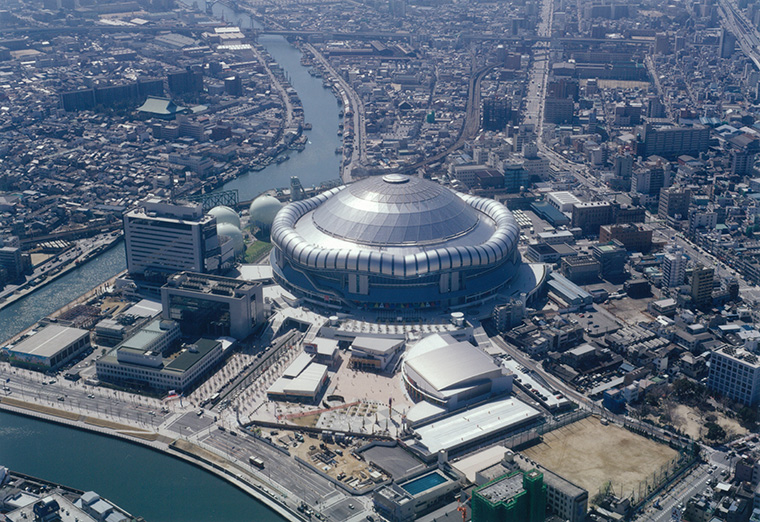 7-5 Osaka Dome (now Kyocera Dome) Heisei 9 (1997)
Growing Demand for “High-Quality Offices”
As awareness grew that offices are also living spaces, demand for “high-quality offices” increased.Technologies related to office space planning, high-rise building design, exterior design, and IT integration have all evolved. Despite the ups and downs of the bubble economy, these technologies continue to evolve today, supported by the growing demand for high-quality offices in urban areas.
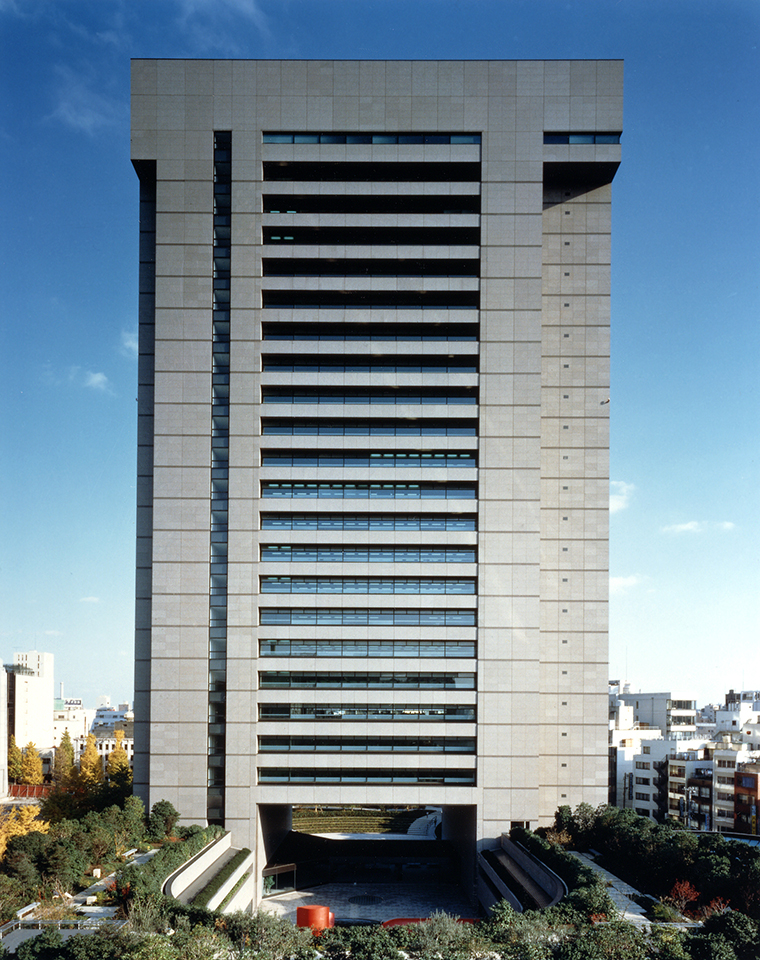 7-6 Taisho Marine Headquarters Building (Now: Mitsui Sumitomo Marine Surugadai Building) Showa 59 (1984)
It not only provided high-quality office space but also created a new landscape that harmonizes with the surrounding environment.
The Age of the Technological Big Bang: Who Are We?
Nikken Sekkei has grown since its founding based on its core competency as an architectural design firm, but amid a rapidly changing society, a movement emerged within the company to ask, “Who are we?” and “Where are we headed?”Consequently, led by the next generation of leaders, a vision was formulated with a time horizon extending to 2020—approximately 30 years from then.
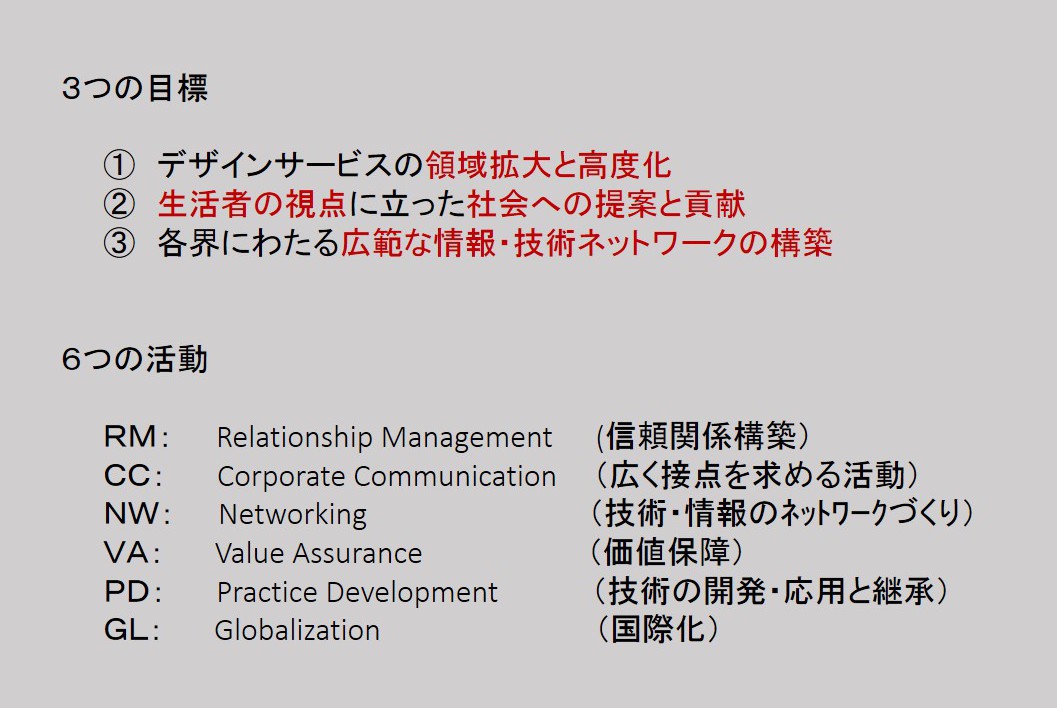 7-7 Report Outlining the Vision of a “Group of Experts Pioneering the Future of Social Environment Design,” Heisei 4 (1992)
In subsequent years, seven group companies were established, forming the Nikken Group—a collection of companies each maximizing their capabilities within their respective fields of expertise—and the seeds of this development can be seen in this report.
Nikken Sekkei (2000), *The Art of Design: 100 Years of Nikken Sekkei*, Nikken Sekkei
Takayuki Hashimoto (1999), *From 13 Kitahama 5-chome*, Sogensha
7-3 Courtesy of the Osaka Prefectural Expo ’70 Commemorative Park Office
7-4 Donelia H. Meadows, et al. (1972), *The Limits to Growth*, a Potomac Associates book
Mark Strauss (2012), “Looking Back on the Limits to Growth,” Smithsonian Magazine
7-5 Photo by Photo Kyodo Pro
7-6 Photo by: Photo Kyodo Pro7-6 Photo by: Koji Miwa