

Cost Management Report
「While capital investment may recover in FY2021, the downward trend in construction prices is expected to continue」
SCROLL DOWN
The “Cost Management Report” (quarterly) provides an overview of domestic and international economic conditions and, drawing on a wealth of cost data derived from our track record as the leading architectural firm in market share, delivers timely, independent analyses of the construction market from a neutral perspective.
*This report was prepared by the Cost Management Group of the Quality Control Division of Nikken Sekkei Ltd for informational purposes. The contents of this report are current as of the date of preparation, and its completeness is not guaranteed. The contents are subject to change without notice. Unauthorized reproduction of this report is prohibited.
CATEGORY
Solution
RELATED EXPERTISE
Solution
share



While capital investment may recover in FY2021, the downward trend in construction prices is expected to continue
Capital investment in FY2021 expected to fall below that of FY2019
Further decline in construction backlog
* Leading construction companies: Obayashi Corporation, Kajima Corporation, Shimizu Corporation, and Taisei Corporation. Takenaka Corporation is not included due to non-disclosure of quarterly financial results.
*Second-tier construction companies: Of the construction companies with non-consolidated sales exceeding 300 billion yen in the past three years, with the exclusion of Haseko Corporation, these are the eight companies of Hazama Ando Corporation, Kumagai Gumi, Penta-Ocean Construction, Tokyu Construction, Toda Corporation, Nishimatsu Construction, Maeda Corporation, and Sumitomo Mitsui Construction.
-
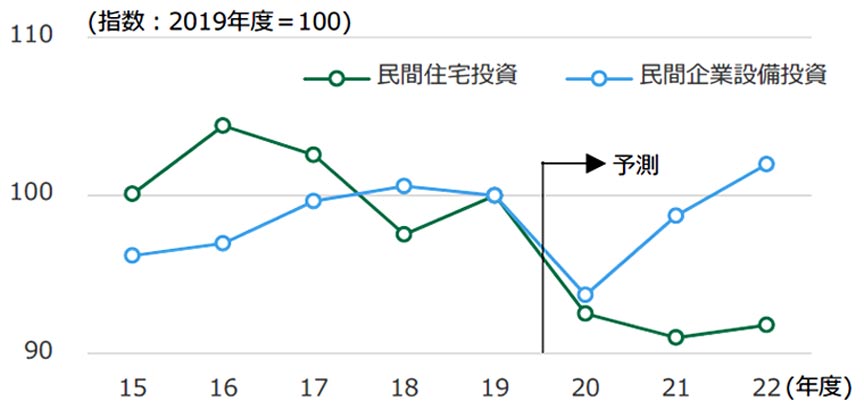 Fig.1 Historical changes in private sector capital investment and private residential investment, and forecast
Sources: Cabinet Office "Quarterly Estimates of GDP"; JCER "Short-term Economic Forecast" -
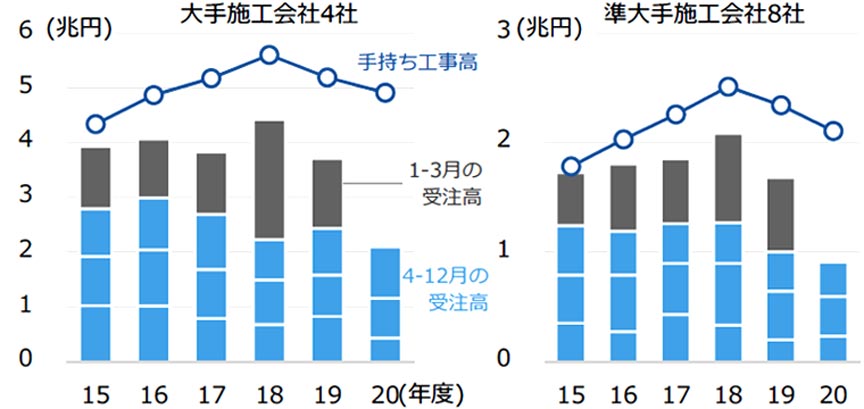 Fig.2 Domestic construction orders and construction backlog of construction companies
Source: Created from each company's financial statements
* Construction backlog in FY2020 is the value as of the end of 2020 Dec.
Polarization of competitive bid and negotiated contract prices is increasing
*Average divergence rate: The average of the divergence rates, which indicate how much a project quotation had exceeded (or fallen below) the estimated price, of projects in a given year.
Be cautious of soaring steel prices
-
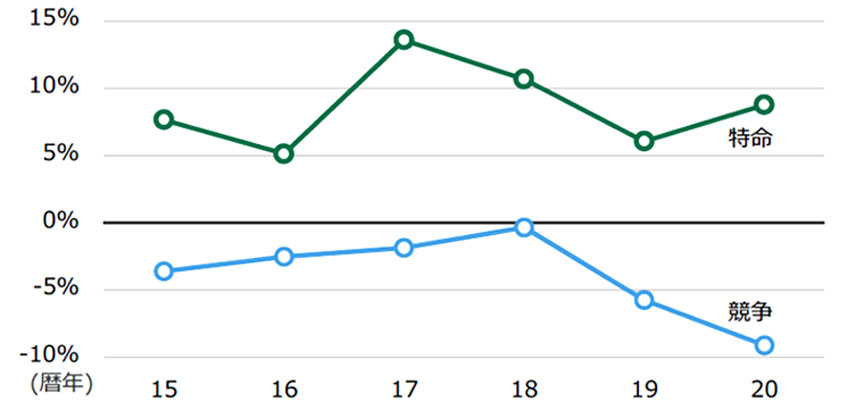 Fig.3 Average divergence rates of competitive bid contracts and negotiated contracts
Source: Nikken Sekkei figures -
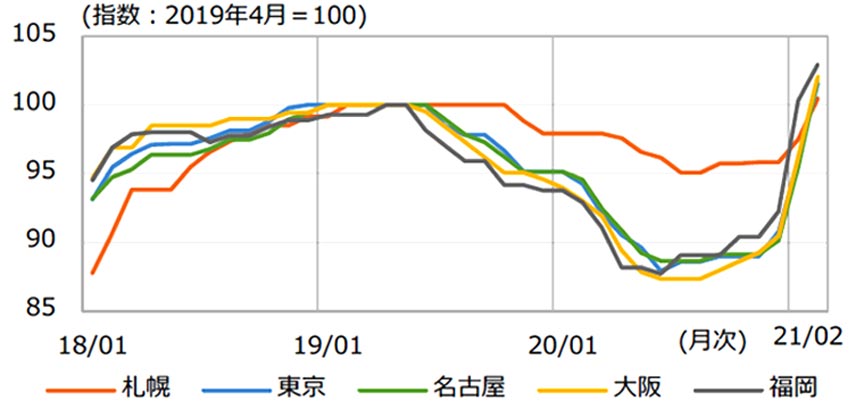 Fig.4 Historical changes in ordinary steel price
Source: "Construction Materials Price Index," Economic Research Institute
The downtrend continues for the Tokyo, Kansai and Tokai areas
NSBPI
Tokyo area
NSBPI
Kansai area
NSBPI
Tokai area
-
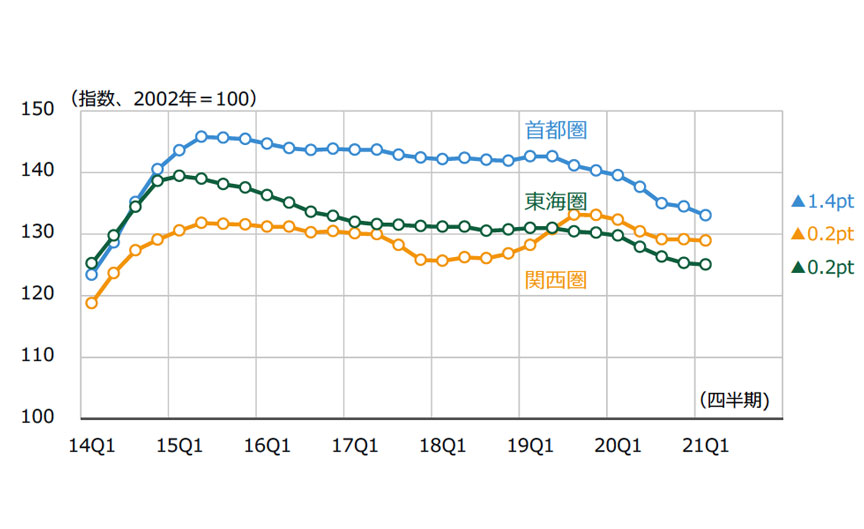 NSBPI Trends
-
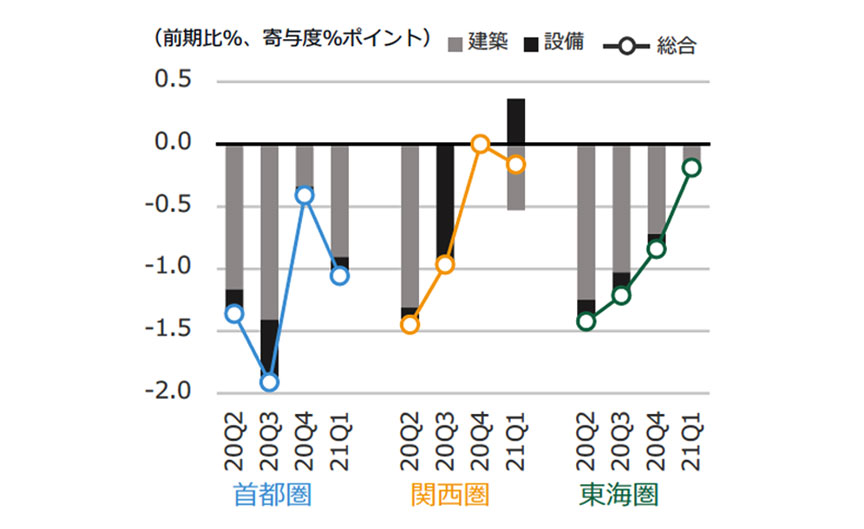 % change in NSBPI and contribution of construction and equipment
Tokyo’s ready-mixed concrete prices rise
Labor supply and demand is flat
-
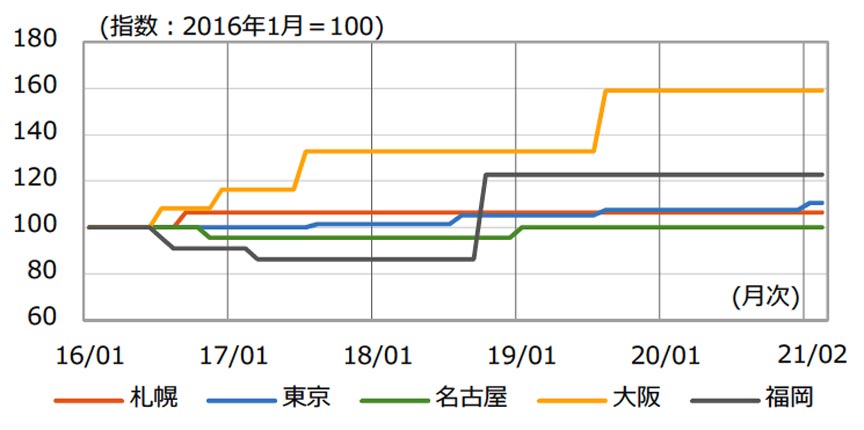 Historical changes in ready-mixed concrete price
Source: "Construction Materials Price Index," Economic Research Institute -
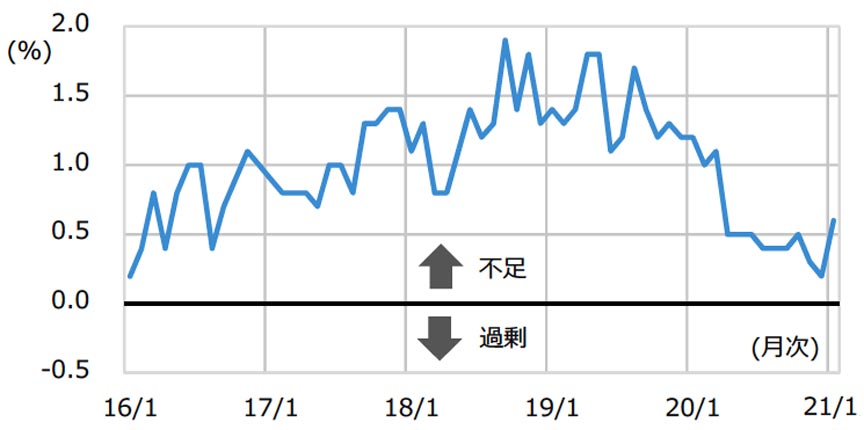 Figure 8: Trends in the excess/shortage ratio of skilled construction workers
Source: MLIT “Construction Labor Supply and Demand Survey (total 8 occupations / nationwide / seasonally adjusted)