
To view the report, please select the industry or sector to which your company belongs.

Selecting this option will display the next level of industry/sector selection.

Cost Management Report


「Construction industry outlook: Temporary recovery but shadow over future outlook Sluggish order record increases downward pressure on construction prices」

SCROLL DOWN

The “Cost Management Report” (quarterly) provides an overview of domestic and international economic conditions and, drawing on a wealth of cost data derived from our track record as the leading architectural firm in market share, delivers timely, independent analyses of the construction market from a neutral perspective.

*This report is prepared by Nikken Sekkei Cost Management Group for the purpose of providing information only. The contents are as of the date of creation and do not guarantee completeness and are subject to change without notice.

Construction industry outlook: Temporary recovery but shadow over future outlook
Sluggish order record increases downward pressure on construction prices

Deterioration of corporate business sentiment has stopped, but has yet to translate into recovery

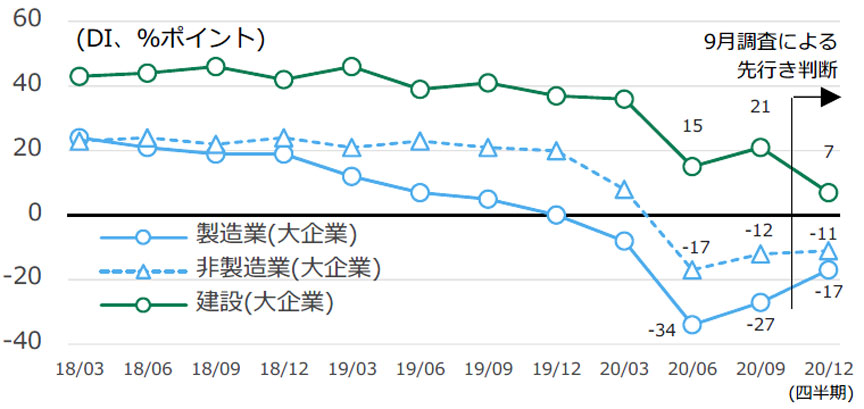
The Bank of Japan Tankan (September) business condition index improved by 7 points from the previous June survey to ▲27 for large manufacturing companies and ▲12 for large non-manufacturing industries. Although the business sentiment has recovered from the previous survey, which was affected by the Covid wreck, the DI remains in the negative range (Fig. 1). Signs of constraints on corporate capital investment are also shown due to careful consideration. In contrast, the construction industry remains in the positive range, however, the outlook has deteriorated sharply by 14 points, indicating that the outlook remains uncertain.

Low level of orders

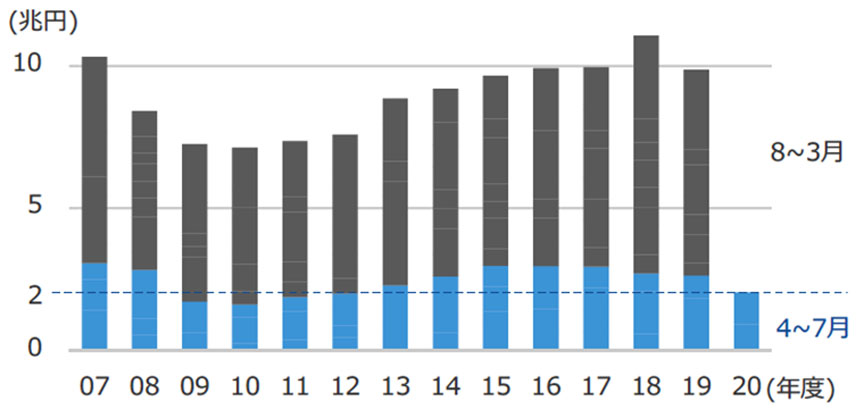
Looking at the current demand for construction, construction orders received from April to July 2020 were at a low level similar to the same period in FY2012, which was affected by the Lehman shock (Fig. 2). The total orders received by the four major construction companies* in the April-June period decreased significantly by 48% from the same period of the previous year. The reason for the decrease has been reported that the timing of orders as well as the contract is deferred to after July due to Covid-19. In case that major construction companies receive lower orders than those of last year, it will increase the possibility of hard competition among them.
*4 major construction companies excluding Takenaka Corporation who has not announced quarterly financial results.
  • Figure 1: Trends in the DI (diffusion index) for business conditions Figure 1: Trends in the DI (diffusion index) for business conditions
    Source: BOJ “TANKAN”

  • Fig.2 Historical Changes in Orders (domestic building) received by 50 construction companies Fig.2 Historical Changes in Orders (domestic building) received by 50 construction companies
    Source: MLIT “Construction Orders received by 50 companies”

Quotation price divergence widens in competition

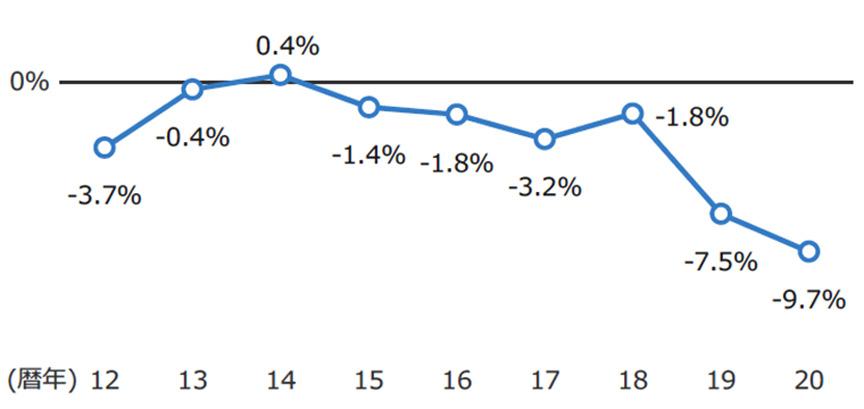
There is a growing tendency for lower quotations submitted by contractors than the estimated price. The average divergence rate* in the competition projects has increased from ▲7.5% in 2019 to its current ▲9.7% (Fig. 3). In 2019, the average divergence rate of building services works increased sharply, and this year the price decline in building works has resulted in a divergence of the same level as building services works, resulting in pushing down the whole building price.
*Average divergence rate: The average of the divergence rate between the estimated price and the quoted amount of respective project.

Slowdown in private sector capital investment

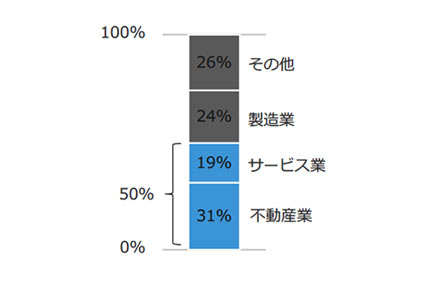
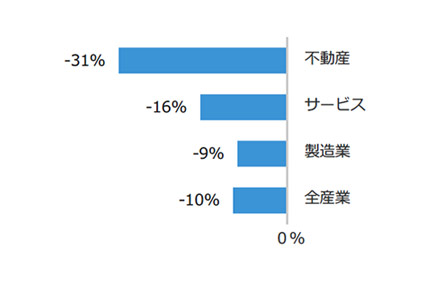
Future capital investment plans for the private sector, the real estate and service industries, which account for 50% of private construction orders and have a large impact on the construction industry, show signs of weakening investment motivation in FY2021 (Fig.4 & 5). Furthermore, unless the circumstances after Covid-19 can be illustrated, it is very likely that many capital investments will be frozen which will result in a continuing competitive environment for receiving orders and construction prices will continue to decline.
  • Fig.3 Average divergence rate of price competition Fig.3 Average divergence rate of price competition
    Source: Nikken Sekkei (Jan to Sep for 2020)

  • Fig.4 Breakdown of Client Fig.4 Breakdown of Client
    Source: MLIT “Construction Orders received by 50 companies”
    *Breakdown of 2019 Private sector

  • Figure 5: Capital Investment Plans by Industry: Percentage Change in Annual Plan Compared to FY2019 Actual Results Fig.5 Capital investment plan by industry
    The rate of increase / decrease in the FY21 plan with respect to the FY19 results

    Source: DBJ “Survey on Planned Capital Spending”

Further decline in construction prices

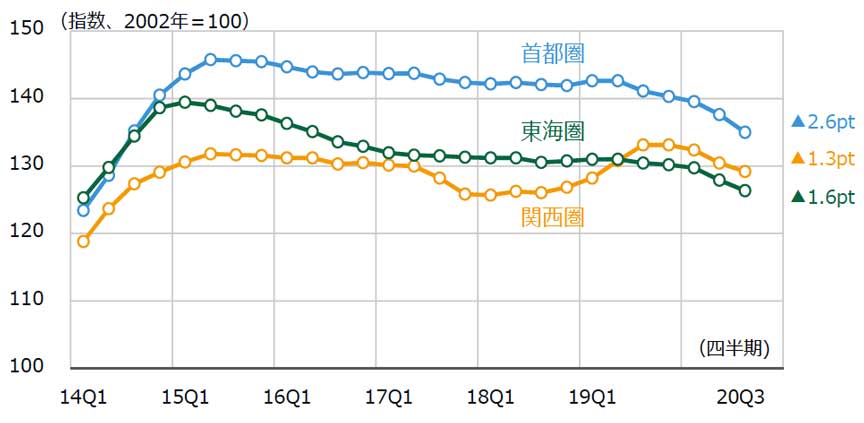
NSBPI Tokyo Area

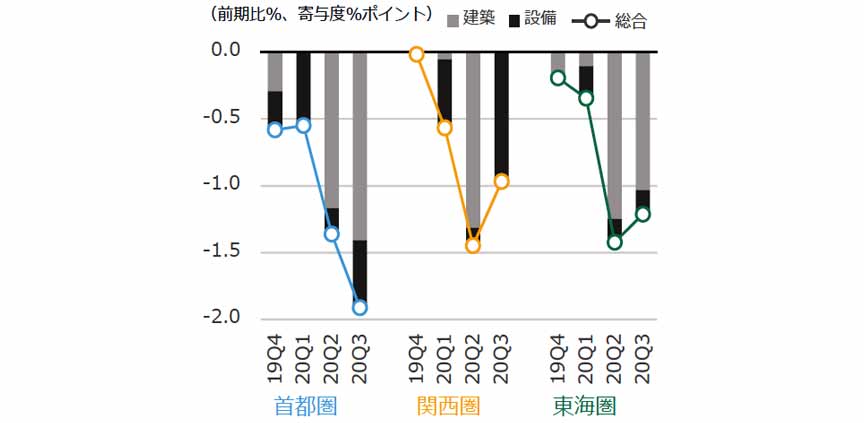
With the exception of structural work and temporary works, prices of building works are falling. Of building services works, some parts of equipment costs and labor costs continue to decline from the previous fiscal year. The rate of decline is increased due to a decrease in demand.

Kansai area

Significant decline in electrical works and elevator/escalator installation.

Tokai area

Due to sluggish construction market conditions including restraint of capital investment by manufacturers and rising vacancy rates of rental offices, construction prices have fallen in structure, finishing and mechanical works.
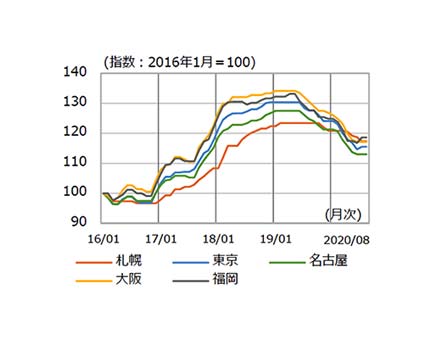
  • NSBPI Trends NSBPI Trends

  • % change in NSBPI and contribution of construction and equipment % change in NSBPI and contribution of construction and equipment

Drop in Steel prices stops

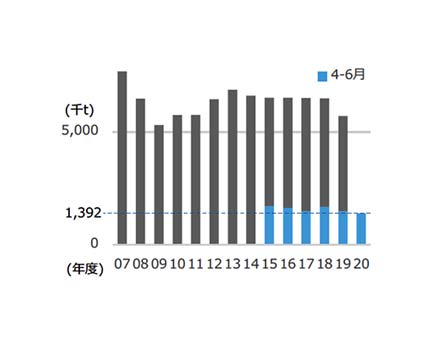
The prices of iron ore and steel scrap, which are the raw materials for steel, are rising. The main factors are the increase in crude steel production in China and the unstable iron ore production in Brazil, one of the major production countries. The demand for steel scrap is recovering overseas and the market price is rising. In contrast, due to the decrease in demand for steel products worldwide, those cost increases have not been transferred to the market price and the steel product price has been flat since last July.

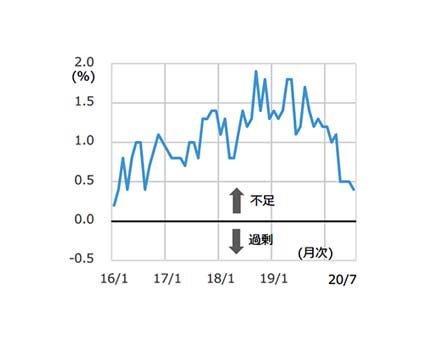
Labor supply and demand is flat

The gap between labor supply and demand has narrowed and flattened out from April 2020. The outlook for labor supply in the next few months will not change significantly, and the current situation is expected to continue. The number of construction skilled workers is sufficient and may be excessive depending on the future construction demand.
  • Historical changes in Demand of Ordinary Steel Historical changes in Demand of Ordinary Steel
    Source: JISF “Domestic Order for Ordinary Steel

  • Figure 7: Trends in steel prices (ordinary steel) Figure 7: Trends in steel prices (ordinary steel)
    Source: "Construction Materials Price Index," Economic Research Institute

  • Figure 8: Trends in the excess/shortage ratio of skilled construction workers Figure 8: Trends in the excess/shortage ratio of skilled construction workers
    Source: MLIT “Construction Labor Supply and Demand Survey (total 8 occupations / nationwide / seasonally adjusted)

This site uses cookies. By continuing to use this website, you consent to the use of cookies.Our policy.