

Cost Management Report 2019 October-December
"The downward trend in construction prices is intensifying due to the worsening business sentiment."
SCROLL DOWN
The “Cost Management Report” (quarterly) provides an overview of domestic and international economic conditions and, drawing on a wealth of cost data derived from our track record as the leading architectural firm in market share, delivers timely, independent analyses of the construction market from a neutral perspective.
*This report is prepared by Nikken Sekkei Cost Management Group for the purpose of providing information only. The contents are as of the date of creation and do not guarantee completeness and are subject to change without notice.



The worsening business sentiment is leading to a stronger downward trend in construction prices.
A decline in construction investment is expected due to the worsening business sentiment.
In line with the decline in private capital investment, investment in non-residential construction is expected to decrease from fiscal year 2019 through fiscal year 2020, and total construction investment (excluding civil engineering) is also projected to decline (Figure 2).
*Business Conditions DI: An economic sentiment index published in the Bank of Japan’s Short-Term Economic Outlook Survey (Tankan), calculated by subtracting the percentage of companies that perceive economic conditions as “poor” from the percentage that perceive them as “good.”
-
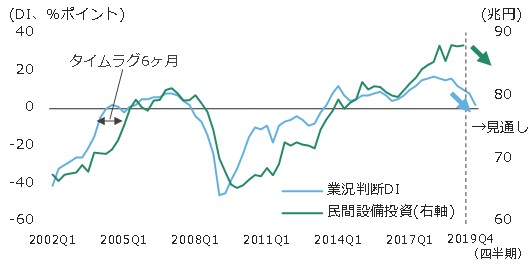 Figure 1: Trends in the Business Conditions Index (DI) and Private-Sector Capital Expenditures
Sources: Bank of Japan, “Tankan Survey,” Cabinet Office “Preliminary Quarterly GDP Estimates” -
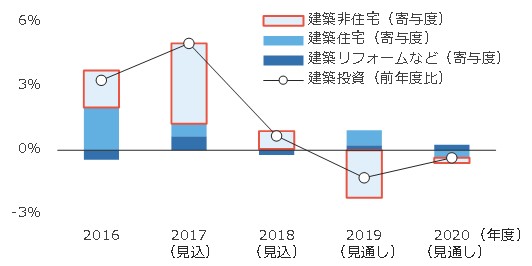 Figure 2: Growth Rate of Construction Investment
Source: Institute of Construction Economics, "Construction Investment Outlook"
Construction prices for competitive projects are falling, clearly highlighting the price polarization between competitive and specially commissioned projects.
*Average Deviation Rate: The annual average of the deviation rates between the estimated price and the bid amount for each project.
The downward trend in construction prices is mainly due to equipment installation and steel frame construction.
-
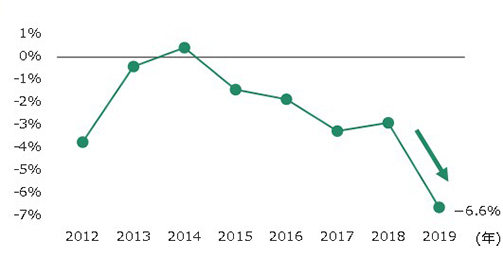 Figure 3: Average Deviation Rate for Price-Competitive Projects
Source: Nikken Sekkei Project Portfolio -
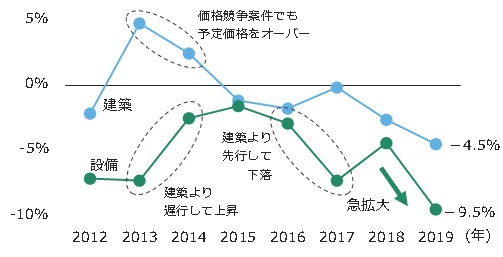 Figure 4: Average Deviation Rate for Construction and Facilities in Price-Competitive Projects
Source: Nikken Sekkei Project Portfolio
Tokyo metropolitan area: The downward trend in construction prices is intensifying.
Kansai region: rising, Tokai region: weakening
What is the Nikken Sekkei Standard Construction Cost Index (NSBPI)?
The Nikken Sekkei Standard Construction Cost Index is an index calculated by using a standard rental office as a quantity model and reflecting the actual market price based on Nikken Sekkei's own research in a timely manner.
With 2002 set as 100, the first quarter is January-March, the second quarter is April-June, the third quarter is July-September, and the fourth quarter is October-December.
Trends in construction costs
Kansai region: Large-scale construction investments are planned, and construction prices are expected to continue their upward trend.
Tokai region: Construction prices are showing signs of weakness.
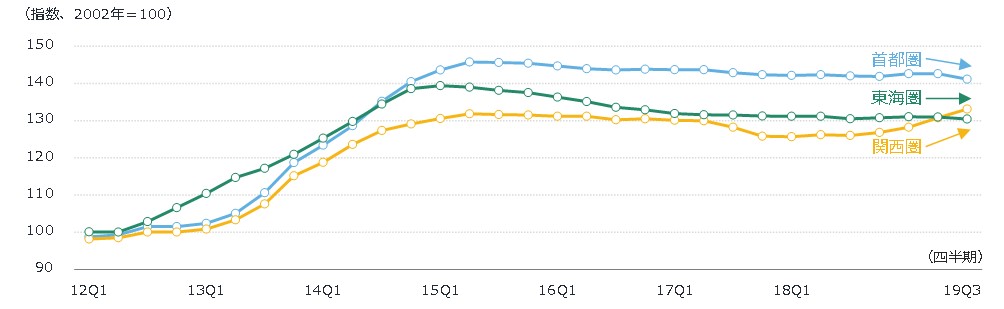 Figure 5: Trends in NSBPI (Nikken Sekkei Standard Construction Cost Index)
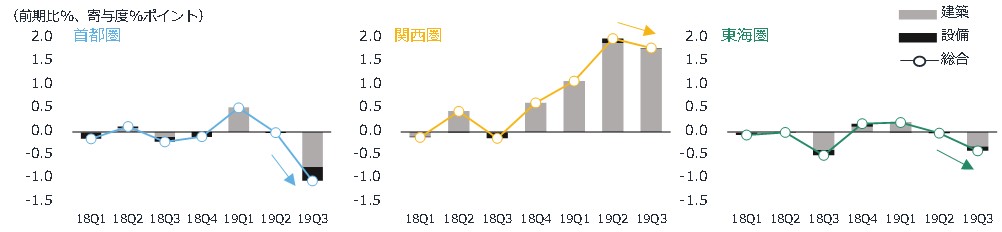 Figure 6 shows the percentage change in NSBPI (Nikken Sekkei Standard Building Cost Index) and the contribution of building and equipment.
Trends in material prices
Ready-mix concrete: The rise in Osaka is particularly noticeable.
Steel prices fell due to factors such as declining scrap prices and raw material prices including iron ore and coking coal, as well as a decrease in shipments due to sluggish construction demand.
Although the volume of ready-mix concrete shipments decreased, prices rose. In particular, prices rose in Osaka due to the ready-mix concrete cooperative's efforts to encourage non-member plants to join the cooperative. The Tokyo ready-mix concrete cooperative has decided to raise prices by 1,000 yen/m³ from contracts made in April 2020, but it is expected that the impact on construction costs will be small and that the downward trend in construction costs will not change.
-
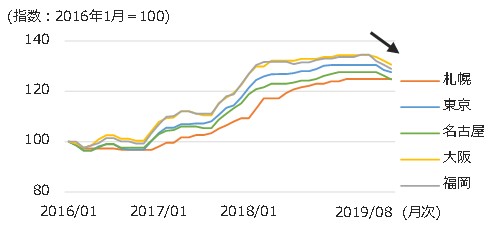 Figure 7: Trends in Steel Prices (Mild Steel)
Source: "Construction Materials Price Index," Economic Research Institute -
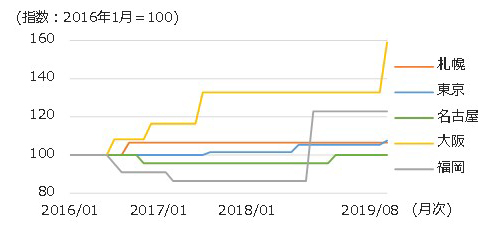 Figure 8: Trends in Ready-Mix Concrete Prices
Source: "Construction Materials Price Index," Economic Research Institute