

The Huawei Southern Plant, designed by our company, won the First Prize at the “China Architectural Society Award for Excellence in Industrial Architecture,” organized by the Industrial Architecture Branch of the China Architectural Society.
At this wrap-up meeting, the Japanese and Russian governments identified seven “Japan-Russia Flagship Projects” that will receive support for their implementation.
The projects in which Nikken Sekkei is involved include the “Japan Quarter Development Project (Molton),” the “Krasnoyarsk Smart City Development Project (Monolith Holdings),” and “Integrated Development Project Around Botanichesky Sad Station (Pioneer)” (client names are in parentheses). With the support of both the Japanese and Russian governments, further progress on these projects is expected.
At the Urban and Housing Subcommittee, a development council was established to promote TOD (Transit-Oriented Development), comprising representatives from the City of Moscow, the Moscow Ring Railway, the Moscow Metro, Gempan—as well as private urban development firms from both Japan and Russia—to promote the “Botanichesky Sad Station Area Integrated Development Project.” It was confirmed that our company is participating in this council, and that relevant organizations from both Japan and Russia will engage in discussions and deliberations moving forward to advance TOD development in Moscow.
In addition, for the three projects designated as Japan-Russia flagship projects in which our company is involved, contract signing ceremonies for each project were held during the general meeting.
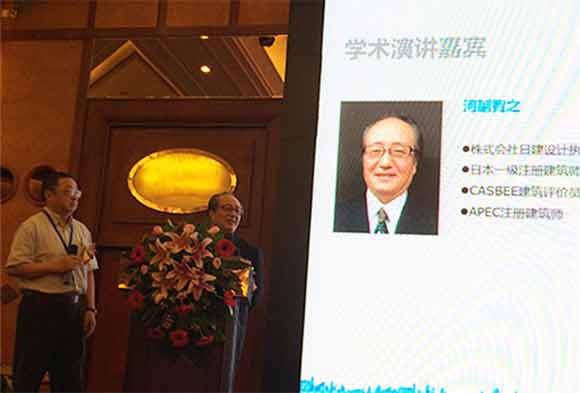 On June 26, at the “China Architectural Society Outstanding Industrial Architecture Design Award” hosted by the Industrial Architecture Branch of the China Architectural Society, the Huawei Southern Factory Project—for which our firm was responsible for the conceptual and preliminary design, design proposal review, and on-site consulting—received the First Prize.
The China Architectural Design Awards are the highest honor in architecture throughout China. There are seven categories, and the following year after the selection of over 100 projects, First, Second, and Third Prizes are selected and awarded in each category.
At the awards ceremony, Tomoyuki Kawazoe of our firm delivered a lecture on the theme of “The Latest in Industrial Architecture in Japan.”