

Developed a sustainability assessment system for factory buildings that evaluates companies’ initiatives related to reducing environmental impact and improving workplace conditions
Promoting sustainable factory development and aiming to improve the construction process
PRESS RELEASE
2023.12.13
Nikken Sekkei Ltd. (Headquarters: Chiyoda-ku, Tokyo; President and CEO: Atsushi Omatsu; hereinafter “Nikken Sekkei”) and Nikken Sekkei Research Institute Co., Ltd. (Headquarters: Chiyoda-ku, Tokyo; President and CEO:Hiroki Asakura; hereinafter “Nikken Sekkei Research Institute”) have developed a sustainability assessment system that evaluates initiatives related to reducing the environmental impact of factory buildings, ensuring quality, and improving workplace comfort. By incorporating the target company’s facility management philosophy into this system, companies can formulate their own unique evaluation metrics.
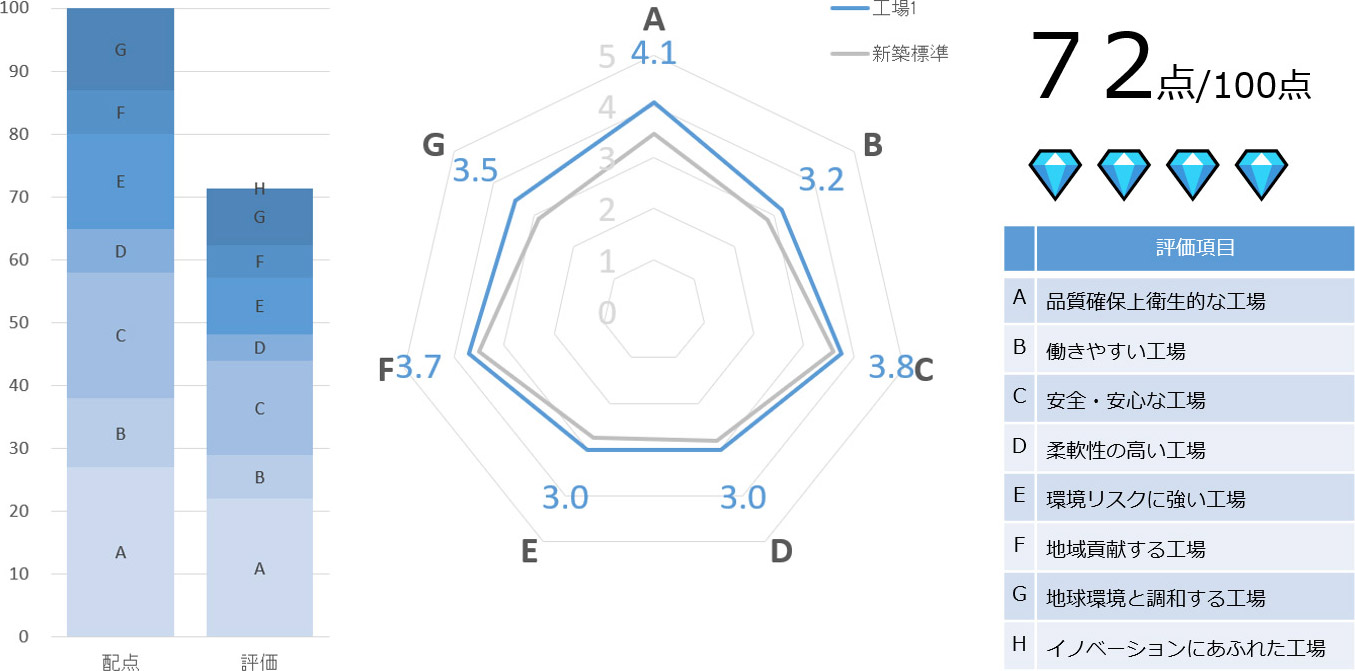 Figure 1: Example of evaluation results from this system
Background of Development: The Lack of a Tool for Comprehensive Evaluation of Factory Facilities
Manufacturers, such as food producers, are striving to conserve energy at every stage of their business operations, and are particularly focused on switching to fuels with lower CO2 emissions and continuously introducing high-efficiency equipment at their production sites.In addition to their efforts to reduce environmental impact, these companies are also working to improve environmental quality—such as by creating indoor factory environments that prioritize employee health—as part of their commitment to promoting “health management.” However, there was no way to comprehensively evaluate, analyze, and share information on these existing facilities, which meant that every time a new facility was built, a significant amount of time was spent defining requirements and determining building specifications.CASBEE is a comprehensive environmental performance evaluation index already in use.※1or LEED※2However, since these metrics apply only to office spaces, it was difficult to properly evaluate factory facilities.
Therefore, with the aim of promoting the development of low-carbon production facilities with excellent environmental quality, we have developed a methodology to evaluate the comprehensive environmental performance of factory facilities.By utilizing this system to objectively evaluate existing factory facilities, the concepts to be achieved when constructing new facilities will be clarified. This is expected to promote the development of sustainable production facilities and enable more reliable management of the construction process, from design through maintenance. Furthermore, it is expected to lead to more consistent business activities and improved return on investment.
*1 CASBEE: A tool developed by the Japan Center for SDGs in Housing and Architecture (a general incorporated association) to comprehensively evaluate the environmental performance of buildings, neighborhoods, and cities from various perspectives. It assesses performance using the “Building Environmental Performance Efficiency (BEE)” indicator, calculated by dividing “environmental quality” by “environmental impact.”
*2 LEED: An environmental performance evaluation system for the built environment (including buildings and urban environments) developed and administered by the nonprofit U.S. Green Building Council, with certification reviews conducted by Green Business Certification Inc.It evaluates performance based on 46 criteria across nine categories, including “Location and Transportation” and “Sustainable Sites.”
Therefore, with the aim of promoting the development of low-carbon production facilities with excellent environmental quality, we have developed a methodology to evaluate the comprehensive environmental performance of factory facilities.By utilizing this system to objectively evaluate existing factory facilities, the concepts to be achieved when constructing new facilities will be clarified. This is expected to promote the development of sustainable production facilities and enable more reliable management of the construction process, from design through maintenance. Furthermore, it is expected to lead to more consistent business activities and improved return on investment.
*1 CASBEE: A tool developed by the Japan Center for SDGs in Housing and Architecture (a general incorporated association) to comprehensively evaluate the environmental performance of buildings, neighborhoods, and cities from various perspectives. It assesses performance using the “Building Environmental Performance Efficiency (BEE)” indicator, calculated by dividing “environmental quality” by “environmental impact.”
*2 LEED: An environmental performance evaluation system for the built environment (including buildings and urban environments) developed and administered by the nonprofit U.S. Green Building Council, with certification reviews conducted by Green Business Certification Inc.It evaluates performance based on 46 criteria across nine categories, including “Location and Transportation” and “Sustainable Sites.”
Case Study: Meiji Factory Facilities / Recognizing initiatives aimed at creating a “people- and environment-friendly factory” and visualizing performance areas requiring reinforcement or review
This system was first introduced at the manufacturing facilities of Meiji Co., Ltd. (Headquarters: 2-2-1 Kyobashi, Chuo-ku, Tokyo; Representative Director: President and CEO: Katsuya Matsuda; hereinafter “Meiji”) and has begun operation as an environmental performance evaluation tool that incorporates the company’s expertise in factory management.Meiji’s metrics, based on the theme of “factories that are friendly to people and the environment,” consist of a total of eight evaluation items—seven categories, including work environment, safety and security, and flexibility for future equipment upgrades or changes in use, plus “innovation” (see Table 1). Each item is evaluated using the AHP method.※3The evaluation is weighted using [...], and evaluation scores are assigned based on the status of implementation. Based on the total evaluation score (out of 100 points), a five-tier rating system using diamonds is applied.
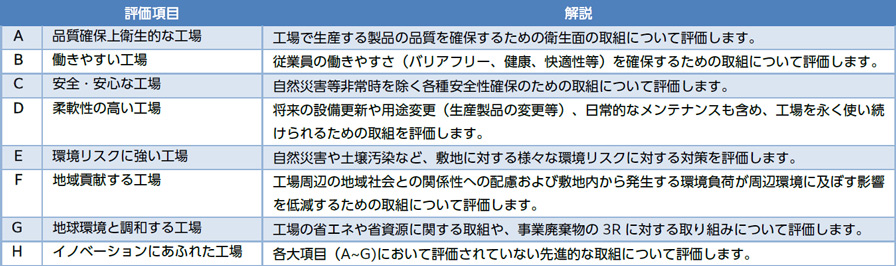 Table 1: Overview of Evaluation Criteria
 Table 2: Overall Scores and Rankings
By evaluating factories that have been completed or are currently in the design phase using this system and comparing them to a standard reference case (minimum required performance), it is possible to conduct a balanced assessment of which performance aspects to enhance and which to reevaluate.For example, the following example demonstrates that, compared to Plant 1, Plant 2 has enhanced its performance as a sustainable plant, particularly in the areas of A. Hygienic plant operations to ensure quality, B. A comfortable working environment, and E. A plant resilient to environmental risks.
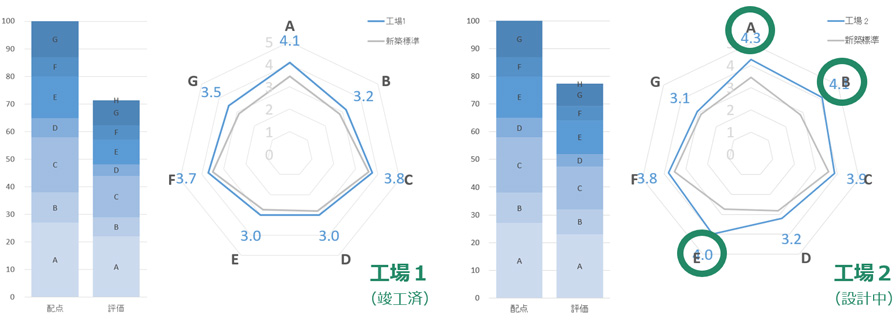 Figure 2: Performance Comparison Based on the Evaluation Results of This System (Illustration)
Future Operations and Development
Going forward, Nikken Sekkei and Nikken Sekkei Research Institute will utilize this system in the design of new factory construction. By conducting evaluations and analyses at key design milestones—such as the basic design phase, the detailed design phase, and upon completion—they aim to validate the building concept and minimize under- or over-design.The plan is to objectively assess the value of facilities—such as flexible factories capable of responding immediately to changing and diversifying social needs, factories that minimize labor requirements and facilitate maintenance, and factories that contribute to solving social issues like the SDGs—and to share the concepts to be achieved in each project among all stakeholders.We also plan to examine methods for applying this approach to existing factories and for evaluating investments based on construction costs.
*3 AHP (Analytic Hierarchy Process): Also known as the Hierarchical Analysis Method, this is a problem-solving decision-making technique used to analyze issues in decision-making by combining human subjective judgment with a systematic approach.
*3 AHP (Analytic Hierarchy Process): Also known as the Hierarchical Analysis Method, this is a problem-solving decision-making technique used to analyze issues in decision-making by combining human subjective judgment with a systematic approach.
About Nikken Sekkei
Nikken Sekkei is a professional services firm specializing in architectural and civil engineering design and supervision, urban design, and related research, planning, and consulting services. For 120 years since its founding in 1900, Nikken Sekkei has been committed to creating value through "social environment design," which aims to solve both explicit and implicit social issues, in order to meet the demands of society and the diverse needs of its clients. To date, it has been involved in various projects in Japan, China, ASEAN, and the Middle East, and in recent years has expanded into India and Europe.
About the Nikken Sekkei Research Institute
The Nikken Sekkei Research Institute serves as the “think tank” for the Nikken Group, with Nikken Sekkei at its core. With the goal of realizing sustainable architecture and urban development, the institute provides research, planning, and consulting services covering all aspects of architectural and urban lifestyles.In recent years, the institute has been actively collaborating with a wide range of universities, research institutes, and companies both in Japan and abroad to conduct research on sustainable architecture and urban development.
Contact information regarding this matter
株式会社日建設計 広報室 Tel. 03-5226-3030 e-mail:webmaster@nikken.jp
株式会社日建設計総合研究所 広報デザイン室 Tel. 03-5259-6080 e-mail:webmaster_ri@nikken.jp
株式会社日建設計総合研究所 広報デザイン室 Tel. 03-5259-6080 e-mail:webmaster_ri@nikken.jp
SHARE