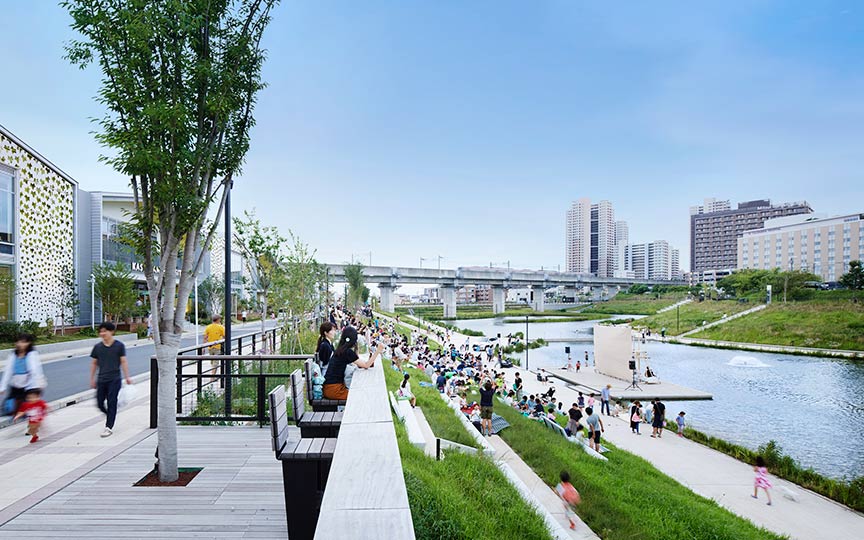

Towards a New Society Brought About by the Coronavirus: Towards Green Wellness Cities Where Nature and Urban Life Coexistence are Needed
Wataru Tanaka
(Title as of the time of publication)
SCROLL DOWN
In the spring of 2020, the days of "Stay at Home, Work from Home" suddenly arrived for us. As city dwellers, we began to challenge ourselves with a new lifestyle, but at the same time, have we ever longed so much for an "escape" to the lush green environment of the outdoors? Walking in the sun, riding a bicycle and feeling the fresh breeze, we are truly grateful for the blessings of nature that reach all our senses. These past few months have made us realize that humans were born from nature and that we deeply desire to coexist with it.
I would like to consider the nature of a "green wellness city," where urban areas and nature coexist, and nature forms the foundation of the city. This is essential not only for urban dwellers seeking "physical and mental health and social well-being = wellness," but also for fostering the creation of urban culture and wisdom, and ultimately becoming a source of urban vitality.



 Nikken Sekkei, Urban Division, Urban Design Group, Principal
Wataru Tanaka
(Title as of the time of publication)
Public spaces and urban wellness
In Japan, since modernization, green spaces have been created and preserved in various forms as public urban areas. During the period of rapid economic growth, from the perspective of pollution control and environmental protection, obligations and incentives for the installation of green spaces on private land also began. Currently, there is an even greater demand for improving the quality and quantity of green spaces in cities as a measure to prevent the urban heat island effect and to enhance the quality of the urban landscape.
Amidst these circumstances, it is believed that the changes in urban residents' lifestyles and behaviors brought about by the development of ICT will be further accelerated by the COVID-19 pandemic. In particular, the increased interest in wellness is expected to lead to a greater expansion of the use of outdoor and semi-outdoor public spaces.
The health benefits that natural elements such as greenery, water, and light have on people's minds and bodies in urban areas have already been extensively studied academically and empirically. Furthermore, it is undeniable that lush green environments enhance human productivity and creativity.
Going forward, the perspective of creating "green wellness cities" centered around these kinds of lush public spaces will become crucial for urban development in all areas.
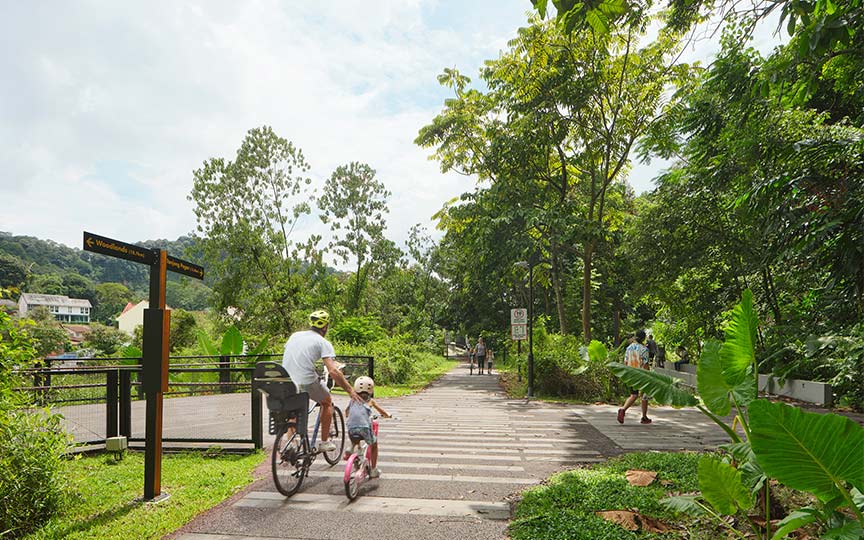
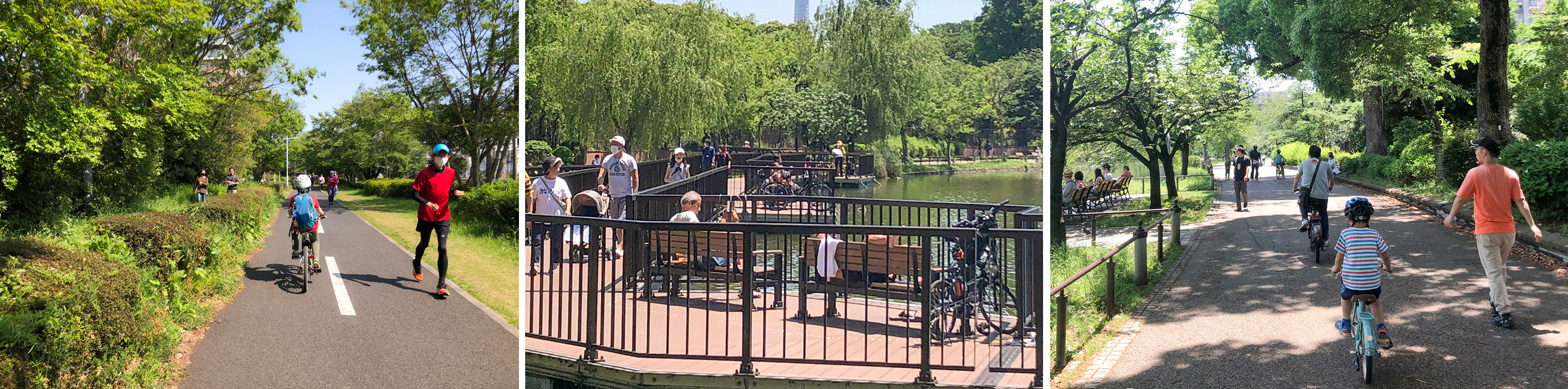 Scenes from public spaces during the state of emergency (photo taken by the author)
The importance of green infrastructure
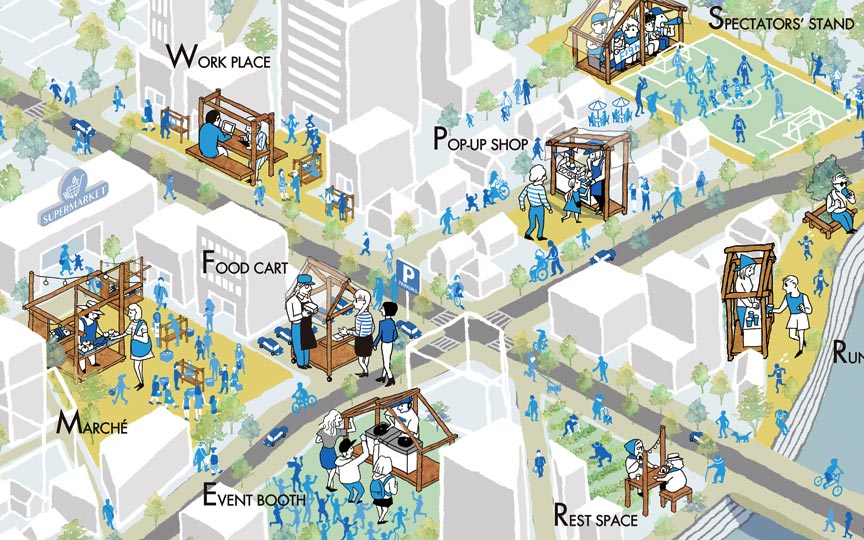
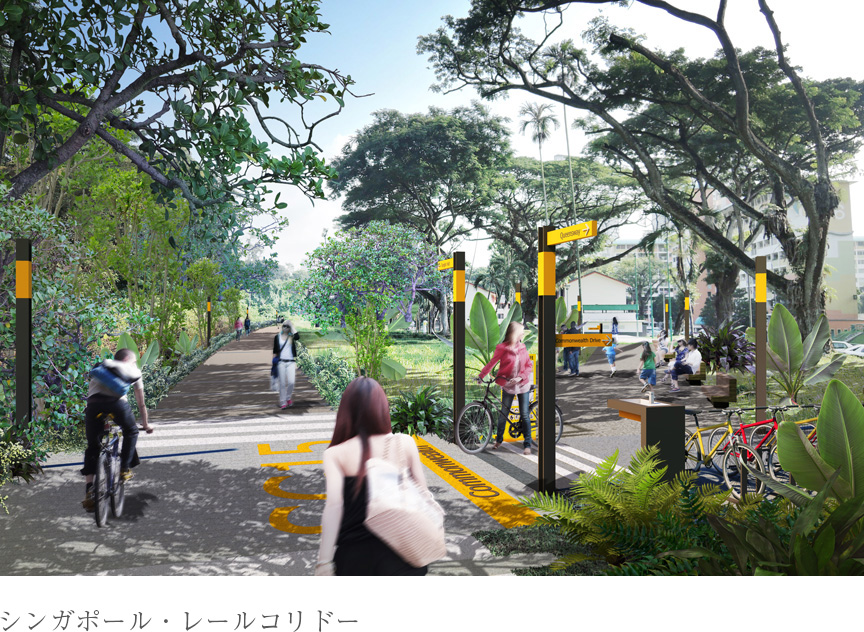
Beyond the network of parks and green spaces, it is necessary to actively incorporate natural and urban elements into civil engineering spaces such as roads, rivers, retention ponds, and former railway tracks, and to rethink them as urban activity infrastructure and health promotion infrastructure. It is believed that the framework of a wellness city will be created when not only residences but also small workspaces, shops, facilities that support local culture and interaction, and plazas are developed along these "green infrastructures."
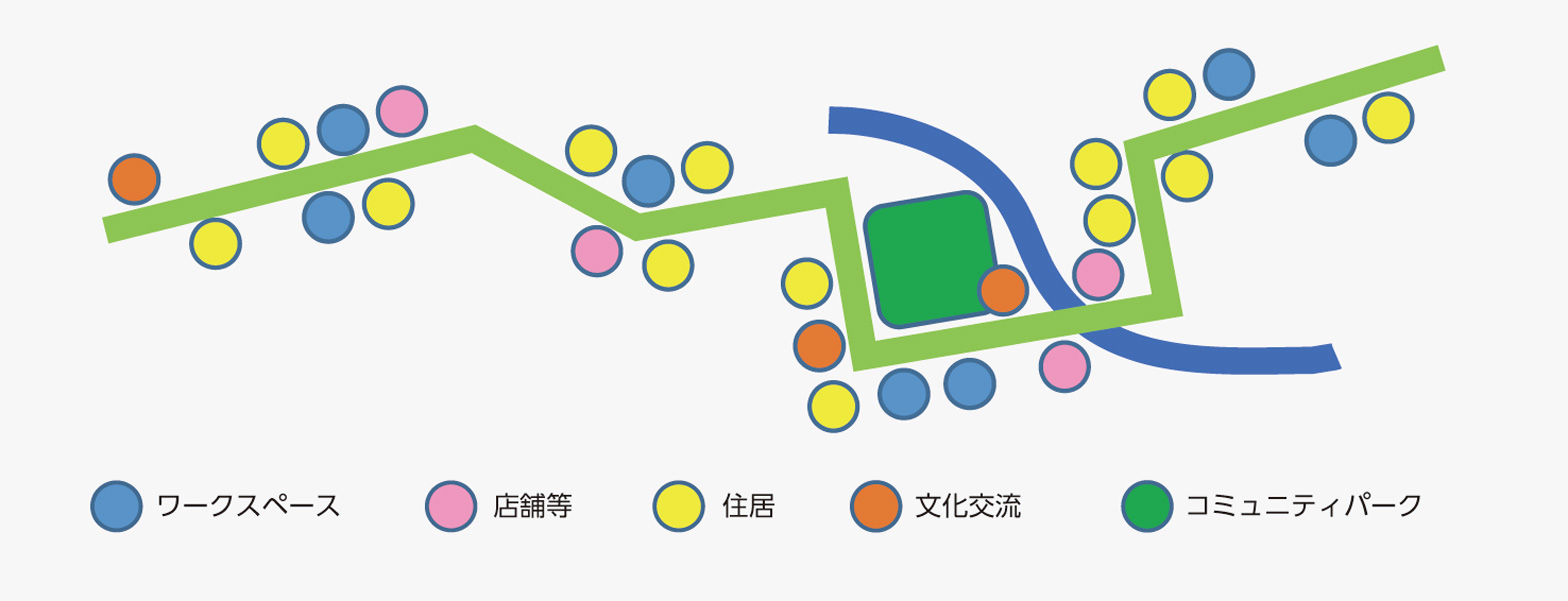 Image of green infrastructure that forms the backbone of a wellness city
Formation of micro-business districts
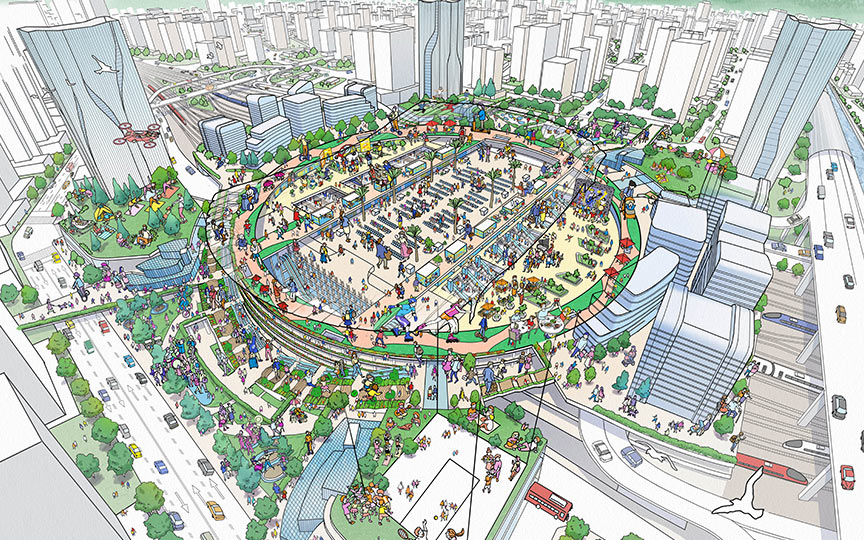
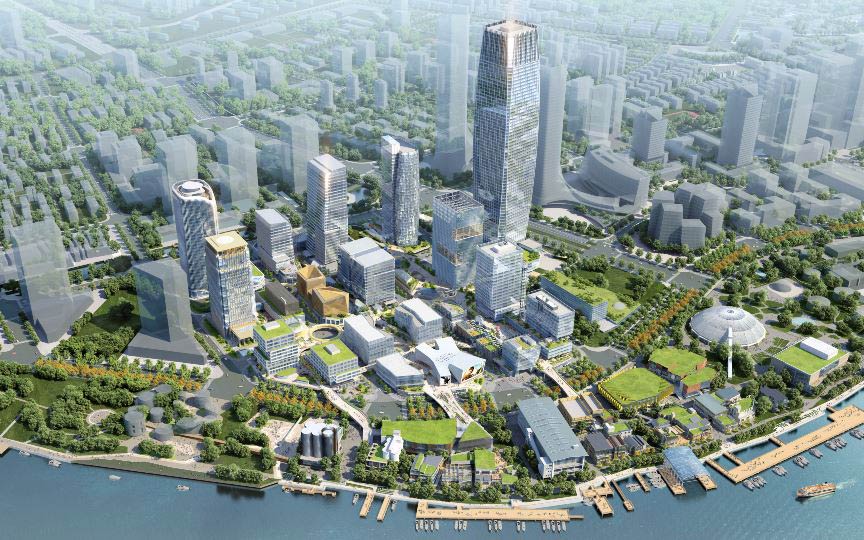
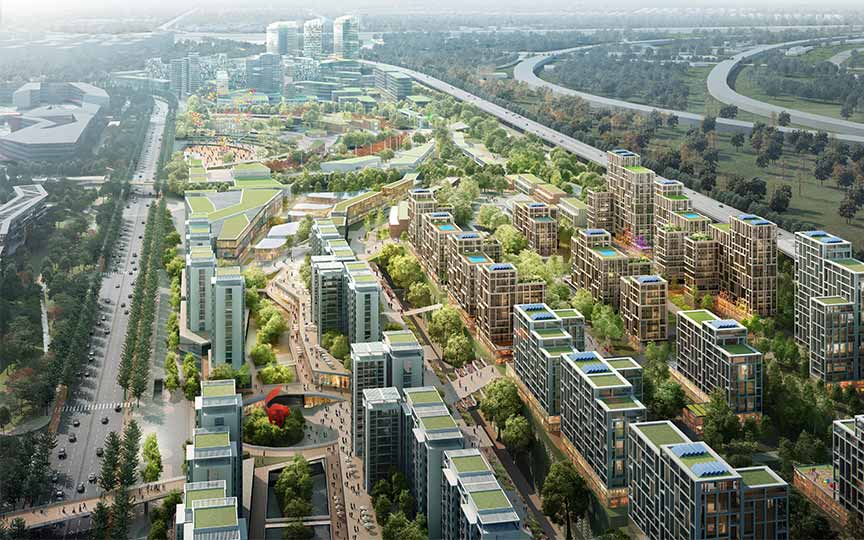
Furthermore, in suburbs and regional cities, it is expected that business spaces will concentrate in locations that are close to daily life and offer high levels of amenities. Specifically, we can expect to see the emergence of "micro business districts," which are small-scale, mixed-use urban industrial areas where various urban functions and natural elements are intertwined, in the centers of suburbs and regional cities, or in multiple locations. At the heart of these districts, there will inevitably be green, human-scale plazas and streets that serve as centers of activity and interaction.
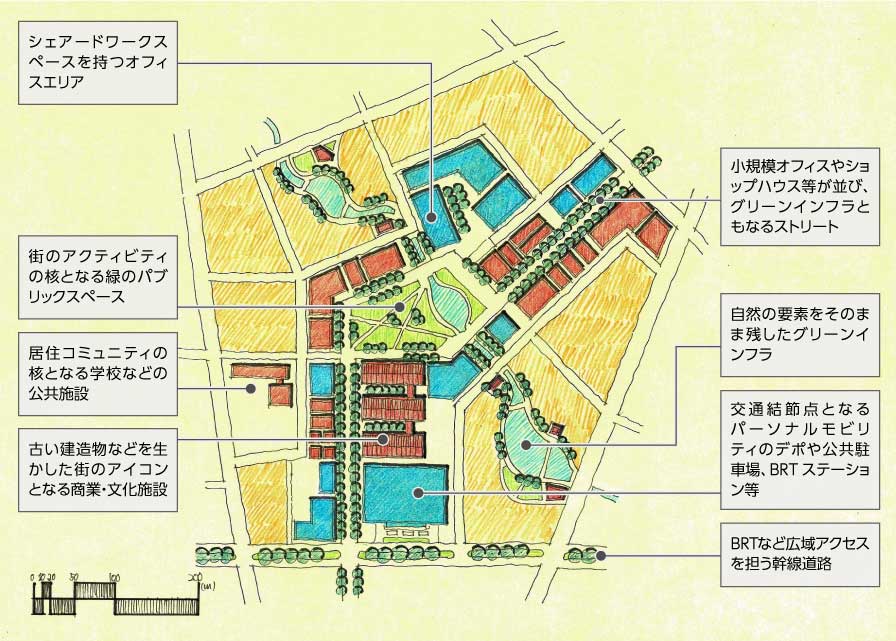 Image of a micro-business district
"Green Wellness Cities" aim to enhance social well-being through the coexistence of nature and urban life. We intend to continue communicating its lasting value to society through concrete proposals.
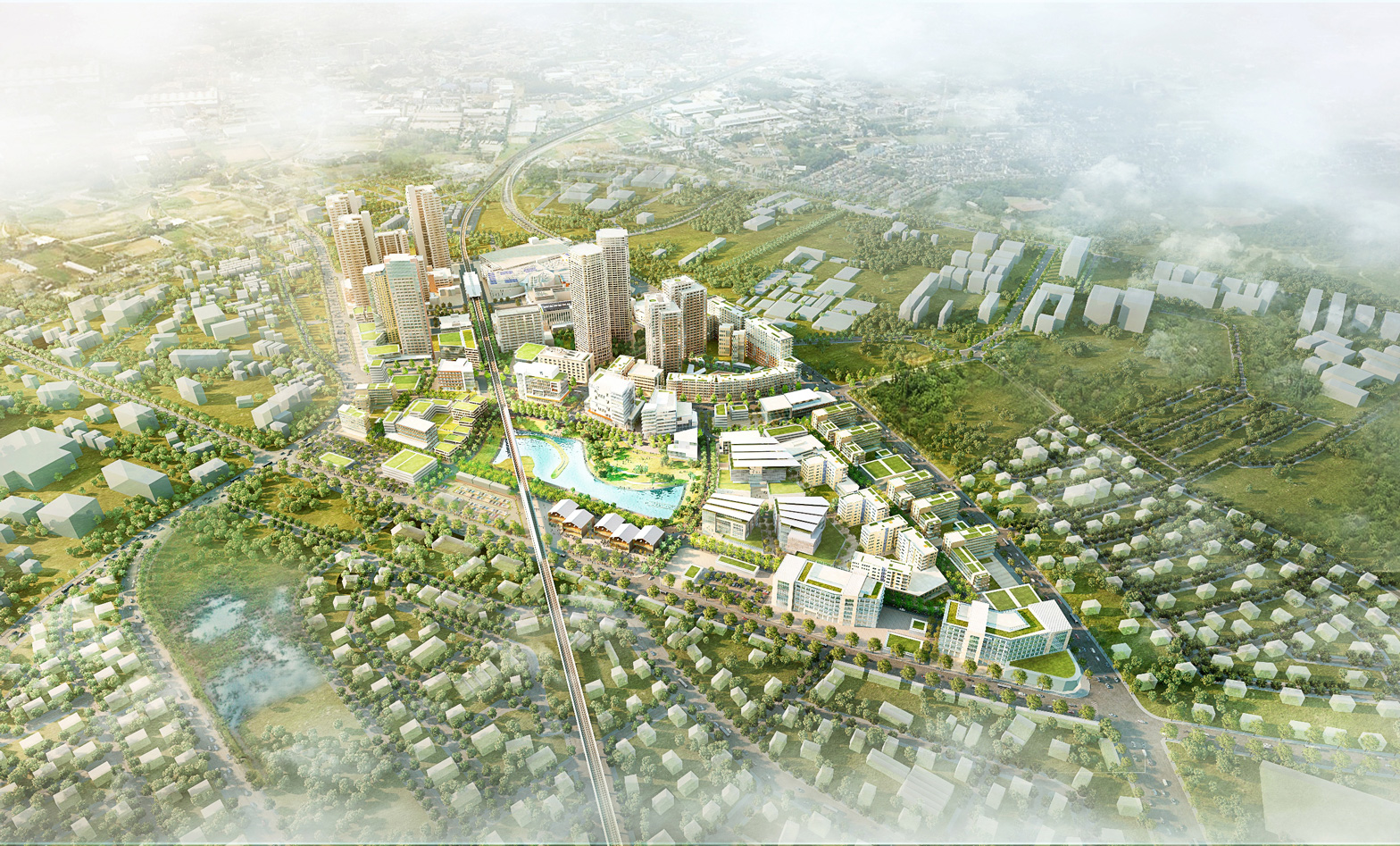 Kashiwanoha Innovation Campus District