
Towards a new society brought about by the coronavirus
~A "loose design" that fosters rich encounters, interactions, and new innovations~
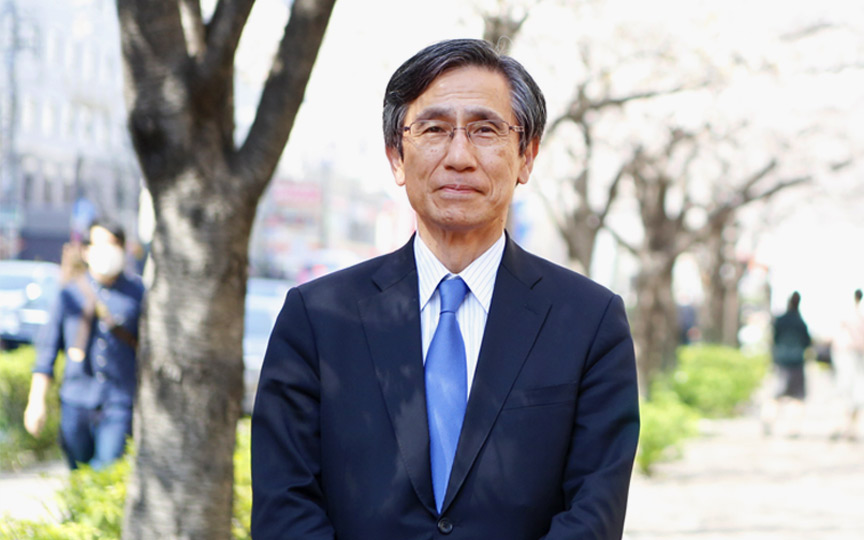
Executive Vice President Representative Member of the Board, Head of the Client Relations & Solutions Division
Katsuya Kawashima
(Title as of the time of publication)
Katsuya Kawashima
(Title as of the time of publication)
SCROLL DOWN
Since primitive times, humans have gathered, met, and stimulated each other, exchanging trust, empathy, and resonance through their bodies and five senses, thereby generating innovation at various levels.
In the post-COVID era, shouldn't we take this opportunity to deeply re-examine its meaning?
The perspective of "designing looseness" might be a helpful hint.



 Executive Vice President Representative Member of the Board, Head of the Client Relations & Solutions Division
Katsuya Kawashima
(Title as of the time of publication)
Things I felt while staying home
The global spread of COVID-19 has severely restricted our lifestyles over the past few months. However, things we previously thought were impossible have suddenly become possible.
The COVID-19 pandemic accelerated the implementation of the "Society 5.0" concept, which the government had been promoting, encompassing future lifestyles where people can communicate without direct face-to-face interaction, such as teleworking, online medical consultations, and distance learning. As a result, many people "stayed home," completing most of their daily lives from their homes.
The evolution of IT will support this, and the distance between people will be overcome dramatically in the future.
However, I can't help but feel that this evolved lifestyle is missing something very important.
Since prehistoric times, humans have evolved by "gathering." Humans cannot exist alone; they have formed groups of some kind to create civilization and culture. By gathering, meeting, and stimulating each other, humans have exchanged trust, empathy, and resonance through their bodies and five senses, and it seems that they have generated innovation at various levels.
And that gene continues to be passed down through generations to this day.
Perhaps the biggest difference between humans and AI, the gap that cannot be bridged, lies in the presence or absence of these fundamental sensibilities: trust, empathy, and resonance.
We cannot forget this.
From now on, we will undoubtedly be able to freely choose our lifestyles depending on the day and time, such as working remotely or bringing children to work. We will break away from the way of life where we simply gather in the same place at the same time and do fixed activities. The range of choices will expand dramatically.
The concept of a "30-minute metropolitan area" is beginning to emerge, envisioned as a field for urban life where people can freely choose and enjoy "places" according to their purpose, with multiple "towns" possessing unique characteristics and cultures linked together in a mosaic-like fashion.
The COVID-19 pandemic accelerated the implementation of the "Society 5.0" concept, which the government had been promoting, encompassing future lifestyles where people can communicate without direct face-to-face interaction, such as teleworking, online medical consultations, and distance learning. As a result, many people "stayed home," completing most of their daily lives from their homes.
The evolution of IT will support this, and the distance between people will be overcome dramatically in the future.
However, I can't help but feel that this evolved lifestyle is missing something very important.
Since prehistoric times, humans have evolved by "gathering." Humans cannot exist alone; they have formed groups of some kind to create civilization and culture. By gathering, meeting, and stimulating each other, humans have exchanged trust, empathy, and resonance through their bodies and five senses, and it seems that they have generated innovation at various levels.
And that gene continues to be passed down through generations to this day.
Perhaps the biggest difference between humans and AI, the gap that cannot be bridged, lies in the presence or absence of these fundamental sensibilities: trust, empathy, and resonance.
We cannot forget this.
From now on, we will undoubtedly be able to freely choose our lifestyles depending on the day and time, such as working remotely or bringing children to work. We will break away from the way of life where we simply gather in the same place at the same time and do fixed activities. The range of choices will expand dramatically.
The concept of a "30-minute metropolitan area" is beginning to emerge, envisioned as a field for urban life where people can freely choose and enjoy "places" according to their purpose, with multiple "towns" possessing unique characteristics and cultures linked together in a mosaic-like fashion.
"Designing looseness"
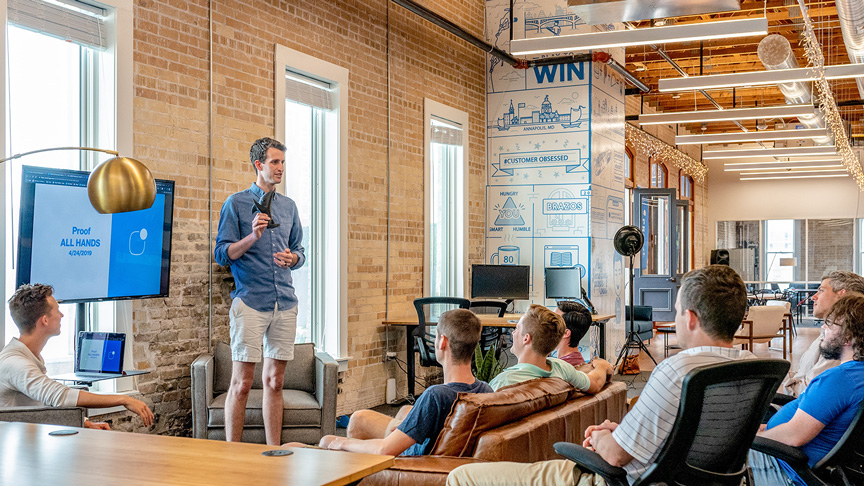
On the other hand, I believe that offices and schools of the future will be reborn as valuable spaces that create genuine value by bringing people together and interacting directly, enabling experiences that can only be had there.
This represents the emergence of "spaces" where one can gain a rich sense of empathy and resonance simply by going there, even without a specific purpose. The "leisure" and "playfulness" of space created by remote work and teleworking will make this possible.
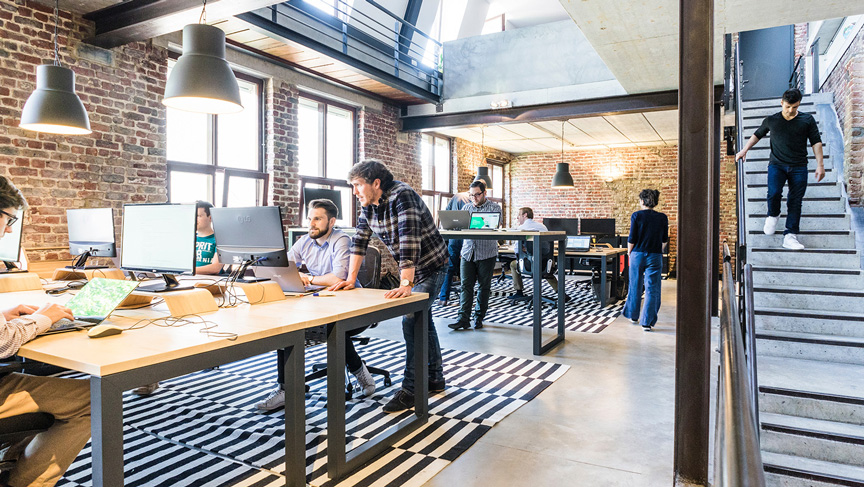
It's an office, yet it feels like a home, a school, a restaurant—in other words, a slightly "loose" space that can transform into any of these. It wouldn't be surprising if such an ideal workplace or school, the kind we've vaguely dreamed of, were to actually appear.
Perhaps the era of "designing looseness" is coming.
This represents the emergence of "spaces" where one can gain a rich sense of empathy and resonance simply by going there, even without a specific purpose. The "leisure" and "playfulness" of space created by remote work and teleworking will make this possible.
It's an office, yet it feels like a home, a school, a restaurant—in other words, a slightly "loose" space that can transform into any of these. It wouldn't be surprising if such an ideal workplace or school, the kind we've vaguely dreamed of, were to actually appear.
Perhaps the era of "designing looseness" is coming.
-
 ©unsplash.com
-
 ©www.useproof.com
By the way, we call the approach of designing with people's feelings and actions at the center of it "Activity Design." We believe that realizing this design methodology is extremely important for creating truly enriching encounters, interactions, and innovations, and we are currently beginning to work on it in various fields.
The core concepts are safety, security, and health.
To change the subject slightly, when planning a city or building, we usually set certain preconditions. Then, we create it through various calculations to ensure that it functions extremely efficiently within those constraints.
However, the COVID-19 pandemic has drastically altered these assumptions. The "unforeseen natural disasters" we often hear about these days could be considered a similar phenomenon. However, we cannot always dismiss such events as simply "unforeseen." Nor can we realistically always pursue and construct plans based on the greatest possible risks and conditions.
In the planning process itself, isn't it possible to create a "loose" plan that doesn't relentlessly pursue only one solution? In other words, isn't it possible to incorporate a certain degree of "flexibility" or "play"?
Would it be possible to incorporate several intermediate modes into urban areas and buildings, ranging from a normal mode to an emergency mode, allowing for flexible operation based on safety, security, and health considerations depending on the situation?
Wouldn't it be possible to create a safer living environment by gently controlling factors such as the density of people and the sense of closeness to nature? I believe that a "loose" approach to planning—one that incorporates diverse and complex functions while using advanced sensing to switch modes according to the situation—is what will be needed in future urban planning, architecture, and spatial design.
However, the COVID-19 pandemic has drastically altered these assumptions. The "unforeseen natural disasters" we often hear about these days could be considered a similar phenomenon. However, we cannot always dismiss such events as simply "unforeseen." Nor can we realistically always pursue and construct plans based on the greatest possible risks and conditions.
In the planning process itself, isn't it possible to create a "loose" plan that doesn't relentlessly pursue only one solution? In other words, isn't it possible to incorporate a certain degree of "flexibility" or "play"?
Would it be possible to incorporate several intermediate modes into urban areas and buildings, ranging from a normal mode to an emergency mode, allowing for flexible operation based on safety, security, and health considerations depending on the situation?
Wouldn't it be possible to create a safer living environment by gently controlling factors such as the density of people and the sense of closeness to nature? I believe that a "loose" approach to planning—one that incorporates diverse and complex functions while using advanced sensing to switch modes according to the situation—is what will be needed in future urban planning, architecture, and spatial design.
Coexistence of nature and humanity
It is said that the history of humankind is essentially a battle against viruses. Looking back, it seems that the evolution of civilization, such as when humankind cleared wilderness land and began agriculture, ultimately disrupted the natural world and attracted viruses, and that globalization has led to the accelerating spread of infections.
From the perspective of the history of the relationship between nature and humankind, the current COVID-19 pandemic must be viewed not as a sudden event, but as part of a continuous chain. The fight against the coronavirus is far from over.
However, this is also a great opportunity for significant growth.
Rather than trying to completely conquer nature as a whole, including viruses, we should sometimes accept it, sometimes let it pass, and sometimes block it out. A "loose design" that expresses a flexible attitude of living in harmony with both gentle and harsh nature—these are perhaps the foundations of sustainability going forward.
From the perspective of the history of the relationship between nature and humankind, the current COVID-19 pandemic must be viewed not as a sudden event, but as part of a continuous chain. The fight against the coronavirus is far from over.
However, this is also a great opportunity for significant growth.
Rather than trying to completely conquer nature as a whole, including viruses, we should sometimes accept it, sometimes let it pass, and sometimes block it out. A "loose design" that expresses a flexible attitude of living in harmony with both gentle and harsh nature—these are perhaps the foundations of sustainability going forward.
* "Beyond Covid-19: Society, Cities, and Architecture" is a series. Going forward, architects, planners, engineers, consultants, and others will regularly share their visions from their respective professional perspectives.