
"Hajimari-ichi": A Social Experiment to Create a Vibrant Community Through Public-Private Partnerships
SCROLL DOWN
From September 22 to October 16, 2022, “Hajimari-no-Ichi,” a social experiment aimed at creating a vibrant atmosphere by testing a wide variety of uses in an actual street space and exploring future approaches to the use and management of street space, was held on Chuo-dori in Yokkaichi City, Mie Prefecture. NAD was responsible for planning and directing the social experiment, communicating with vendors and exhibitors, and developing the public relations strategy.



Background of the Initiative
近鉄四日市駅とJR四日市駅を結ぶ中央通りの全長約1.6kmの区間において、車線数を8~6車線から4~2車線に削減し、「ニワミチよっかいち」というコンセプトのもと居心地が良く歩きたくなる空間づくりとしてまちなかの回遊を支える歩行空間を整備していく。今回社会実験を行った区間を含む国道1号~JR四日市駅にかけては、車道を集約することで生まれる歩行者のための空間を公園として整備し、近鉄四日市駅周辺で今は点在しているバス乗り場を集約するバスタが国直轄事業として整備されるほか、次世代モビリティの導入空間やスマートシティ機能を支える情報基盤の受け皿として、最先端の取り組みのショーケースとなる空間づくりを行うことをうたっている。また、この計画は中央通りを中心とした中心市街地の再構築を目指すものであることから、近隣の市民公園、鵜の森公園、諏訪公園の再編計画との連携や、四日市港の賑わいづくり「四日市みなとまちづくりプラン」が進められていることから、港方面への動線づくりとも連携をしていく形となっている。
「ニワミチよっかいち」という言葉には、緑とひとの豊かな関係をともに育んでいきながら、自由に立ち寄り、気兼ねなく時を過ごせる「ニワ」の役割に加え、歩行者中心の考え方に基づきつつ、市民が自分の空間として使い、様々な出来事に出会い、歩きたくなるような「ミチ」の役割を担っていきたいという意味が込められている。 “ニワミチ”の実現は、都市の発展の過程で公害を経験してきた四日市市が、環境先進都市として今まで以上に環境に配慮し、人々に楽しまれ、選ばれ、住みたくなるまちになる「リーディングプロジェクト」となるものである。
そういった具体の整備方針やコンセプトを踏まえた空間活用の可能性を検証することが社会実験の主たる目的である。
(参考リンク:中央通り再編関係者調整会議)
Launching a Task Force That Includes Citizens as Members
Since Reiwa 4, the committee has held a total of five meetings to discuss various issues, including the scope of the experiment, the program offerings, the application process, and the public relations plan.
Four Objectives
1. To test new ways of utilizing outdoor spaces
2. To identify potential future operators
3. To inform citizens about the development plan
4. To establish connections with Yokkaichi’s existing industries
Regarding “2. Identifying potential future operators,” since part of the developed space is intended to be operated under a Park-PFI model in the future, this objective implies verifying through the experiment whether the location has commercial potential.
Regarding “3. Raising public awareness of the development plan,” the goal was to allow visitors to experience firsthand how the tree-lined central median—a lush green space that had previously gone unused—is being transformed into a space for the public.
Four Zones to Test Your Future
In the event area, we decided to solicit events from local organizations every weekend to verify operations related to fixture layouts and the required size of storage space.
In the Street Area, we decided to explore ways to create spaces within the future sidewalk plan that make the most of the programs of the buildings along the street and their relationship with existing trees.
In the Park Area and the Culture & Challenge Area, we decided to explore the potential for utilizing the space along the camphor tree-lined avenue—which will be retained in future plans—as a public space from the perspectives of comfort and management.
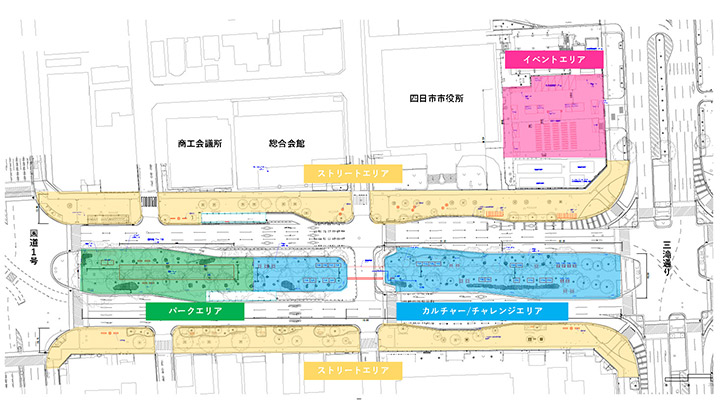 Zoning Map for the Social Experiment
Citizen-Initiated Programs
A Skate Park Built with Local Skaters
When determining the scale and planning the “sections”—the structures designed for skateboarding—we sought the cooperation of local skaters and park builders, aiming to create a full-fledged park that, despite being temporary, could be enjoyed by everyone from beginners to professionals.
Getting Started
The logo was created by the “Komono Design Institute,” a design firm based in Komono City, Mie Prefecture. It features multiple vessels modeled after Banko-yaki—one of Yokkaichi’s traditional crafts—arranged side by side to represent the diverse collection of vendors.
The “Gate of Beginnings” set up at the venue featured art panels created by local children from an art class, who painted the logo on plywood boards.
-
-
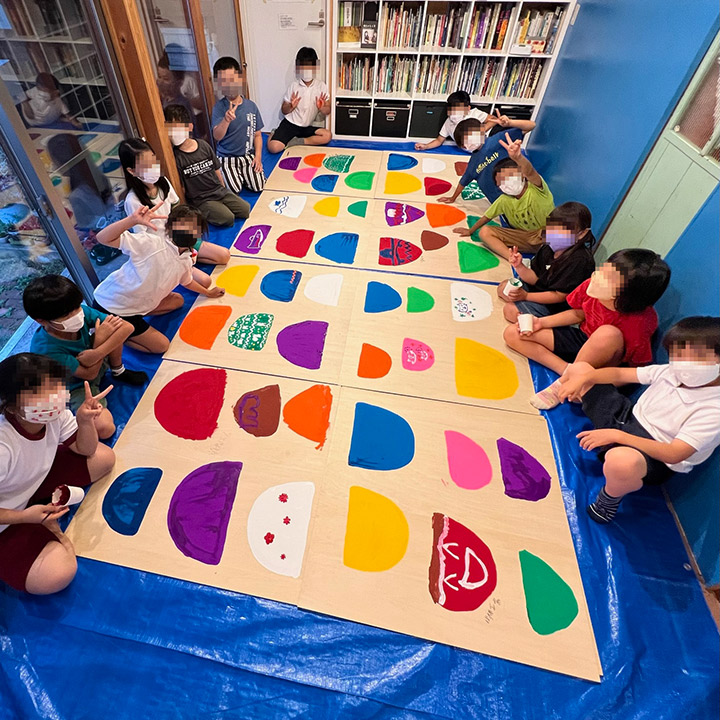 Scenes from the Panel-Making Workshop
Using the space while envisioning the future
In the event area, activities organized by local companies and organizations were held every weekend, providing an opportunity to explore new ways to utilize outdoor spaces.
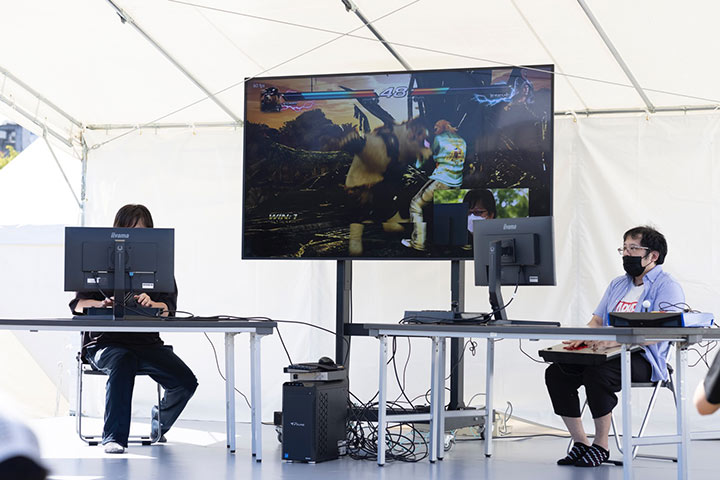 Scenes from an esports event
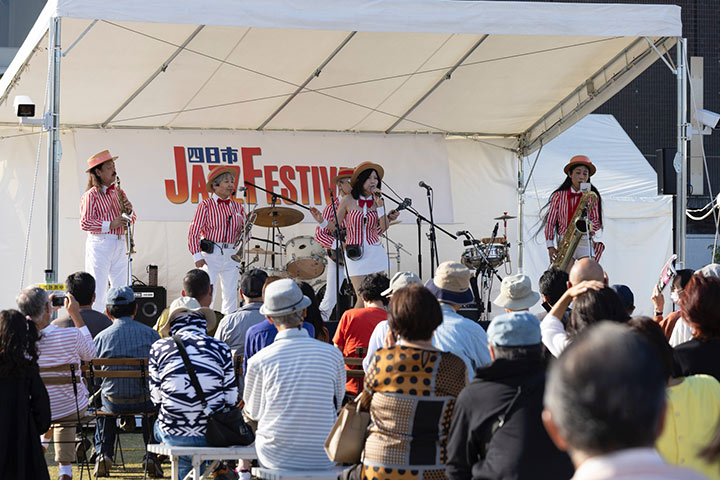 Scenes from the Jazz Event
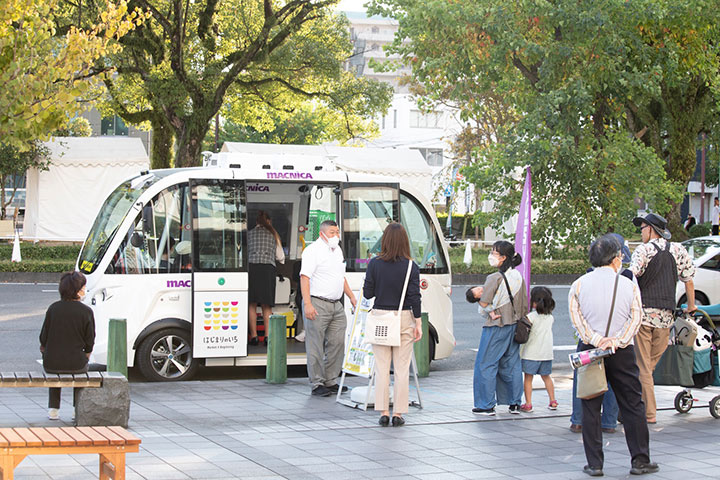 Scenes of Passengers Getting On and Off Autonomous Vehicles
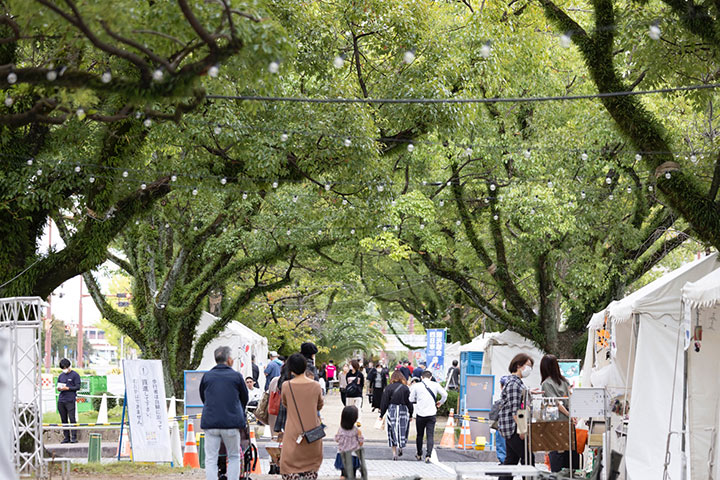
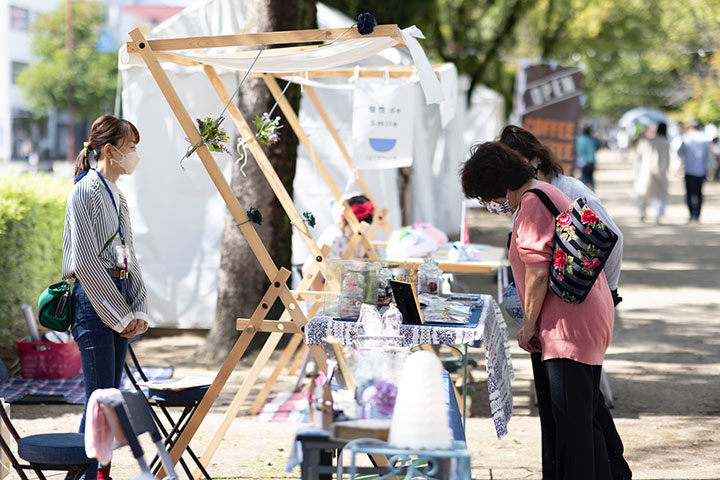 Communication Between Vendors and Visitors
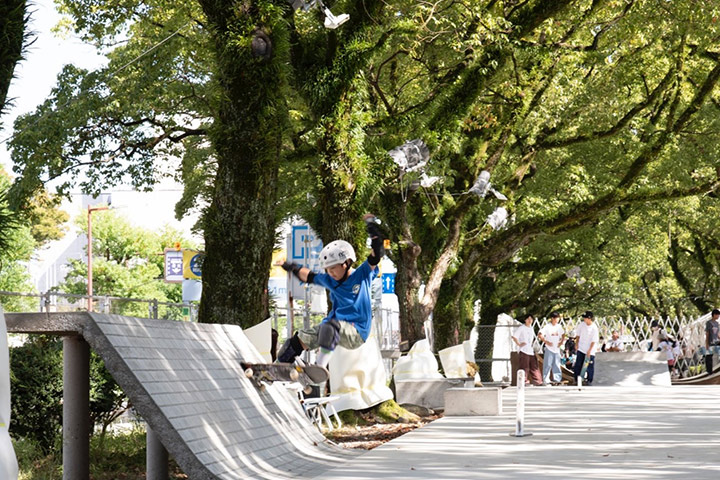 A boy skating at a skate park
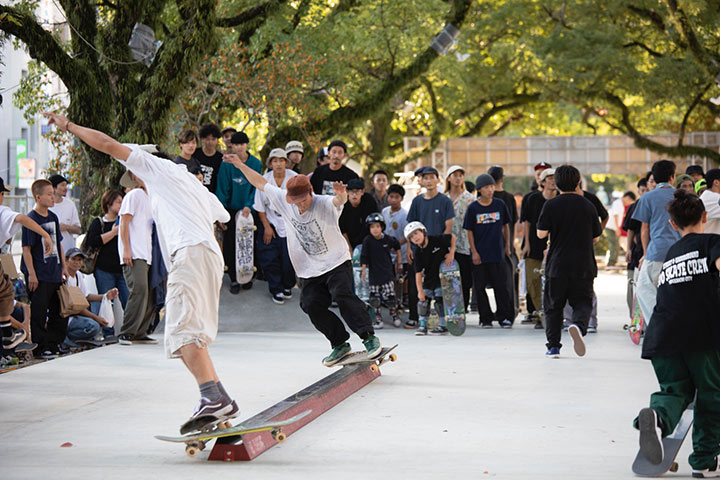 Scenes from the Jam Session Event
Toward Sustainable Solidarity
Photo: Masami Fujii *The fourth photo, “Scene from the Panel-Making Workshop,” is courtesy of Nikken Sekkei
Reprinted from the Nikken Activity Lab (NAD) website