

A Clear Explanation of the Benefits of Using BIM from the Client’s Perspective
"BIM Implementation Guidebook" Published
Promoting construction digital transformation (DX) through BIM—which enables centralized management of all stages of a building’s construction—to help alleviate labor shortages
PRESS RELEASE
2023.03.31
Nikken Sekkei Ltd. (Headquarters: Chiyoda-ku, Tokyo; Representative Director: President and CEO: Atsushi Omatsu) has produced “BIM USES DEFINITIONS Vol. 1: A Simple Guide to BIM-Based Processes and Tasks,” which clearly outlines the benefits of BIM for clients, amid growing recognition of the need to improve productivity through digital transformation (DX) in Japan’s construction sector.The creation and effectiveness verification of this guidebook were conducted as part of the Ministry of Land, Infrastructure, Transport and Tourism’s (MLIT) BIM Model Project for Reiwa 4, and the verification results will be published on the MLIT and Nikken Sekkei websites.
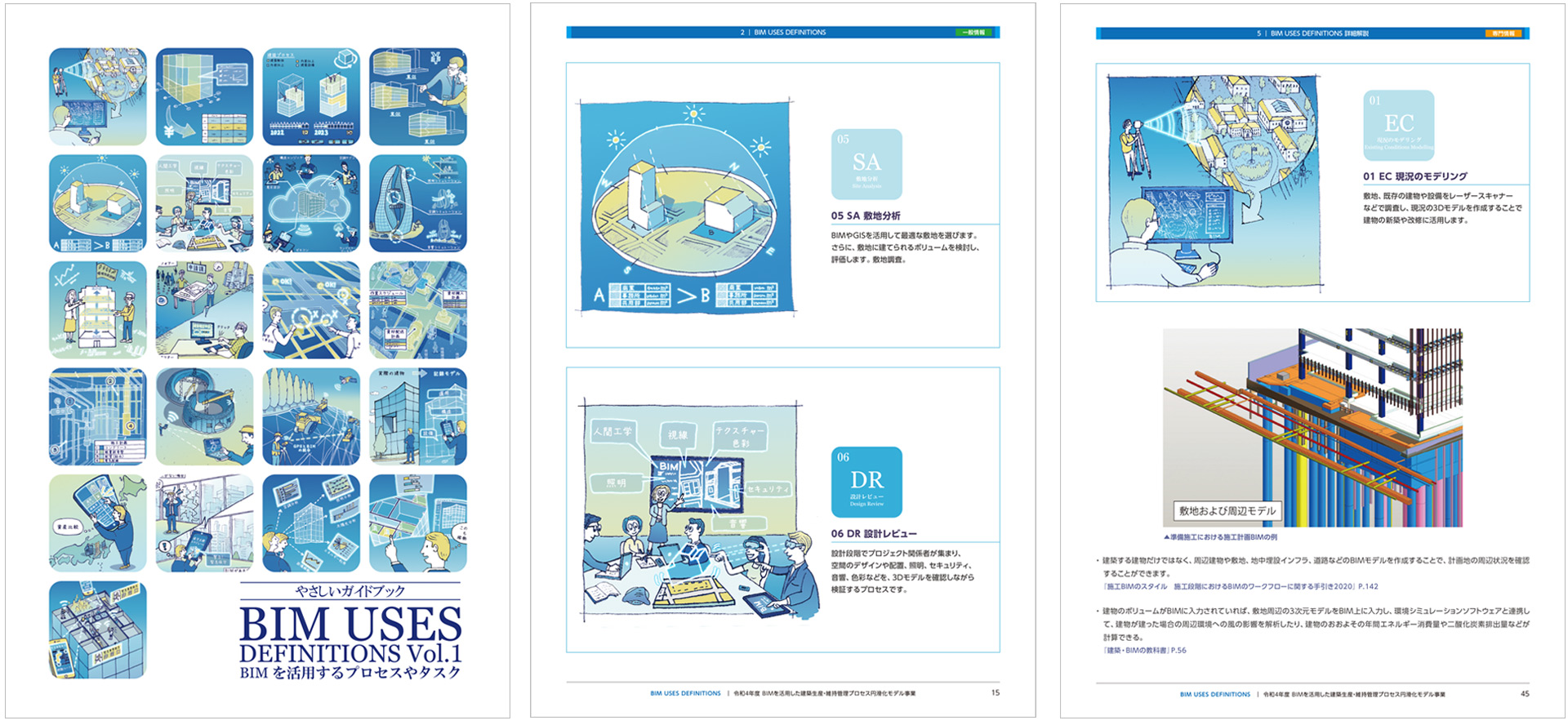 "BIM USES DEFINITIONS Vol. 1: A Simple Guide to BIM Processes and Tasks"
By expanding the use of BIM among clients, we anticipate improved productivity in building maintenance and the preservation and enhancement of real estate value.
In a society facing population decline, labor shortages are becoming increasingly severe in the construction sector as well, making the improvement of productivity through digital transformation (DX) an urgent priority.In particular, regarding BIM, the budget for BIM-related projects was increased 40-fold in the fiscal year 2022 supplementary budget, and the Ministry of Land, Infrastructure, Transport and Tourism has set specific BIM achievement targets for fiscal year 2025—demonstrating the emphasis placed on accelerating its adoption.
When not only “contractors”—such as designers and builders—but also building “clients” utilize BIM to accumulate and understand building information data, it not only reduces the labor required for post-completion maintenance but also facilitates planning to maintain and enhance property value.On the other hand, the adoption rate of BIM within the construction industry remains at just 48.4% (as of December 2022), and its adoption by clients in particular remains a challenge. To further promote the use of BIM, it is necessary to create an environment where clients can understand the specific benefits of BIM.
When not only “contractors”—such as designers and builders—but also building “clients” utilize BIM to accumulate and understand building information data, it not only reduces the labor required for post-completion maintenance but also facilitates planning to maintain and enhance property value.On the other hand, the adoption rate of BIM within the construction industry remains at just 48.4% (as of December 2022), and its adoption by clients in particular remains a challenge. To further promote the use of BIM, it is necessary to create an environment where clients can understand the specific benefits of BIM.
A guidebook based on domestic BIM case studies that is intuitive and easy for clients to understand
In light of these challenges, in May 2022, Nikken Sekkei published the handbook “BIM USES DEFINITIONS” to support the sharing of BIM utilization methods between contractors and clients and to promote the use of BIM across the industry.to support the sharing of BIM utilization methods between contractors and clients and to promote industry-wide BIM adoption, Nikken Sekkei analyzed the content of “Appendix D: BIM USES DEFINITIONS” from “The New Zealand BIM Handbook” published by BIMinNZ in New Zealand and produced and released the handbook “BIM USES DEFINITIONS Vol. 1: Processes and Tasks for Utilizing BIM,” which was translated to suit the Japanese context.
Subsequently, as part of the Ministry of Land, Infrastructure, Transport and Tourism’s BIM Model Project for Reiwa 4, we compiled the accompanying explanatory guide, “BIM USES DEFINITIONS Vol. 1: Processes and Tasks for Utilizing BIM—An Easy-to-Understand Guidebook.”This guidebook addresses the technical terminology found in the aforementioned handbook by providing explanations through illustrations and text, as well as examples based on domestic Japanese cases. It is designed to facilitate intuitive understanding even for clients without specialized knowledge and to further promote the adoption of BIM among clients.
Moving forward, Nikken Sekkei will continue to contribute to the widespread adoption and promotion of BIM through various approaches—including the handbook published in 2022 and this newly released guidebook—to advance digital transformation (DX) in Japan’s architectural sector.
Subsequently, as part of the Ministry of Land, Infrastructure, Transport and Tourism’s BIM Model Project for Reiwa 4, we compiled the accompanying explanatory guide, “BIM USES DEFINITIONS Vol. 1: Processes and Tasks for Utilizing BIM—An Easy-to-Understand Guidebook.”This guidebook addresses the technical terminology found in the aforementioned handbook by providing explanations through illustrations and text, as well as examples based on domestic Japanese cases. It is designed to facilitate intuitive understanding even for clients without specialized knowledge and to further promote the adoption of BIM among clients.
Moving forward, Nikken Sekkei will continue to contribute to the widespread adoption and promotion of BIM through various approaches—including the handbook published in 2022 and this newly released guidebook—to advance digital transformation (DX) in Japan’s architectural sector.
Created and Published an “Easy-to-Understand Guidebook” as Part of the Ministry of Land, Infrastructure, Transport and Tourism’s BIM Model Project
Since “BIM USES DEFINITIONS Vol. 1: Processes and Tasks for Utilizing BIM” contained many technical terms for clients and was based on case studies from New Zealand, Nikken Sekkei set out to create a guidebook with content that would be intuitive and easy to understand for clients, as well as more practical for use in Japan.In particular, to analyze the benefits for clients by building type—an area that had previously been difficult to understand—we conducted interviews with individuals involved in actual BIM projects and incorporated the results into the guide. We also organized BIM application methods expected to be useful across 12 building types, including offices and public facilities.In addition, the guidebook explains 21 BIM application methods using easy-to-understand illustrations and text, and includes concrete examples that are easy for contractors to understand.
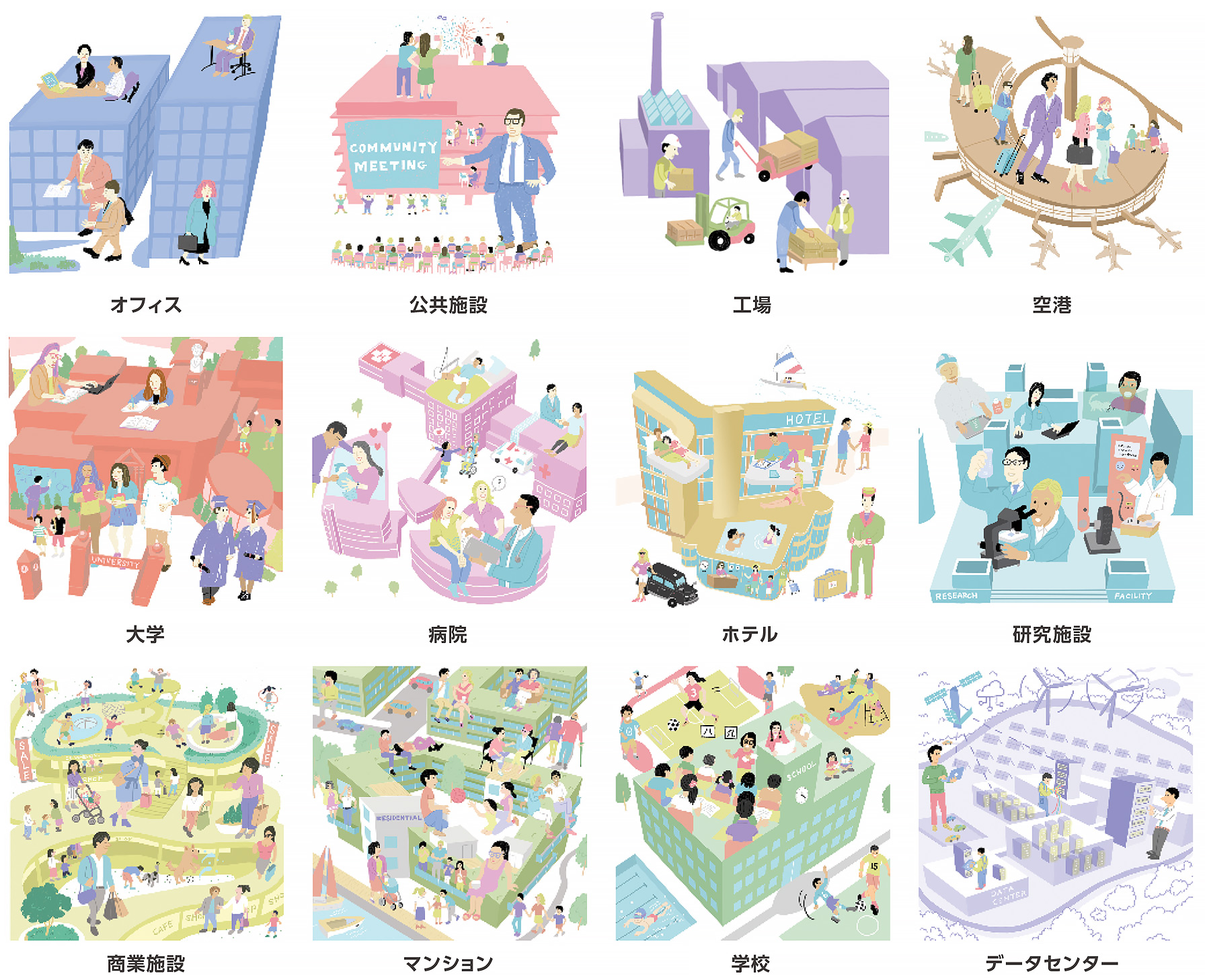
Promoting Digital Transformation in the Construction Sector by Utilizing the "Easy-to-Understand Guidebook" in Life Cycle Consulting Services
"BIM USES DEFINITIONS Vol. 1: A Simple Guide to BIM Processes and Tasks" and the results of its implementation have been compiled into the "BIM USES DEFINITIONS Verification Results Report," which is available for download on the websites of the Ministry of Land, Infrastructure, Transport and Tourism and Nikken Sekkei.
The “Easy-to-Understand Guidebook” may be reused for the purpose of promoting the use of BIM in architectural design, construction, and facility management, provided that the source is clearly cited.Not only does it serve as a reference for clients seeking to understand BIM, but by explicitly citing the “Easy Guidebook” in the EIR, you can clearly outline the BIM usage methods required by the client. Furthermore, it can be utilized in lifecycle consulting services that provide BIM consulting to clients, covering the entire process from planning and design through construction to maintenance and management.
What Is “BIM USES DEFINITIONS Vol. 1: Processes and Tasks for Utilizing BIM”?
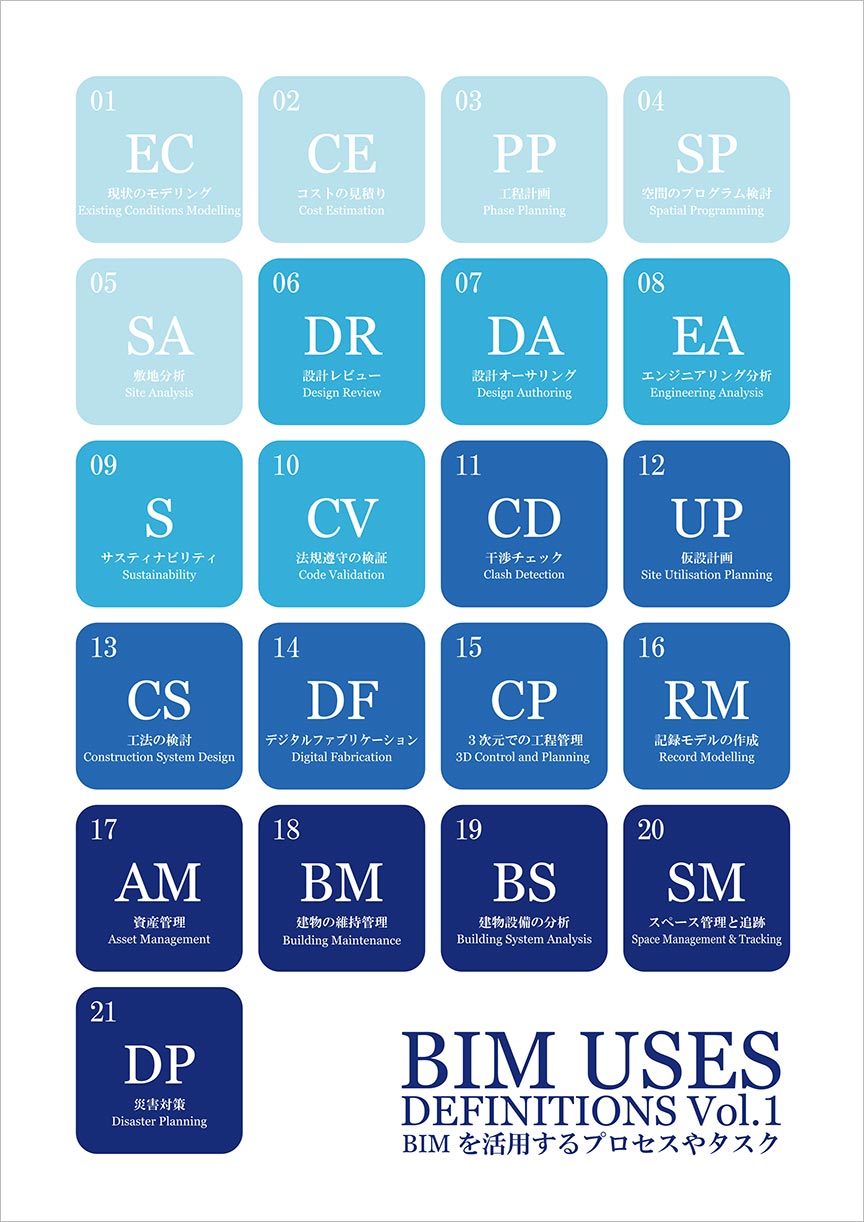
This handbook was produced and published by Nikken Sekkei after analyzing the content of “Appendix D: BIM Uses Definitions”—an appendix to “The New Zealand BIM Handbook” created by BIMinNZ in New Zealand—and translating it to suit the Japanese context.This handbook enables clients to select BIM usage methods from a list of 21 items and document them in a document called the “EIR (Employer’s Information Requirements),” thereby accurately communicating the intended uses to contractors. It has been utilized not only in New Zealand but also in countries around the world.
"BIM USES DEFINITIONS Vol. 1: Processes and Tasks Involving the Use of BIM" Download Link
What is BIM?
BIM stands for Building Information Modeling. It is a system for creating building information models that combine 3D geometric data generated on a computer with attribute information about the building—such as room names and areas, specifications and performance of materials and components, and finishes.
BIM enables centralized management of information across all stages of a building’s lifecycle—from design through construction to maintenance—allowing for the smooth execution of various simulations. Furthermore, it facilitates communication among stakeholders by making it easier to share a common vision of the building. Additionally, the data—which remains usable even after the building is completed—enables more efficient operation and maintenance.In recent years, amid a declining labor force in the construction sector, the Ministry of Land, Infrastructure, Transport and Tourism has been leading efforts to promote the use of BIM to improve productivity through digital transformation (DX).
BIM enables centralized management of information across all stages of a building’s lifecycle—from design through construction to maintenance—allowing for the smooth execution of various simulations. Furthermore, it facilitates communication among stakeholders by making it easier to share a common vision of the building. Additionally, the data—which remains usable even after the building is completed—enables more efficient operation and maintenance.In recent years, amid a declining labor force in the construction sector, the Ministry of Land, Infrastructure, Transport and Tourism has been leading efforts to promote the use of BIM to improve productivity through digital transformation (DX).
About Nikken Sekkei
Nikken Sekkei is a professional services firm engaged in architectural design and supervision, urban design, and related research, planning, and consulting services.For 120 years since our founding in 1900, we have been committed to creating value through “social and environmental design,” which seeks solutions to both explicit and latent social challenges, in order to meet the needs of society and the diverse requests of our clients.We have been involved in a wide range of projects in Japan, China, ASEAN, and the Middle East, and in recent years have expanded our operations to India, Russia, and Europe. In March 2021, we issued a “Climate Emergency Declaration” as part of our efforts toward a decarbonized society.
inquiry
株式会社日建設計 広報室 Tel. 03-5226-3030 e-mail:webmaster@nikken.jp
SHARE