

New Hub “PYNT Takebashi” Opens to Guide Ideas for Solving Social Issues Toward “Social Implementation”
PYNT Begins Phase 2 Activities at Two Locations: “Encounter” (PYNT Tokyo) and “Practice” (PYNT Takebashi)
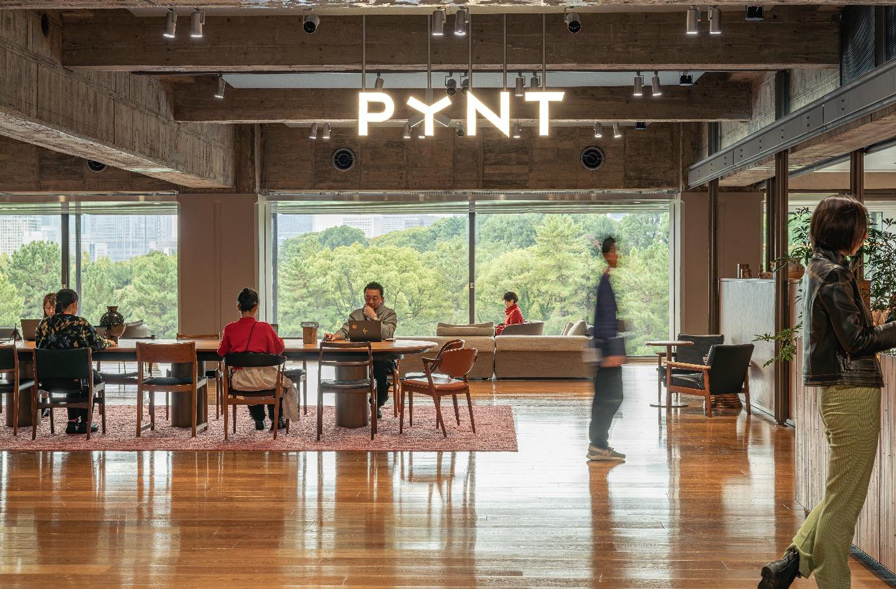
As a breakthrough to this challenge, PYNT Takebashi was established as a hub focused on supporting the “social implementation” phase of ideas for solving social issues.While PYNT Tokyo has served as the “entry point” (facilitating connections between people and fostering community), PYNT Takebashi functions as the “exit point” (commercialization and a venue for practical implementation), guiding ideas toward social implementation.Through the synergies created by the collaboration between these two hubs, Nikken Sekkei aims to accelerate the process of solving social issues through co-creation and contribute to society.
-
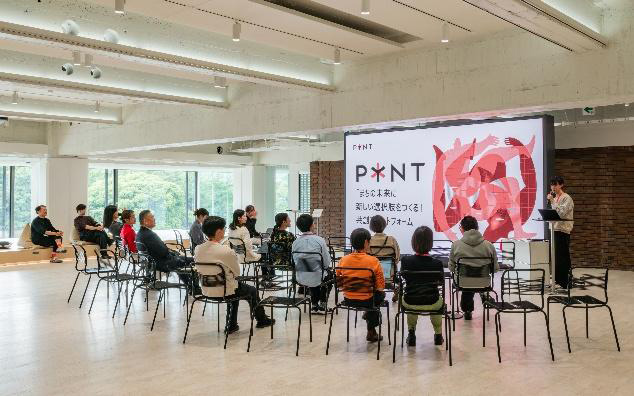 "Agora," a workshop space where practical events and co-creation sessions aimed at social implementation are held.
-
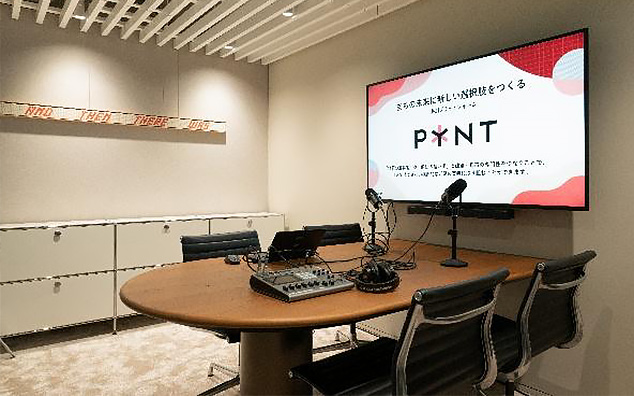 "Radio Room," a platform for sharing project insights and results.
Expanding the circle of co-creation and fostering new partnerships -
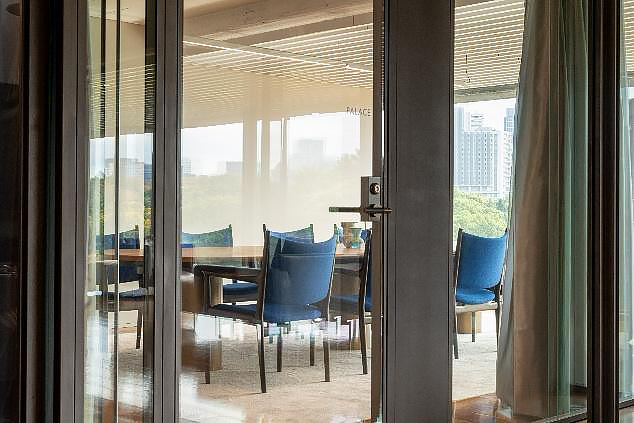 The “Palace Room,” designed for highly confidential discussions with external partners, supports critical decision-making for business development.
-
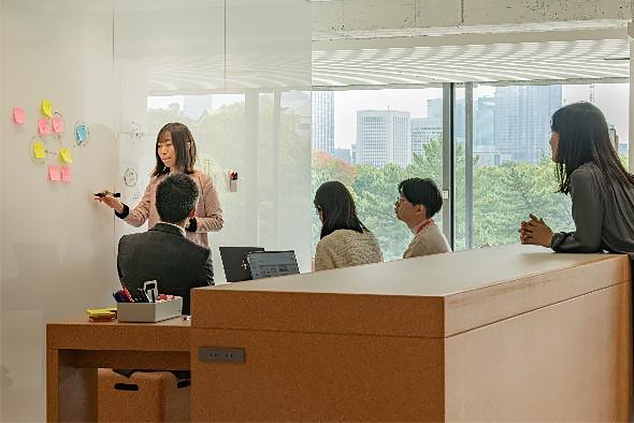 The "Board Area," which allows you to track and visualize the discussion process.
Accelerates discussions that turn ideas into concrete business plans
Why Do We Need a Center That Focuses on Supporting “Social Implementation” Right Now?
Guided by this philosophy, Nikken Sekkei has established “Evolution into a Social Environment Design Platform” as the vision for its Mid-Term Management Plan (2021–2025). In April 2023, the firm opened PYNT Tokyo as a “gateway” to co-creation, and through two years of activities, has generated numerous projects.Building on these achievements, PYNT’s activities are now transitioning into its “Phase 2.”We strongly recognize that, in order to guide the diverse projects born from PYNT toward truly “solving social issues,” an environment is needed that prioritizes support for the “exit” function—that is, the “social implementation” of ideas—which takes ideas and roots them in society, nurturing them into sustainable activities. This realization led to the opening of PYNT Takebashi.
An Overview of PYNT: End-to-End Support from Initial Encounter to Social Implementation
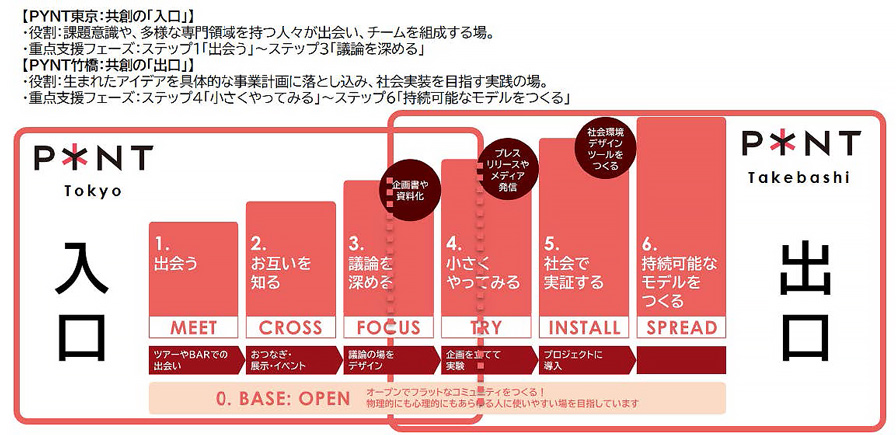
Three Key Features of PYNT Takebashi That Accelerate the “Social Implementation” of Ideas
① Assignment of “Co-creation Facilitators”—experts who provide support from conception through implementation
To address the various challenges projects face during the social implementation phase, we assign “Co-creation Facilitators”—specialists who serve as a bridge from idea generation to the final goal—to provide ongoing support. This is a unique initiative based on our company’s insights—gained through joint research with Fireplace Co., Ltd.*, which has hands-on experience in co-creation support—that revealed a “lack of mid-level personnel” is a key factor causing many projects to stall.
② Promoting Further Collaboration with Co-creation Partners Necessary for the Implementation Phase
We will promote collaboration with external partners by serving as a hub that connects the funding, expertise, and networks essential for the growth of co-creation projects.For example, through the social entrepreneur support program “FUTURE LENS,” we provide investors with investment opportunities that offer social returns and provide entrepreneurs with business development support and pilot testing environments, thereby creating a platform for sustainable value creation for both parties.
③ Space Design That Transforms Discussions and Activities into Social Implementation
We have created an environment that fosters long-term thinking and dialogue for the future by establishing an inclusive space that meets the diverse needs of our partners and is designed to evoke a sense of connection with people, nature, and the past. Additionally, to accelerate co-creation activities, we have equipped the facility with spaces that facilitate workshops and can accommodate large groups, as well as event spaces where participants can share their enthusiasm.While PYNT Tokyo features an open floor plan that encourages encounters and interaction, PYNT Takebashi is equipped with private rooms designed specifically for focused discussions and highly confidential deliberations.
For your reference: Examples of co-creation projects in which PYNT has been involved to date
① Skyscape Design
This project puts into practice and proposes designs for takeoff and landing sites (vertiports) as well as a vision for the phased development of cities, looking toward a future where air mobility (commonly known as “flying cars”) crisscrosses urban areas.Beginning as a volunteer initiative in 2020, awareness of the project accelerated through events and exhibitions held at “PYNT,” a co-creation hub. Buoyed by this momentum, the number of commissioned projects steadily increased, leading to the establishment of the “Skyscape Design Lab Division” within the company in 2024.Currently, as a member of the Public-Private Council for the Air Mobility Revolution, the lab is also involved in rulemaking. It is active at the forefront of public-private partnerships, having been selected for the Tokyo Metropolitan Government’s “Commissioned Study on the Development of Takeoff and Landing Sites for Flying Cars in Urban Planning,” among other initiatives.
-
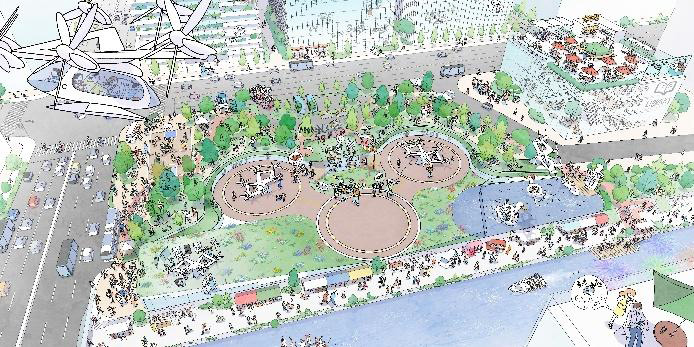 Refined through repeated collaboration with air operators
A Vision for the Urban Implementation of Next-Generation Air Mobility Takeoff and Landing Sites -
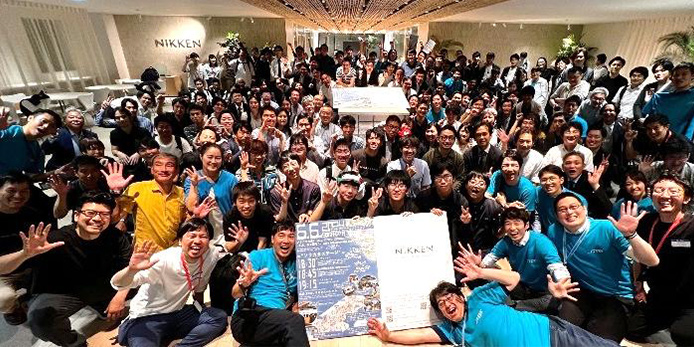 Bringing an Air Mobility Industry Event to PYNT
To everyone at “Sora Kata Gathering Vol. 2”
This is a demonstration project aimed at solving mobility and logistics challenges in regions facing population decline and an aging population by sharing and transporting people, goods, and resources.This project began when “SMART Fukushi Lab,” which addresses welfare issues in Kurobe City, Toyama Prefecture, and a Nikken Sekkei team envisioning mobility infrastructure met at “PYNT,” a co-creation space. A key feature of the project is that it starts with “human connections” rather than service development.The project implemented a program to uncover local resources and needs through “surveys,” “dialogue,” and “visualization” (such as the “Mobi Map”), and following a pilot in Kurobe City, it is now expanding to multiple regions, including Fukuyama City, starting in fiscal year 2025.
-
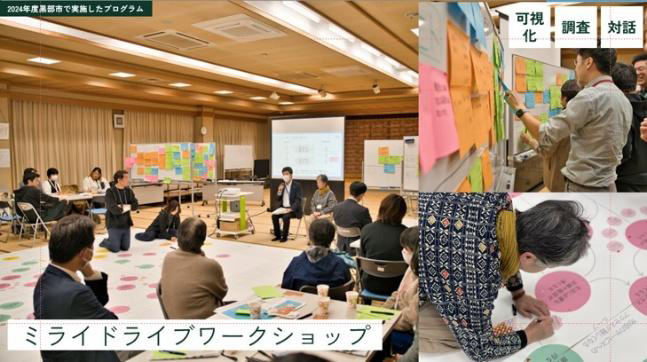 Scenes from the workshop held in Kurobe during fiscal year 2024.
Bringing together local residents, businesses, and government officials to create a space for dialogue that transcends their respective roles -
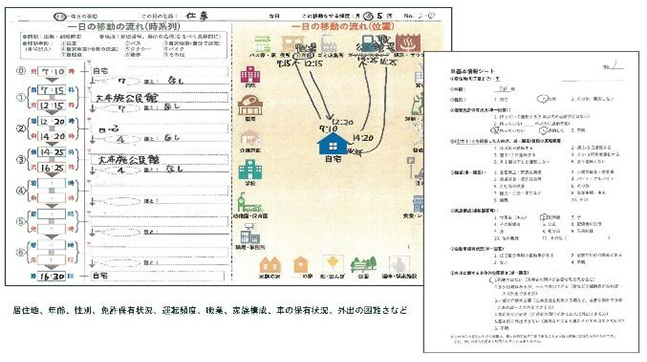 To understand and analyze the actual travel patterns of local residents
Mobi Map, developed
This is a design process that aims to address needs often overlooked by conventional barrier-free and universal design approaches by working together with those directly affected. Nikken Sekkei utilizes PYNT as a hub to promote collaboration with a diverse range of stakeholders and experts.In 2025, Nikken Sekkei launched industry-academia collaboration and joint research on Inclusive Design for daily life and urban development in partnership with the University of Tokyo, LIFULL, CULUMU, and the Nikken Sekkei Research Institute.Furthermore, together with Frontier Nikken Sekkei—a Nikken Sekkei subsidiary that employs staff with various characteristics, including disabilities—we are advancing the implementation of stakeholder participation processes in architectural design.
-
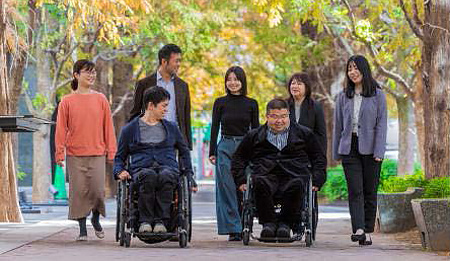 Frontier Nikken Sekkei Team Members
-
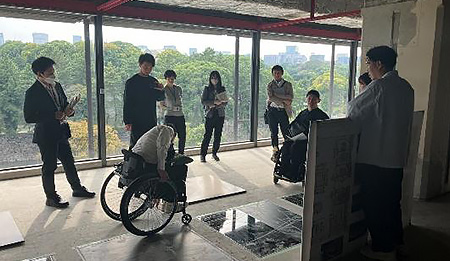 Choosing Flooring That's Easy to Navigate in a Wheelchair
We have developed the “Circular Issue Map,” which visualizes the challenges hindering the transition of the architecture and urban sectors toward a circular economy from a cross-sectoral public-private perspective.We noted that while the construction industry imposes a significant environmental burden in terms of resource consumption and waste, a lack of “shared awareness of the issues” among diverse stakeholders serves as a barrier to this transition.“PYNT” was utilized in the development process of this map. In May 2025, a workshop was held at PYNT, where representatives from relevant government agencies and businesses gathered at Private, each bringing their own awareness of the issues, to collaboratively organize the prototype of the map.Going forward, this map will be continuously updated with the involvement of diverse supply chain stakeholders—including financial institutions, developers, universities, waste disposal companies, and building materials manufacturers—to lay the groundwork for more comprehensive solutions to these challenges.
-
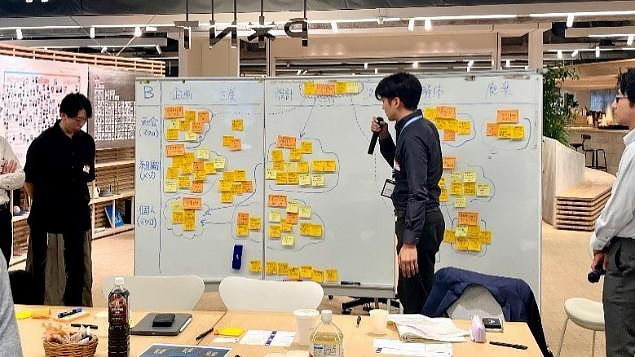 Scenes from the Workshop
-
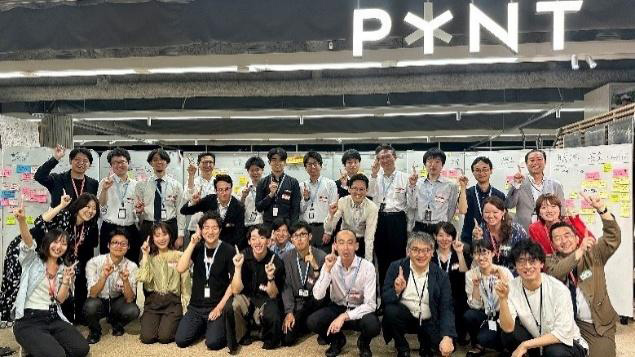 To everyone who participated in the issue-mapping workshop