
The past and future of urban development around Shibuya Station. [Part 1]
SCROLL DOWN
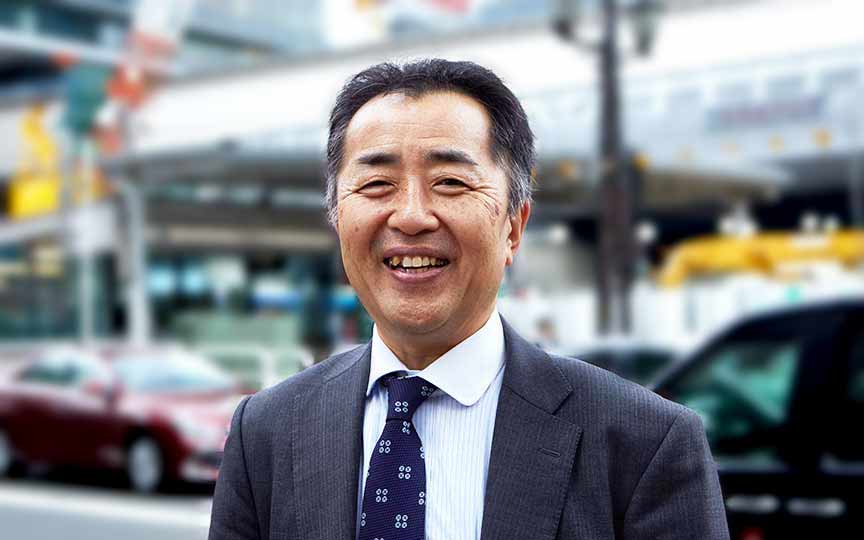
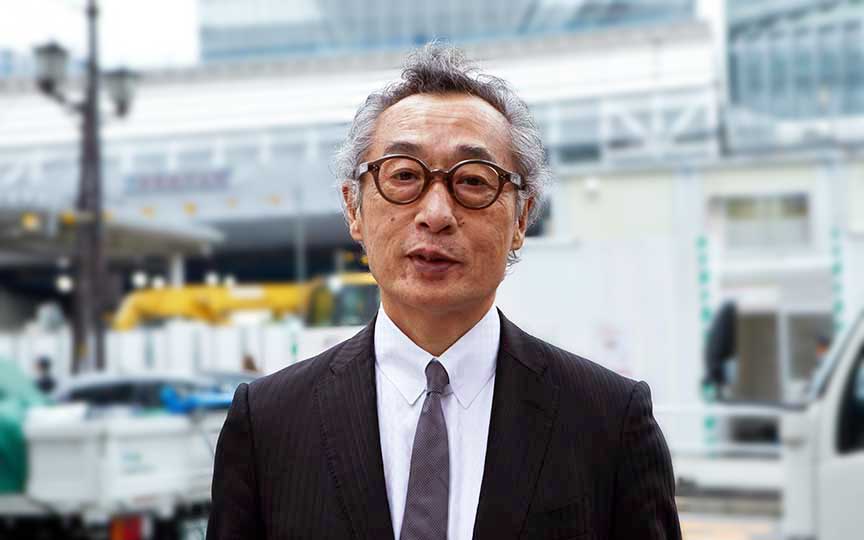
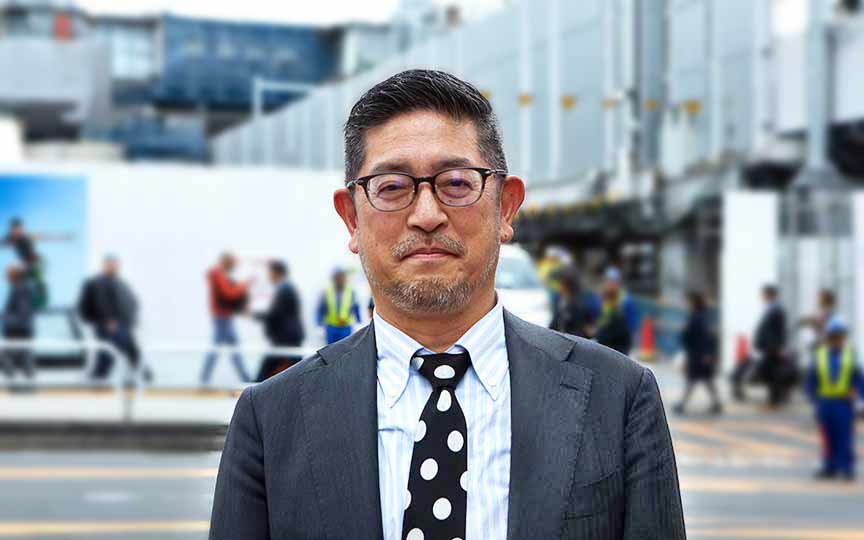
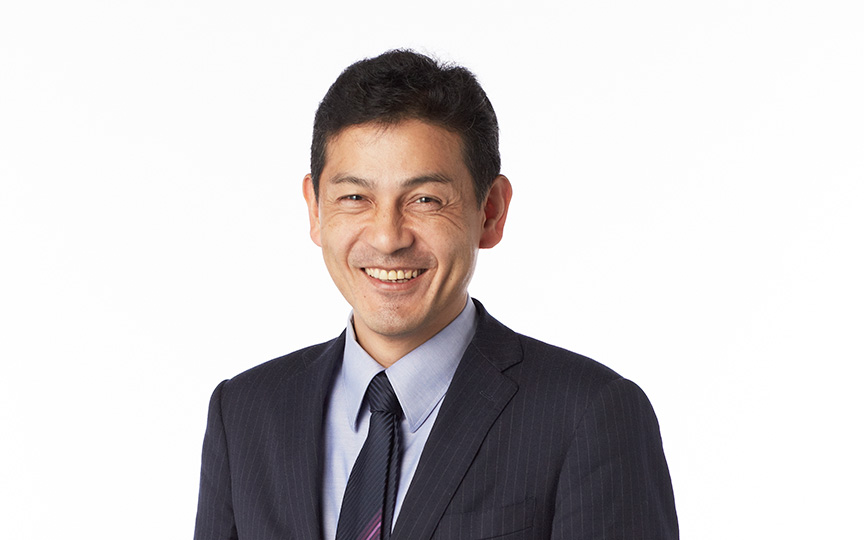
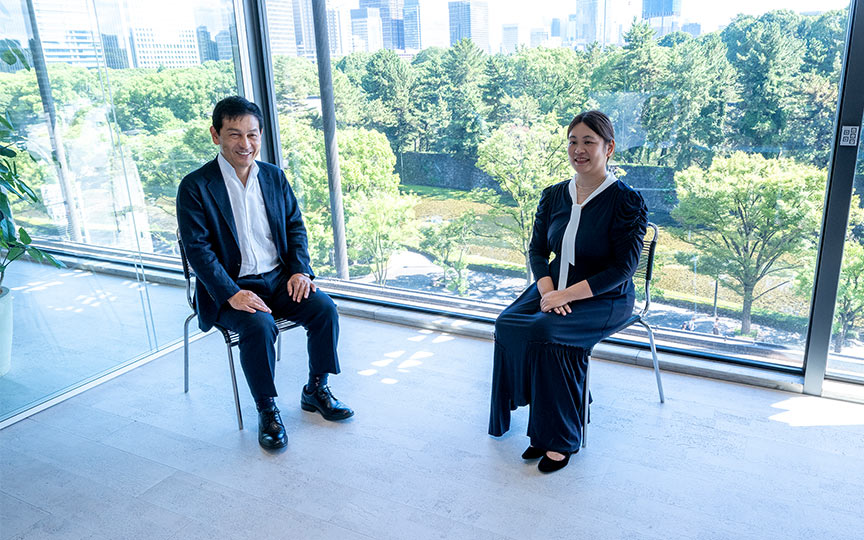
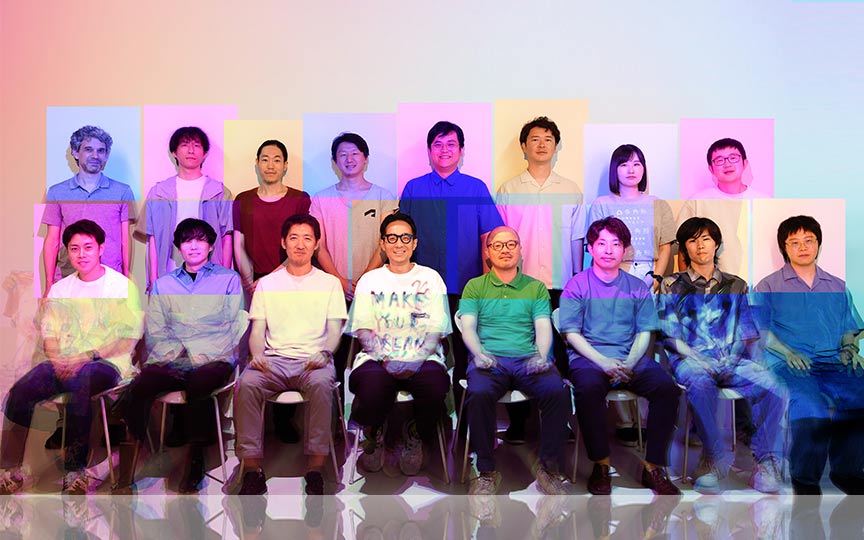
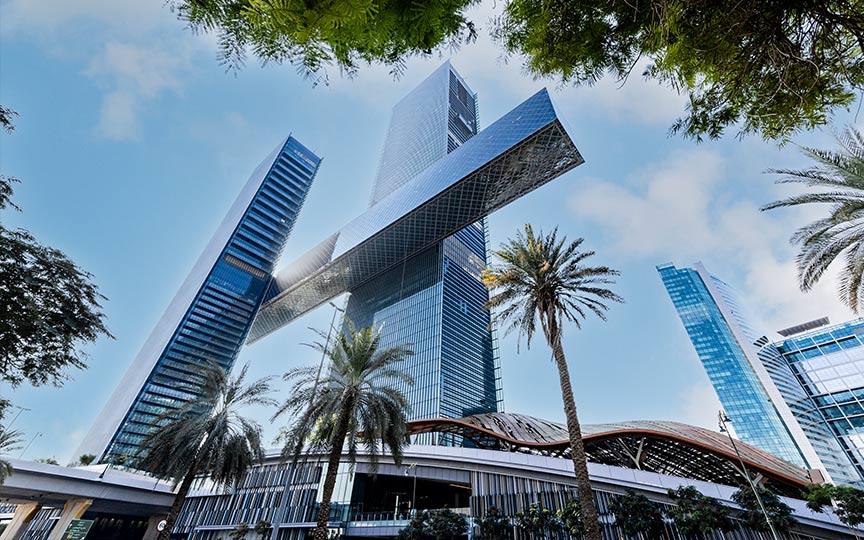
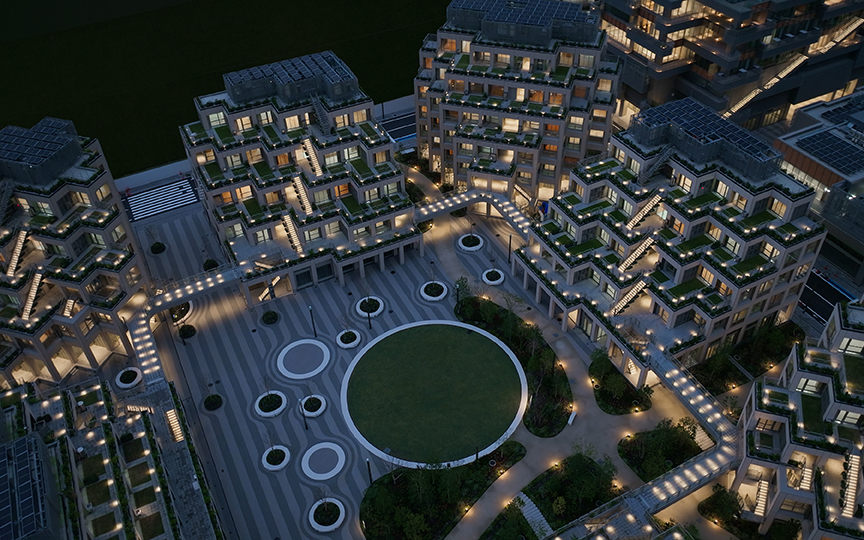
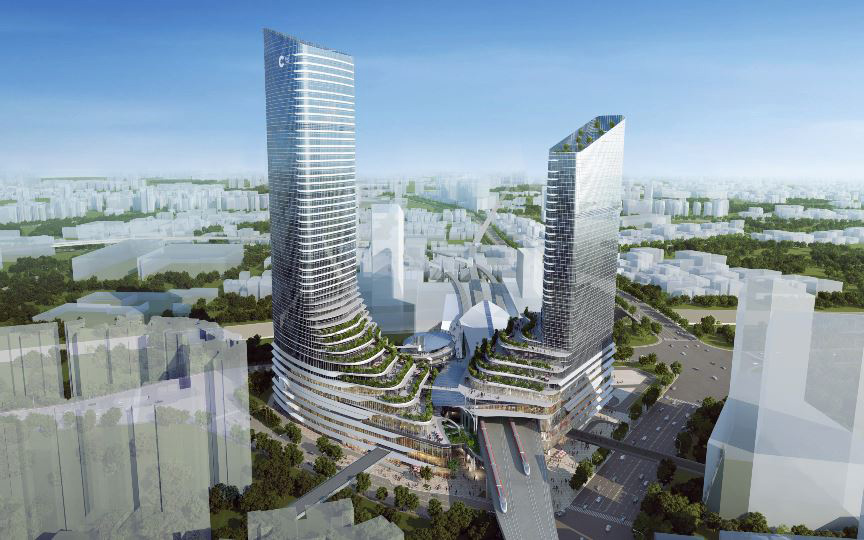
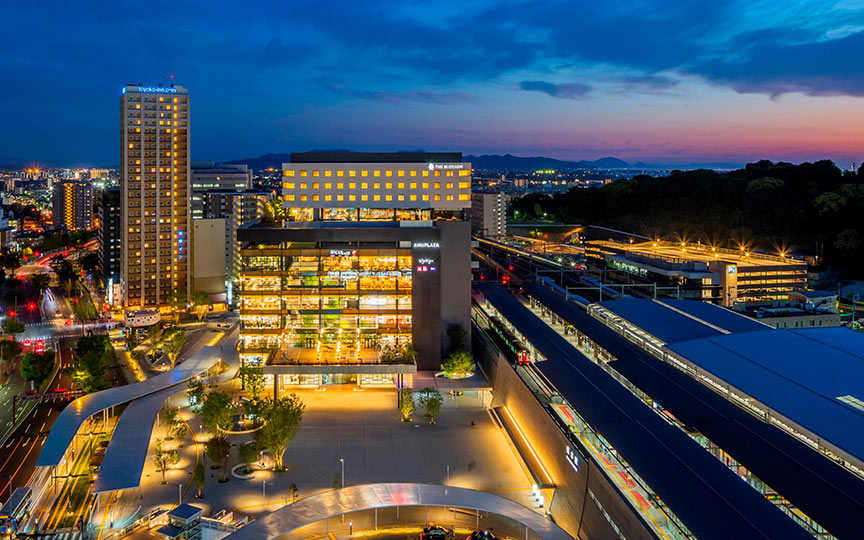
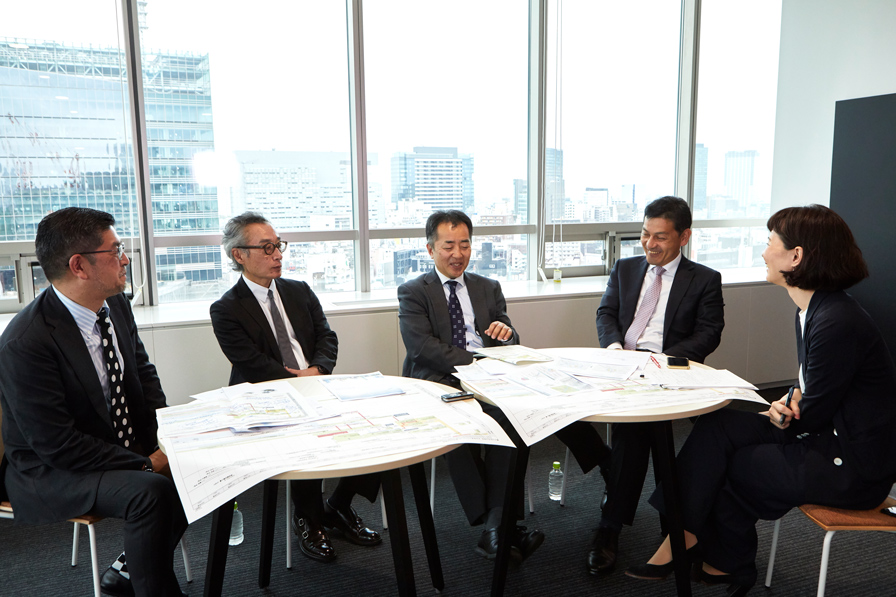
2019年11月には「渋谷スクランブルスクエア」、12月には「渋谷フクラス」が開業と、“まちびらき”が進む渋谷。再開発の大きなきっかけは、2002年、東急東横線と東京メトロ副都心線の相互直通運転の決定までさかのぼる。以来、この巨大プロジェクトはどのように進んできたのか、異なる立場からまちづくりに関わったメンバーが語り合った。対談の会場となった渋谷区役所新庁舎に集まったのは、一般社団法人渋谷未来デザイン※(以下、渋谷未来デザイン)事務局長の須藤憲郎さん、渋谷区土木部道路課長の米山淳一さん、株式会社日建設計都市開発グループ代表の奥森清喜、パシフィックコンサルタンツ株式会社で渋谷プレイングマネジャーを務める小脇立二さん(写真左から順)。4人が語る渋谷駅周辺のまちづくりのこれまで、そしてこれからの姿とは。ファシリテーターは、渋谷駅周辺の開発プロジェクトに長年携わり、現在は渋谷未来デザインのプロジェクトデザイナーも務める、日建設計都市開発部アソシエイトの金行美佳。
※一般社団法人渋谷未来デザイン:未来の「都市」の可能性と、渋谷を愛する人々が実現したい「夢」を叶えるため、オープンイノベーションにより社会的課題の解決策をデザインする組織。日建設計は設立準備から携わり、2018年の設立以降はパートナー企業として参画。
ウェブサイト:http://fds.or.jp/



The "torrent" began about 20 years ago with the decision to connect the Tokyu Toyoko Line and the Tokyo Metro Fukutoshin Line.
Yoneyama: I was assigned to the Urban Planning Division of Shibuya Ward in 2000 and worked there primarily until 2006.At that time, the area was buzzing with excitement following the decision to implement direct through-service between the Tokyo Metro Fukutoshin Line—which we were working to bring to Shibuya—and the Tokyu Toyoko Line. We were coordinating urban planning efforts to determine how to utilize the site of the former Shibuya Station on the Toyoko Line, which was being relocated underground, and how to keep people in Shibuya—which would transition from a terminal station to an intermediate stop.
Sudo: I really got involved in this work in earnest in 2009, when I was transferred to the Shibuya Station Area Development Division of the Urban Development Department. Currently, I am on secondment from Shibuya Ward to “Shibuya Future Design,” an organization promoting next-generation urban development in Shibuya Ward, where I serve as Executive Director.
Okumori: : When we think of 2009, it was the time when the Hikarie Urban Regeneration Special District was finally proposed, and plans for the surrounding blocks began to take shape.
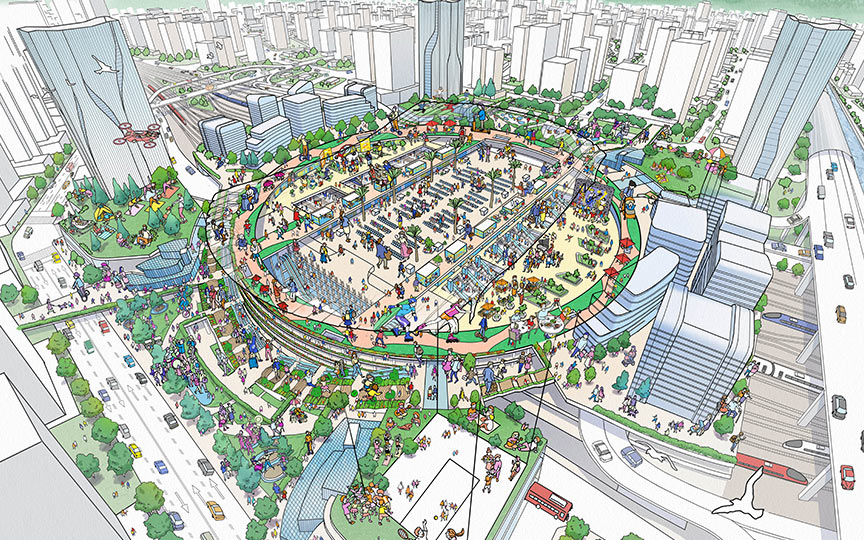
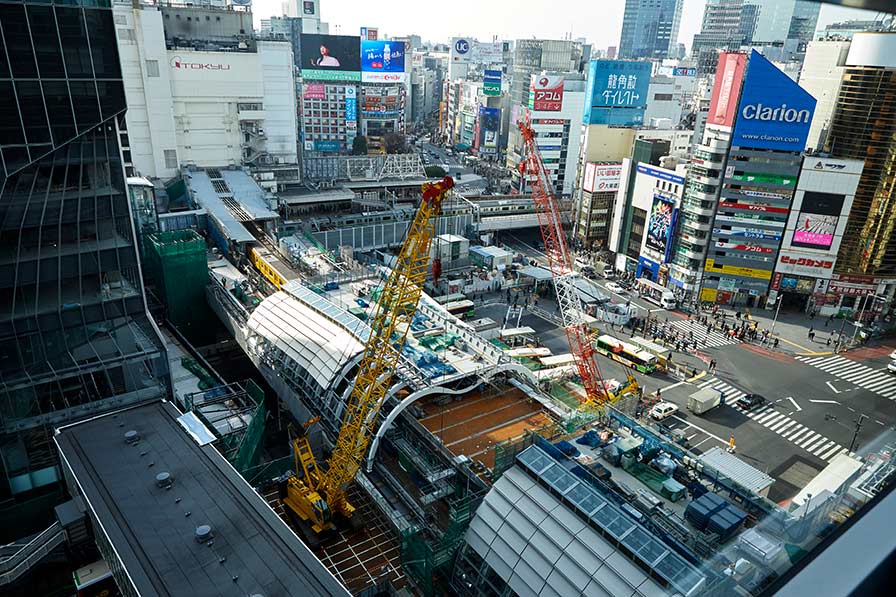
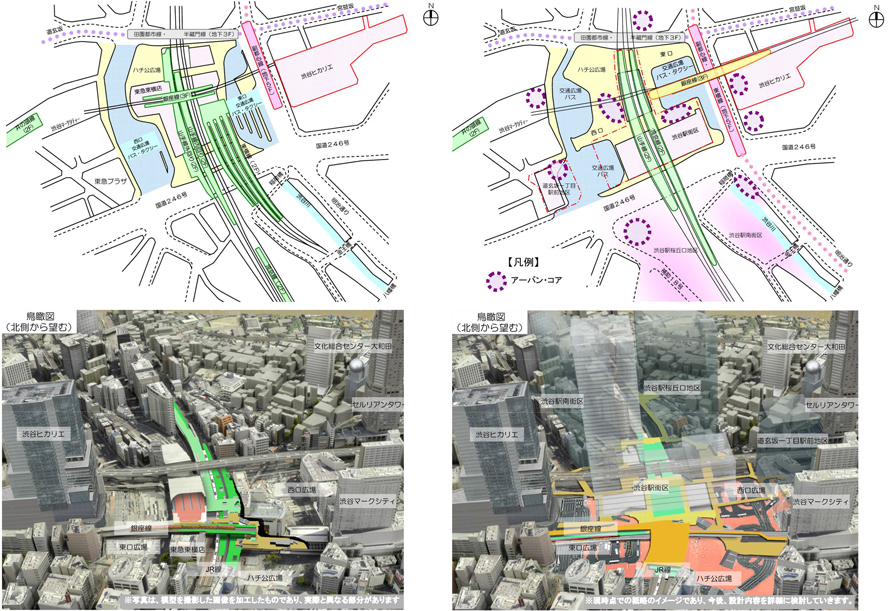 From the Shibuya Station Central Area Infrastructure Development Plan (2012): the state of Shibuya in 2012 (left) and a vision of future development (right).
Yoneyama: The Urban Development Department, where Mr. Sudo worked, was originally a small department with just three staff members. It was renamed and reorganized so that it could fully dedicate itself to urban development. Since this was the time when the plan had been finalized and we were about to move forward in earnest, the idea was to establish a solid organizational structure to keep things running smoothly.
Gold Shop: Mr. Kowaki has been involved in community development even longer than Mr. Yoneyama and Mr. Sudo, hasn't he?
Under the arm: I first became involved with Shibuya as a consultant around 1997—back when the “river” was just beginning to flow, before the torrent set in.It all started back when the Tokyo Metro was considering plans for Line 13 (now the Fukutoshin Line), and we worked with Tokyu Corporation to draft a future underground development plan. Once the decision to build the Fukutoshin Line was made and the project really took off, Mr. Yoneyama, Mr. Sudo, and I have been swimming nonstop for 20 years—without even a moment to catch our breath—and here we are today…
Okumori: : So you really poured your youth into Shibuya, huh? (laughs).
Under the arm: Yes, most of my career has been in urban development in Shibuya. What about you, Mr. Okumori?
Okumori: : For us at Nikken Sekkei, it all began around 2003, when discussions started regarding the Emergency Urban Regeneration Zones. It was a phase where we had to consider the various rail lines and station plazas as a unified whole—integrating urban infrastructure, buildings, and railways—and we joined the project to examine the architectural aspects.It was right when discussions began on the broad framework of the redevelopment—such as the swap of building lots and station plaza land in the Shibuya Station district (Shibuya Scramble Square the First Phase (East Tower)), which is currently under construction—that we joined the project, and since then, just like everyone else, we’ve been navigating these turbulent waters.
The first "Shibuya town development" project with participation from local residents.
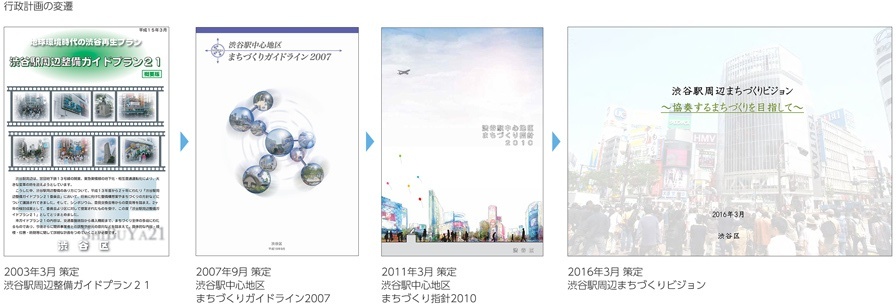
Yoneyama: The first document we in Shibuya Ward compiled together with Mr. Kowaki was the 2003 “Shibuya Station Area Development Guide Plan 21” (hereinafter “Guide Plan 21”).At that time, a committee led by Professor Shigeru Morichi, a special professor at the National Graduate Institute for Policy Studies, was advancing plans for National Route 246, while a committee led by Professor Ko Kurokawa, Professor Emeritus at Tokyo Institute of Technology, was advancing plans for Meiji-dori.After considering what Shibuya Ward should do in this context, we decided on a policy to create a people-centered pedestrian network that makes the most of Shibuya’s distinctive slopes and street-level shops.
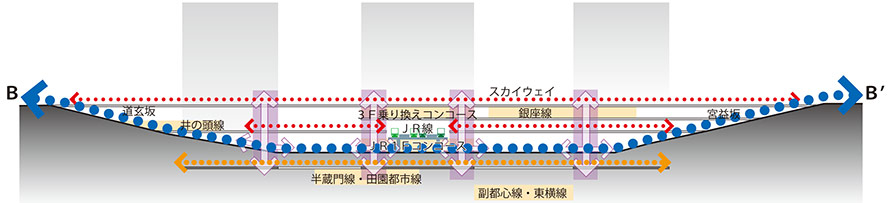 Shibuya Station Central District Urban Development Guidelines 2010
Okumori: : The idea of connecting the entire district via decks and underground passages is still being carried forward today. Plans for a fourth-floor-level deck network connecting the Shibuya Station district (Shibuya Scramble Square the First Phase (East Tower)) with the Miyamasuzaka and Dogenzaka areas have been in place since that time.
Yoneyama: It’s more of a concept of running a ridge line rather than filling in a valley. Although the details have changed little by little as we’ve continued to explore the idea, the overall approach has probably remained the same from that time until now.
Yoneyama: We determined that, because various operators are involved, it would be difficult for the government alone to carry this out. Since Shibuya is served by multiple train lines, it took some time to coordinate with the rail operators.
Under the arm"A lot of people from neighborhood associations and merchants' associations participated in the 'Guide Plan 21' committee. When we tried to synthesize everyone’s opinions, we treated the uncertainty surrounding what would happen to rail lines other than Line 13 as it stood at the time, and based on that, we continued to discuss what could be done. I think that was the basic approach."
Sudo: It was a structure that included local residents, wasn’t it? The idea was to involve the local community in a large consultative body from the very beginning of the urban planning process as a way to build consensus with residents.
Yoneyama: I think this might be the first example of urban development in Shibuya that has involved the local community. That’s because, prior to 2000, there were only two district plans, and in those cases, the private sector simply carried out plans created by the government.However, in line with the concept of “moving forward together” presented in the 2000 “Urban Planning Master Plan,” the community, the government, and the private sector have been working together to move the project forward.
Gold Shop: The way cities are developed has changed significantly since 2000, hasn’t it? In terms of government planning, the “Shibuya Station Central District Urban Development Guidelines 2007” (hereinafter referred to as “Guidelines 2007”) were formulated following the “Guide Plan 21.” Were Mr. Yoneyama and Mr. Okumori involved in their development?
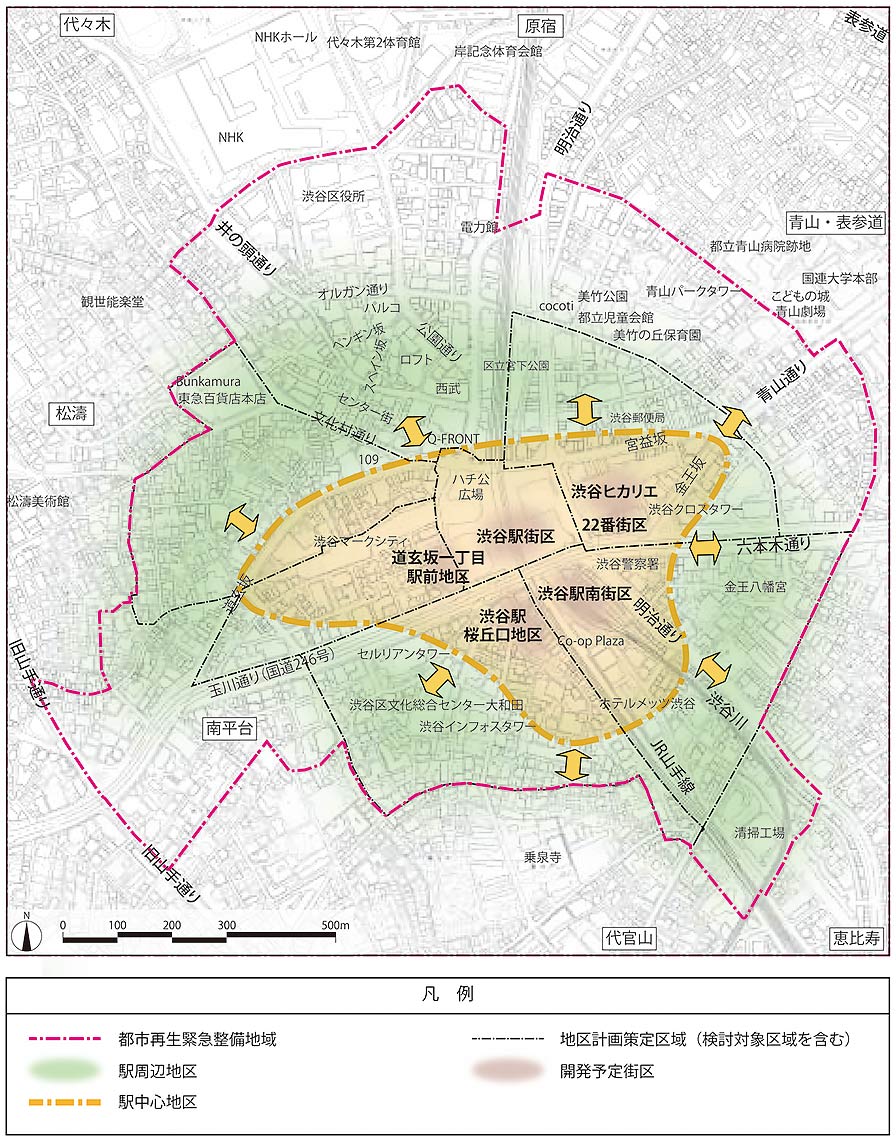 Shibuya Station Central District Urban Development Guidelines 2010
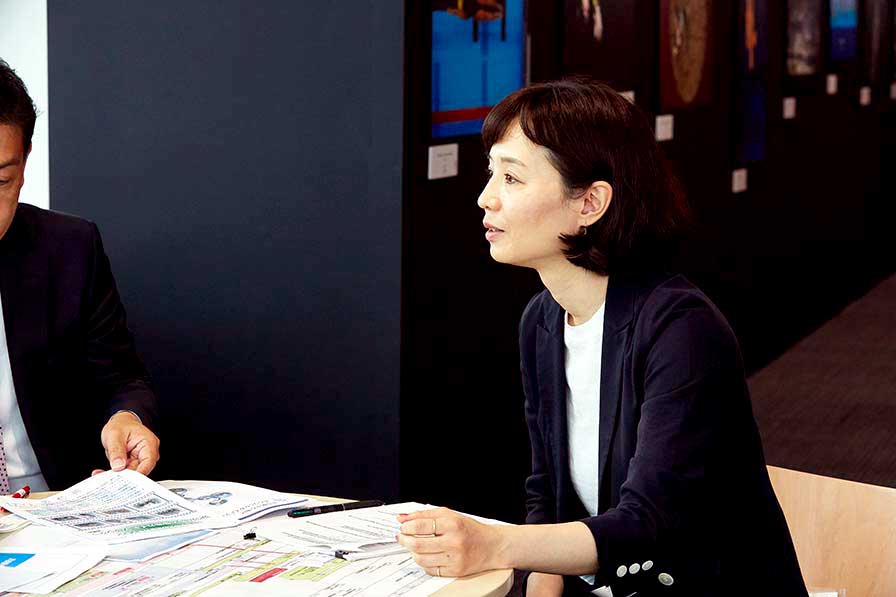
Under the arm: This council was established based on Shibuya Ward’s firm conviction that “to move forward with redevelopment, we need a system for sharing information with local residents, gathering their opinions, and incorporating that feedback into the plan.” In other words, it functioned as a dual-track process, with one track serving as a forum for discussion with local residents and the other as a forum for refining the plan.
Gold Shop: Subsequently, in 2009, construction began on “Shibuya Hikarie,” and as plans for surrounding developments—such as the Shibuya Station district—began to take shape, the “Shibuya Station Central District Urban Development Guidelines 2010” (hereinafter “Guidelines 2010”) were formulated. This was the administrative plan that Mr. Sudo played a leading role in, wasn’t it?
Sudo: Yes. A clear division of roles emerged—with the government drafting plans and the private sector offering input—making the structure much clearer.The Local Coordination Council gradually came to understand that we—both the government and businesses—all share the same goal of making Shibuya a better place, and people began to speak more candidly. To reflect those voices, we decided to include a section in the “2010 Guidelines” dedicated to discussing “the essence of Shibuya.” I believe we were able to fully capture the local residents’ feelings toward the neighborhood.
Okumori: : We were debating this for about a year, weren’t we? I think it was around this time that people started discussing what “the essence of Shibuya” really is in various settings.
The Shibuya River, once the "underbelly," has given rise to new possibilities.
Under the arm: I was also involved in reviewing this plan. As for the Shibuya River, we had lengthy discussions—ranging from technical matters to how we should utilize the river.
Sudo: Now that “Shibuya Stream” has opened, things are moving forward even further. It’s incredibly valuable that the site of the former Toyoko Line tracks has been transformed through private urban development into a public space—a riverside promenade right next to the station—and I believe the challenge moving forward is how to connect that area with the Shibuya River.
Okumori: : There are various constraints when it comes to flood control, and there aren’t many examples of urban development projects that have seriously addressed rivers, are there? Until the development of the Shibuya River began, it was sort of “hidden away”—something no one really paid attention to—so the fact that so many people now come and go there has had a major impact.
Yoneyama: The scenery along the Shibuya River is likely to change in the future as well. More and more shops are opening, and offices are starting to move in, too. Come to think of it, Shibuya Future Design is also exploring ways to utilize the riverfront as part of a social experiment, isn't it?
Sudo: We’re conducting an experiment by installing a container called “PARK PACK” along the riverside promenade to see how it can be integrated into the city as a public space, depending on who uses it and how. For example, we’re currently collecting basic data on what happens to the flow and demographics of people when events are held here, and what kind of impact this has on the local community. I’m sure Shibuya Ward will end up co-hosting these events with us in the future (laughs).
Gold Shop: This is a true example of public-private collaboration. It’s a time when the city is changing not only along the Shibuya River but in many other places as well.
(Part 2 is scheduled to be released around July 20.)