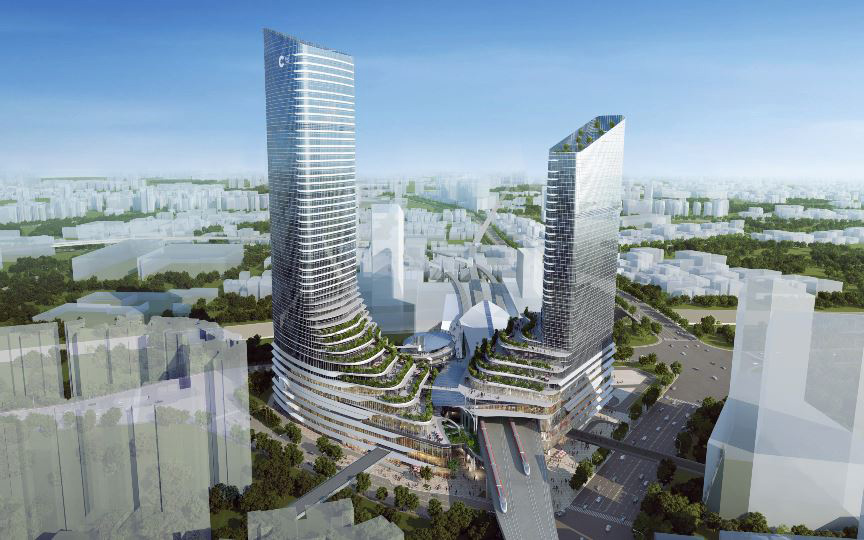

Urban development that deeply integrates local communities and redevelopment. [Part 1]
SCROLL DOWN
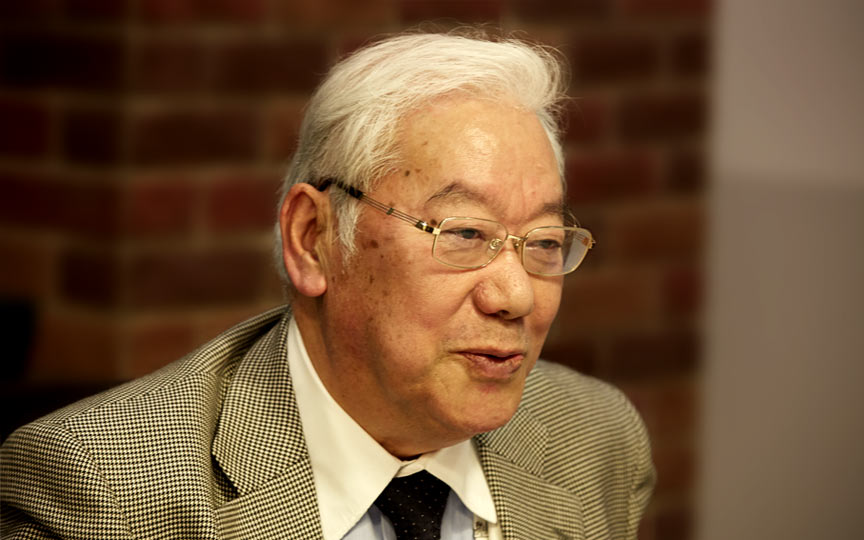
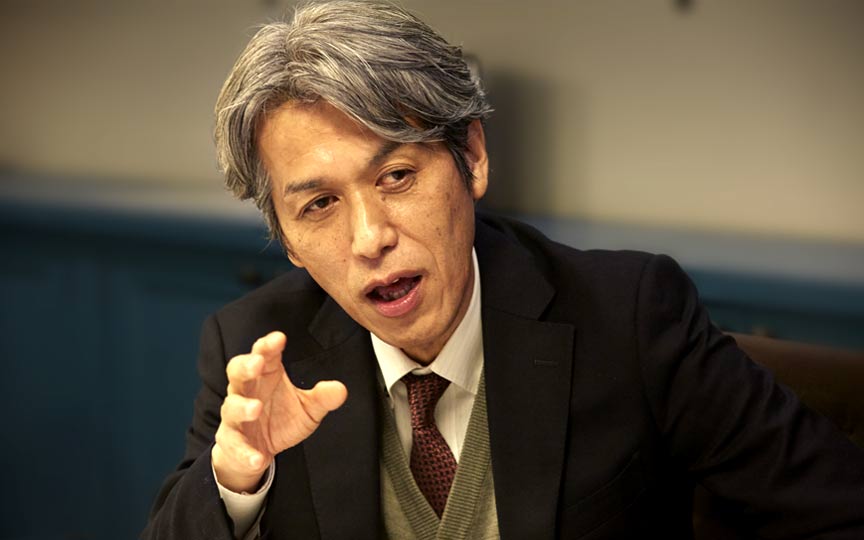
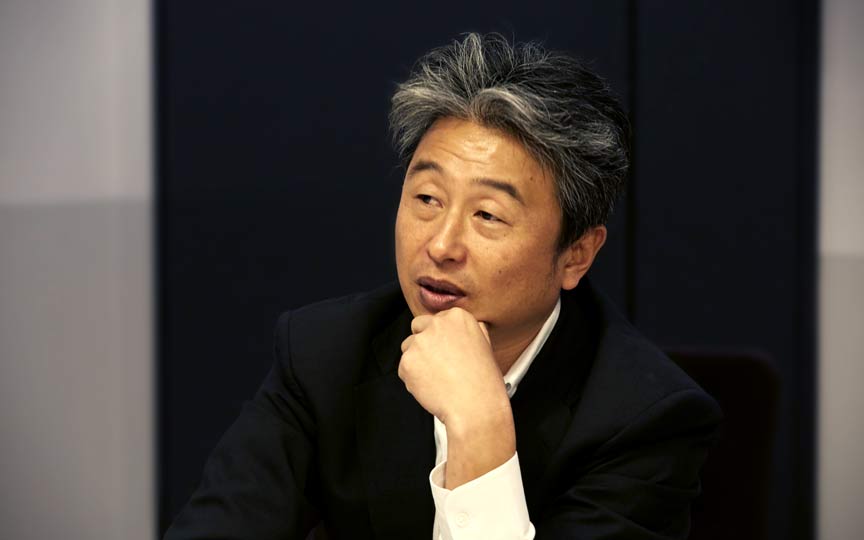
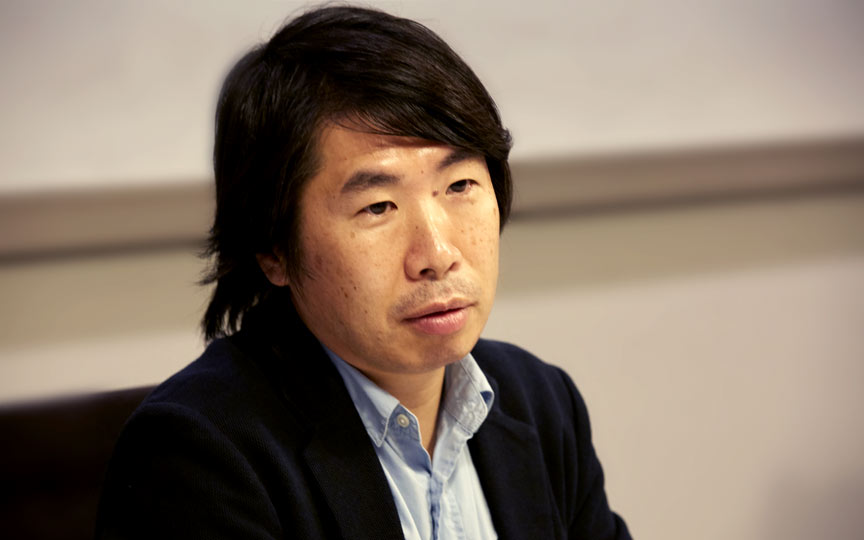
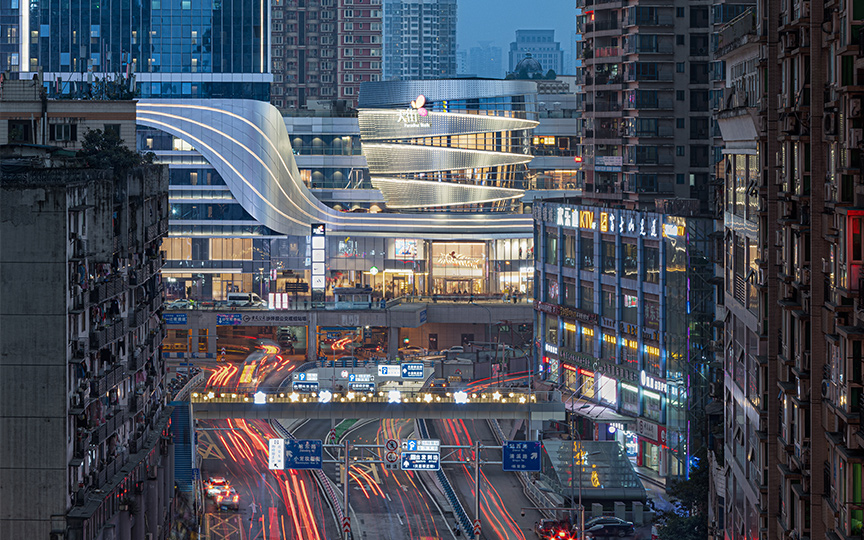
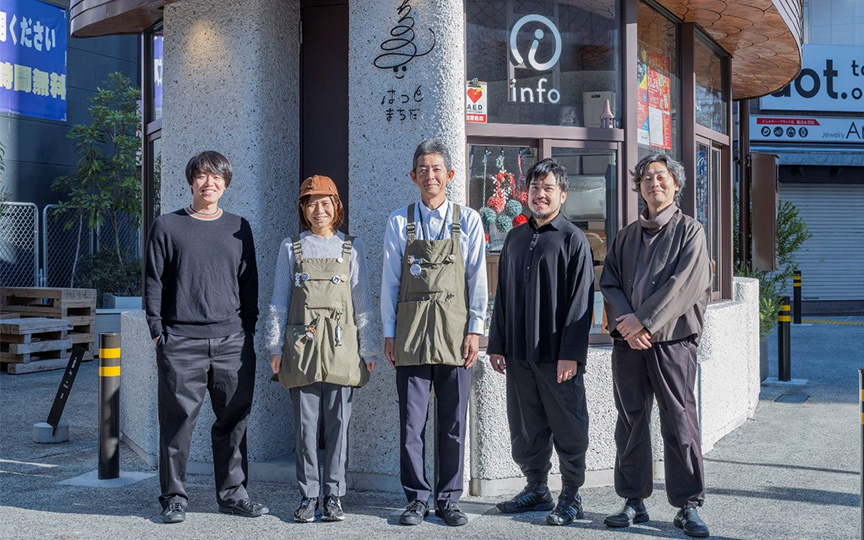
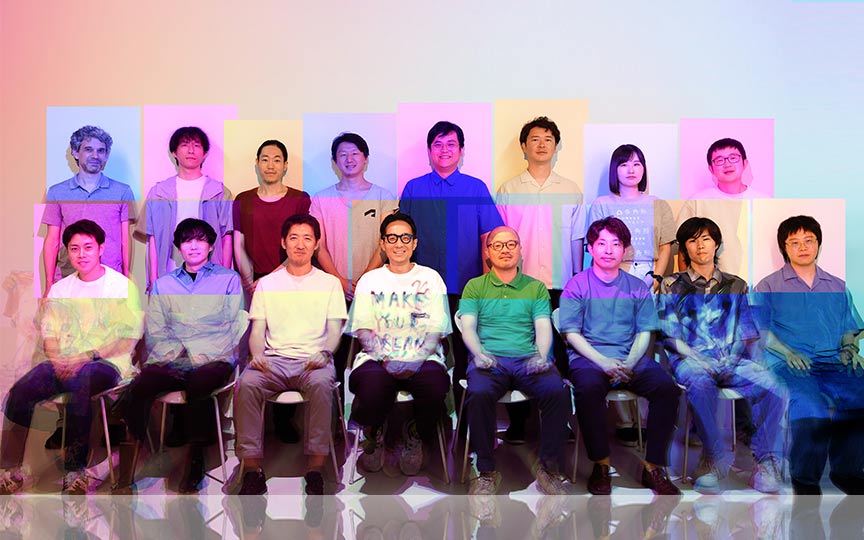
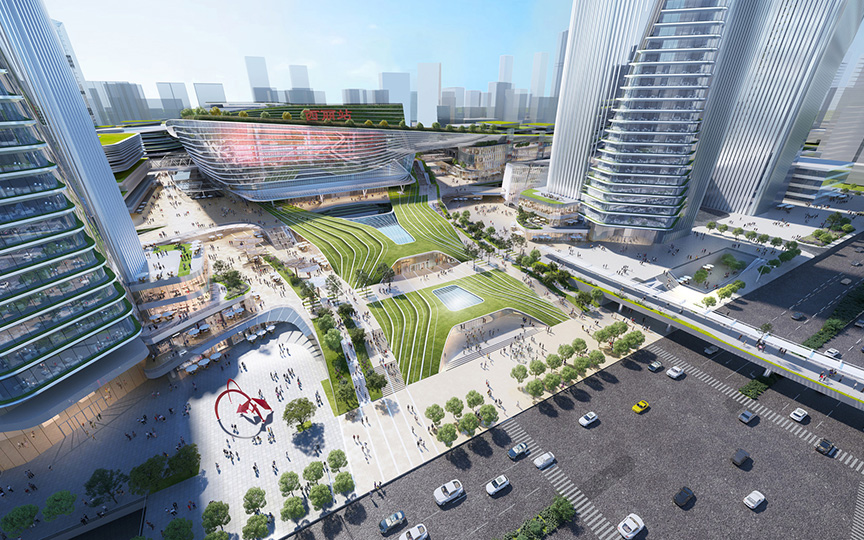
“Shibuya Furasu,” a redevelopment project encompassing the former Tokyu Plaza Shibuya and the surrounding blocks near the West Exit of JR Shibuya Station, was completed in October 2019. At its base, in the “Shibuya Chuo-gai” shopping district—nestled between Shibuya Mark City and National Route 246—numerous restaurants continue to thrive.Amid ongoing construction to develop the “western gateway to Shibuya,” a roundtable discussion was held to discuss the relationship between the redevelopment project and the local shopping street. Participants included Masaru Sakairi (center), former chairman of Shibuya Chuo-gai,Hiroshi Kageyama (center left), representative of Town Planning Partners, who served as a consultant for the Dogenzaka 1-chome Station Area Type 1 Urban Redevelopment Project; Atsushi Nagahata (center right) of Tokyu Land Corporation, a project partner for Shibuya Furasu;and Yuichiro Shinozuka (far right) of Nikken Sekkei’s Urban Division TOD Planning Department (Associate), who was involved in the development of Shibuya F-Class and supported the operations of the local council.What has the Shibuya Station West Exit area been like in the past, and what does the future hold? The facilitator is Kenya Fujiwara (far left) of the Redevelopment Planning Department, Urban Division, Nikken Sekkei (Associate). (Roundtable held in mid-February 2020)



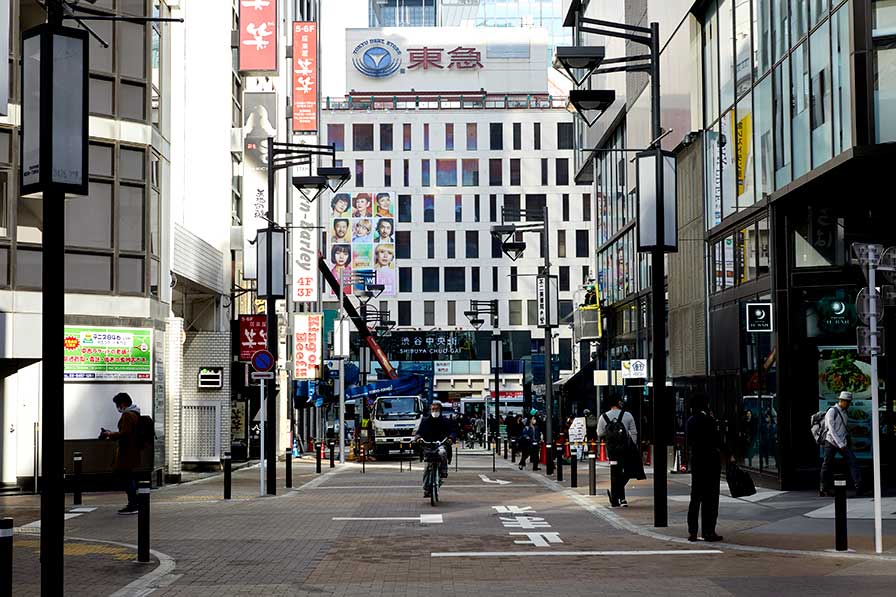
The shopping district and the developer. Building trust through repeated interactions and shared feelings.
Sakairi: Chuo-gai has a history spanning about 60 years, dating back to the time when it was known as the “Shibuya Station Front Shopping District,” and over the years, there have been several proposals for its redevelopment.First, there was a proposal to “build an underground mall,” but that led to a heated dispute. After that, there was also a concept to “construct a skywalk above the West Exit Plaza.” Naturally, whenever the town faces such a transformation, the local community becomes unsettled, and various issues arise; each time this happened, the board of directors for Chuo Street was completely overhauled.
Shinozuka: I see. So this development project is that significant for the local community, isn't it?
Sakairi: When I took over as chairperson from my predecessor, there were no personnel issues, but later I heard that “it seems plans for the Nishiguchi development are moving forward.”I didn’t think Shibuya could remain exactly as it is, but the shopping district couldn’t possibly carry out development on its own—it would inevitably require the involvement of developers. That said, I felt we should be thinking more proactively about development and that we, too, bore some responsibility, so I consulted with Mr. Kageyama, an expert in community development.
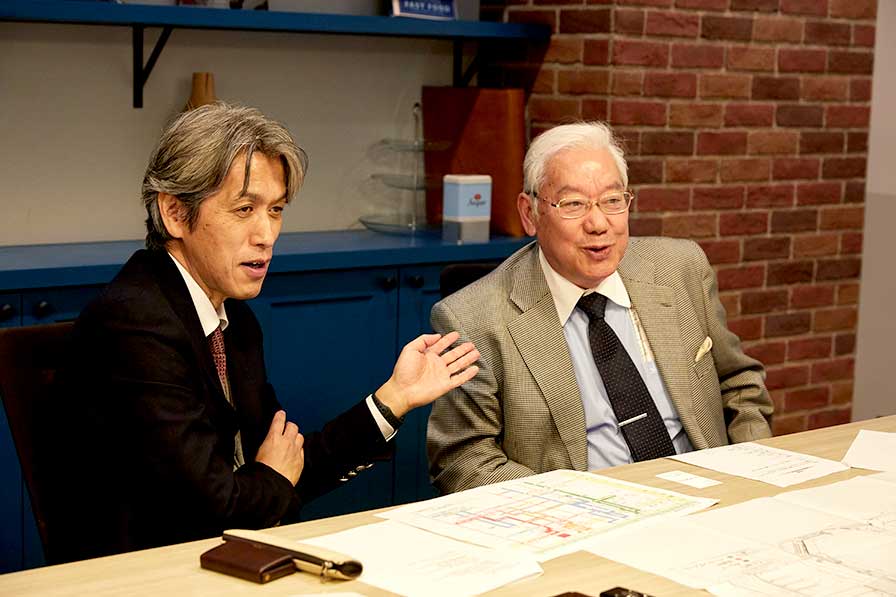
Sakairi: I think I was probably 28 at the time.
Kageyama: So that means you’ve been involved with Chuo-gai for about 40 years now. I was first approached around 2006, when Mr. Sakai became vice chairman, and that was right when talks of a new redevelopment project were just getting started. But at first, everyone was pretty cautious, weren’t they?
Sakairi: That's right.
Kageyama: At the time, plans for development—including Shibuya Station—were already under consideration, and the previous chairman had been invited to a meeting of the local coordination council. There, the project was explained to him, but the materials shown were the exact same documents that would be submitted to the government—they were quite dry and formal. Since they were difficult for laypeople to understand, it was decided that an advisor was needed, and that’s why I was approached.
Fujiwara: So, Ms. Kageyama, you’ve been involved in the project for quite some time now, haven’t you?
Kageyama: Yes. Then, around 2007, Mr. Sakairi showed me some documents regarding Tokyu Real Estate’s redevelopment project and said, “Actually, there’s this other proposal—I’d like you to explain it.” That’s when a group of interested landowners started holding study sessions.However, since I didn’t know the basis for the figures in the materials, I suggested we ask the developer directly—and that’s how we launched the Redevelopment Study Group. This group later evolved into the Dogenzaka 1-chome Station Area (hereinafter referred to as “this area”) Redevelopment Preparatory Association—that is, the Shibuya Furasu Redevelopment Preparatory Association.
Sakairi: We also held several community development workshops in Chuo-machi. During those workshops, we divided participants into several groups and took them on walking tours of the neighborhood; one of the issues that came up was the need to improve the road environment.There was a lot of illegal parking and unauthorized signage, making it difficult for people to walk around, so we agreed we needed to address this. We also decided to establish guidelines for Central Street’s urban development before any construction began, so we started discussing how to improve this area.
Kageyama: That meeting went well, didn't it? We were able to discuss specific measures—such as cracking down on illegal parking and illegal signs, as well as adult entertainment businesses and soliciting customers—which made it easier to draw out everyone's thoughts about the town.
Fujiwara: This is a story that illustrates why the entire area has improved as a result of the development. Mr. Nagahata, you’re involved in this project as a business partner of Shibuya Furasu through Tokyu Real Estate—what are your thoughts?
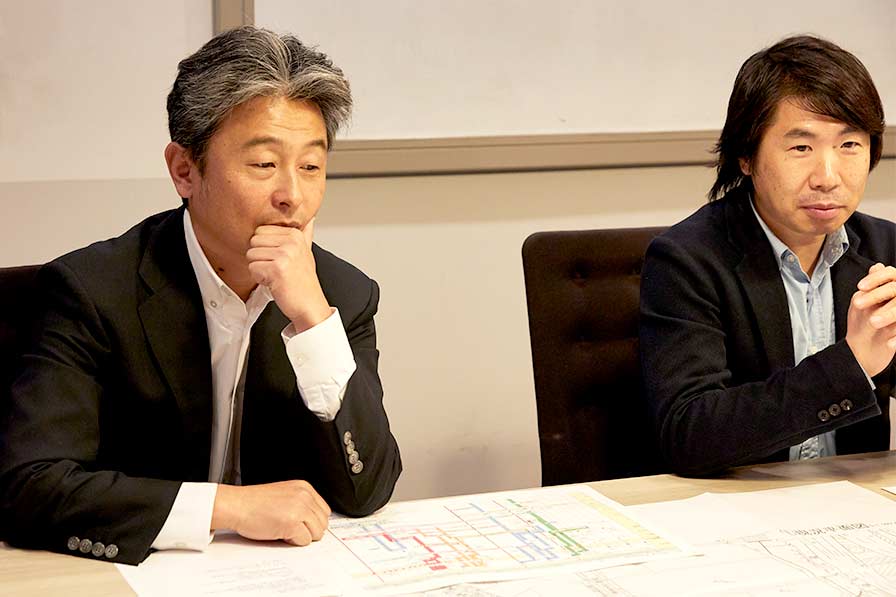
Kageyama: I'm sure our predecessors suffered even more than we did.
Nagahata: I suppose so. Internally, we have a long and weighty history dating back 50 years to when we built Tokyu Plaza, but in the community, Tokyu Real Estate had virtually no presence. Rather than being cautious, the local residents actually kept their distance from us.That’s where we started, but with the cooperation of local residents, we began discussing the neighborhood’s development together and carrying out activities such as neighborhood patrols. Over the past 10 years, the situation has changed significantly, and I feel that people now see us as “part of the same community.”
Fujiwara: I see. So that’s what the situation was like when you joined, Mr. Nagahata. Did you take any steps to build relationships with people in the community?
Nagahata: At first, I took part in the annual festival at Kinō Hachiman Shrine, which is held every September. To be honest, I had absolutely no idea what I was supposed to do, so I just went along to check it out (laughs).
Shinozuka: Back then, the folks in Chuo-machi really gave us an earful, didn't they? (laughs).
Nagahata: We got scolded, didn’t we…? It’s because we showed up in our regular clothes, so they said, “You can’t carry the mikoshi dressed like that!” So they took care of everything for us, starting with matching happi coats, to get us ready to participate in the festival. But looking back now, I’m really glad we had the mikoshi.
Kageyama: That gave you a chance to get involved in the local community, didn't it?
Sakairi: I think just being able to get to know the young people in the Youth Association is a big step forward. Having them come into our community gives us the chance to talk about all sorts of things, too.
Fujiwara: You don’t often hear about large projects like this where the first step is to participate in a festival together with the local community, do you?
Sakairi: Speaking of mikoshi, they used to let us place one at the entrance to Tokyu Plaza. So when the building was being rebuilt, all sorts of ideas came up—like whether we could put one inside the Shibuya Furasu bus terminal (laughs). Those kinds of discussions were probably one of the reasons why any lingering resentment gradually faded away.The current manager of Tokyu Plaza, for example, cares so much about the neighborhood that he even patrols the area at night.
Kageyama: When it comes to community development, while discussions between top leaders are certainly important, it simply won’t work unless connections are formed across various levels of society. From Private ’s perspective, I believe that stepping in between people to facilitate coordination is one of the most rewarding aspects of community development.
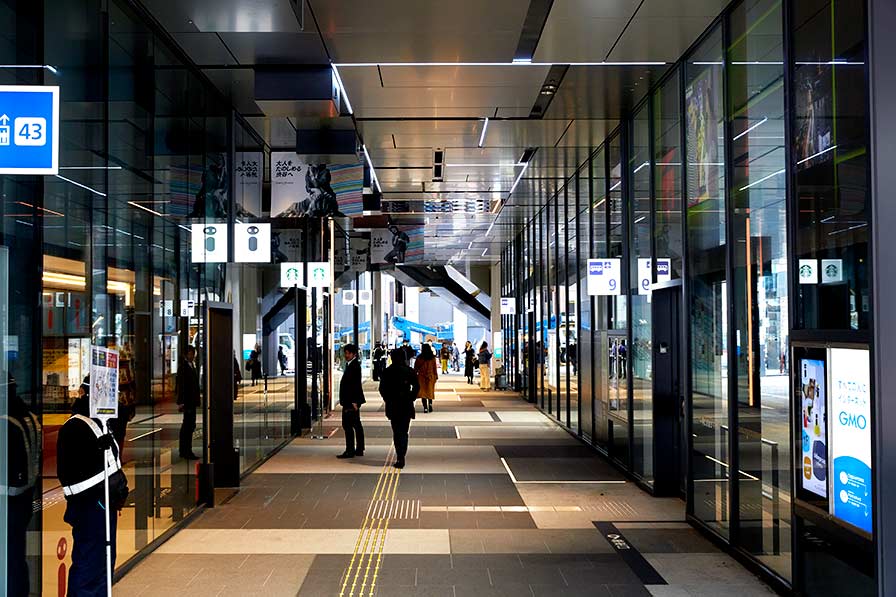
Fukuras, the new icon of the west exit, is a tourist support facility.
Shinozuka: Like Mr. Nagahata, I recall that I didn’t become fully involved in the development of this district until around 2010.During the discussions and deliberations on what kind of development to pursue at the West Exit of Shibuya Station, the topics of the bus terminal, pedestrian flow, and parking facilities came up, and we received a request from Chuo-gai to address the road conditions, which had effectively turned into a “loading zone.”
Sakairi: When I first met Mr. Shinozuka, I thought he was really knowledgeable about traffic regulations.
Kageyama: Yeah, they say that if you ask them about the roads, they'll answer just about anything.
Shinozuka: Is that so? (laughs). So, as part of our efforts to utilize the “Special Urban Regeneration District” urban planning system, we worked with Tokyu Real Estate to develop a proposal for a public contribution: “Let’s build a shared cargo handling area (now known as ESSA) in the basement that anyone can use.”Furthermore, we thought that if we beautified the area—including the streets outside the project zone—we could create a lively neighborhood where many people would walk around. That proposal was accepted by Shibuya Ward and the Tokyo Metropolitan Government, and concrete plans began to take shape.
Fujiwara: Even now that Shibuya Fukurasu has been completed, various improvement projects are still underway, such as the construction of a bus terminal, the replacement of the deck over the national highway, and the beautification of Plaza Street—the main thoroughfare of Chuo-machi. While the West Exit will continue to undergo rapid changes, what impact has the renewal of public spaces—such as roads and plazas—had on the entire area, including Chuo-machi?
Sakairi: A tourist support facility for international visitors has opened at Shibuya Furasu, hasn't it? Partly because of that, the number of international travelers has increased significantly.
Kageyama: Of course, the number is probably increasing throughout Shibuya as a whole, but it’s true that many foreign visitors are coming to this area.
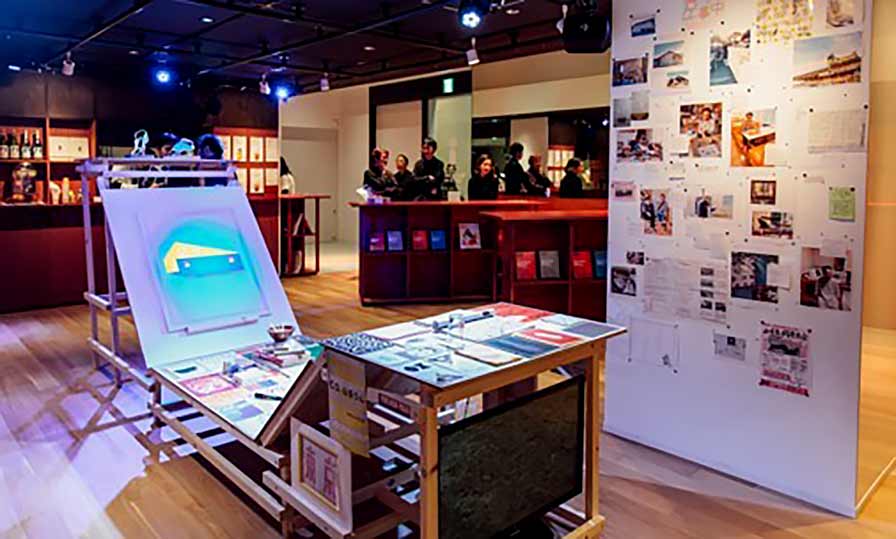
Kageyama: It's just getting started.
Nagahata: From a developer’s perspective, I’m sure this area will look very different 10 years from now.As things stand now, foreign visitors don’t understand the rules at restaurants, and restaurant owners aren’t yet perfectly equipped to accommodate them either. Still, it’s a fact that so many foreign visitors are coming here, and I think everyone—including the tenants—will have no choice but to adapt.
Kageyama: For example, Japan might end up needing a pricing system that charges a seat fee, and we might see an increase in standing-bar-style establishments as well.
Fujiwara: It's a fresh perspective to consider how to accommodate foreign tourists, including providing guidance at the store.
Nagahata: That’s right. I’m not sure whether the services will change or the tenants themselves will be replaced, but in any case, major development in an area always brings about changes. Shibuya-san also hopes to contribute, even in a small way, to those positive changes.