
Urban development where local communities and redevelopment projects are deeply intertwined. [Part 2]
SCROLL DOWN
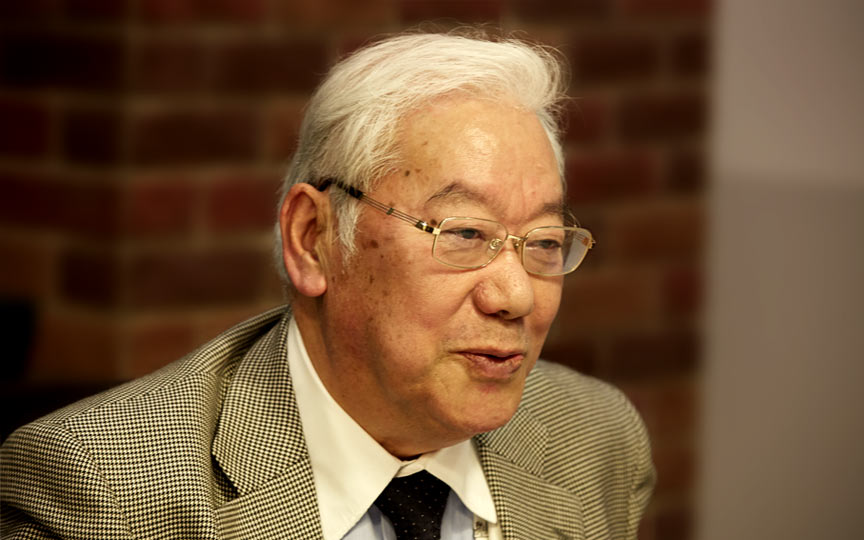
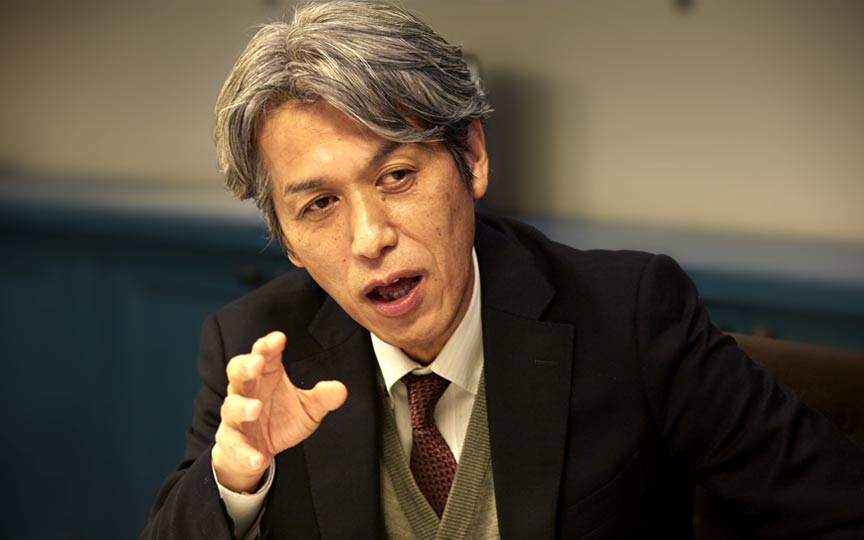
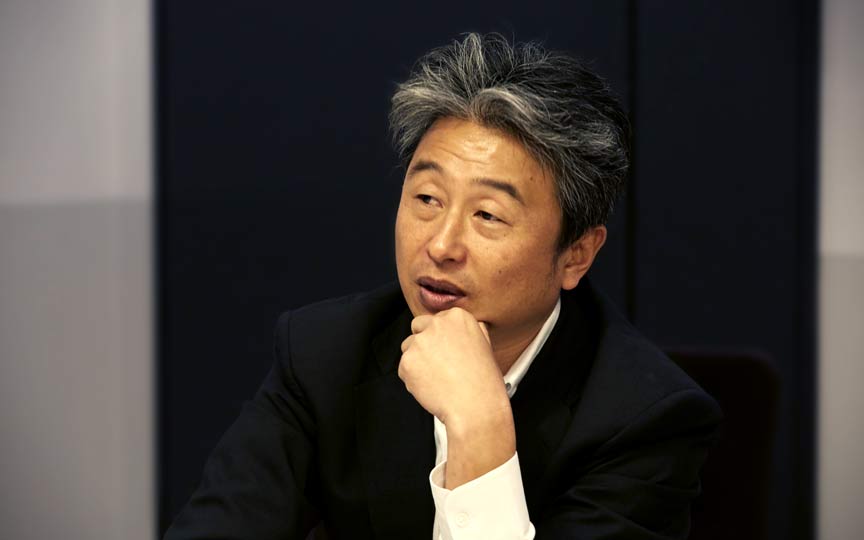
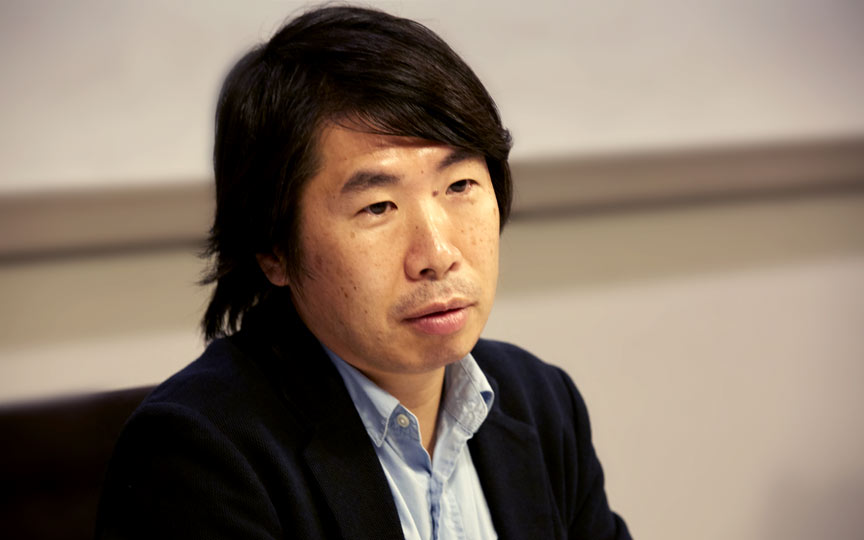
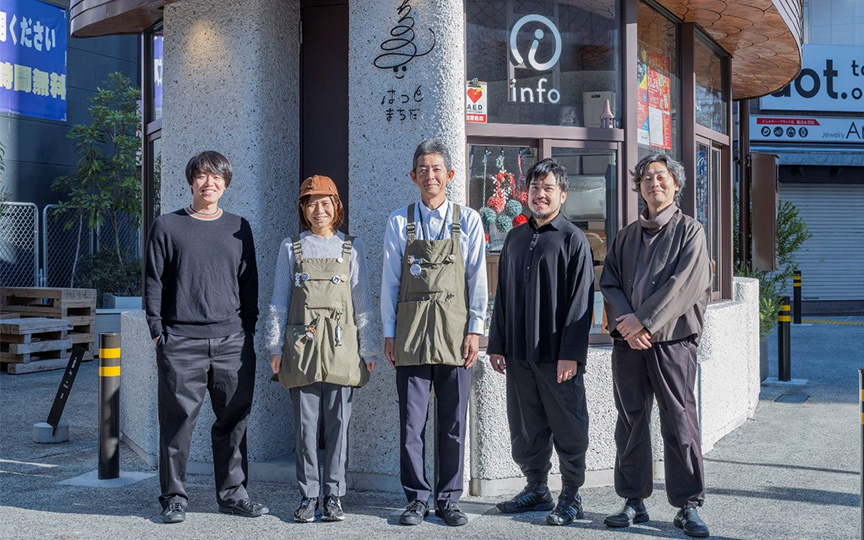
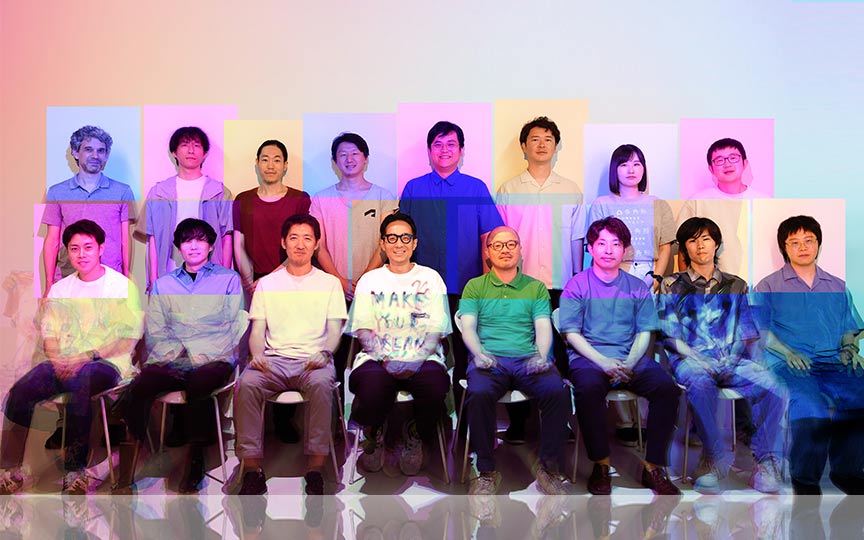
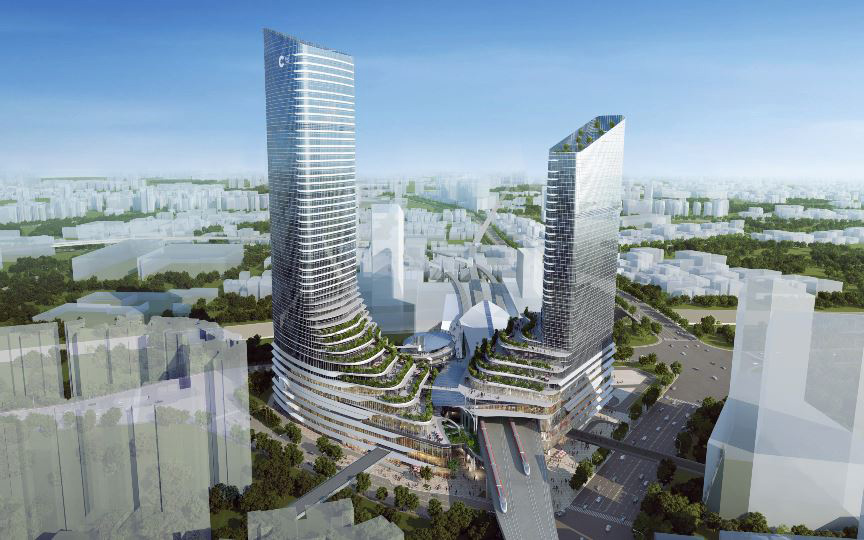
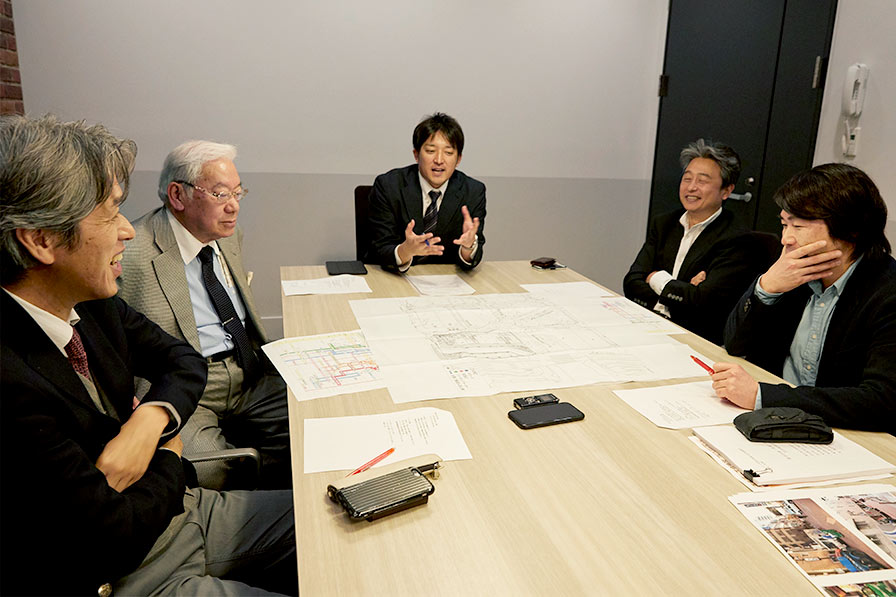
“Shibuya Furasu,” a redevelopment project encompassing the former Tokyu Plaza Shibuya and the surrounding blocks near the West Exit of JR Shibuya Station, was completed in October 2019. At its base, in the “Shibuya Chuo-gai” shopping district—nestled between Shibuya Mark City and National Route 246—numerous restaurants continue to thrive.Amid ongoing construction to develop the “western gateway to Shibuya,” a roundtable discussion was held to discuss the relationship between the redevelopment project and the local shopping street. Participants included Masaru Sakairi (center), former chairman of Shibuya Chuo-gai,Hiroshi Kageyama (center left), representative of Town Planning Partners, who served as a consultant for the Dogenzaka 1-chome Station Area Type 1 Urban Redevelopment Project; Atsushi Nagahata (center right) of Tokyu Land Corporation, a project partner for Shibuya Furasu;and Yuichiro Shinozuka (far right) of Nikken Sekkei’s Urban Division TOD Planning Department (Associate), who was involved in the development of Shibuya F-Class and supported the operations of the local council.What has the Shibuya Station West Exit area been like in the past, and what does the future hold? The facilitator is Kenya Fujiwara (far left) of the Redevelopment Planning Department, Urban Division, Nikken Sekkei (Associate). (Roundtable held in mid-February 2020)



The birth of a groundbreaking facility called "ESSA," a shared loading and unloading area.
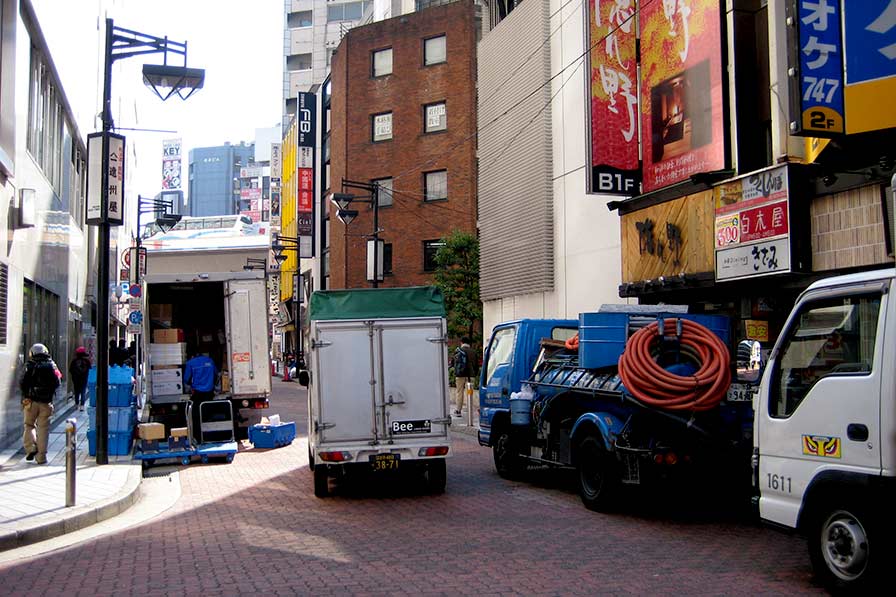
Sakairi: As the name suggests, Shibuya’s terrain is generally valley-like, but the area around Chuo-gai is flat, making it ideal for cargo handling.Because of this situation, there was a lot of illegal parking, which made the roads narrow. Of course, at first, I never imagined we’d be able to establish a shared cargo-handling area, but I really wanted to find a way to resolve the issue. One of the most significant steps was forming the “council.” I think it was a good move to thoroughly communicate our policy and explain how things would ultimately turn out.
Shinozuka: The first opportunity for local residents, developers, and government officials to come together and discuss cargo handling was the first study meeting, held in mid-2012.Of course, this was partly intended to demonstrate that our organization was taking the matter seriously as we prepared to submit a city planning proposal for this district. However, I recall that we proceeded carefully—including establishing the necessary framework—with a clear focus on the long-term, ensuring that the project wouldn’t simply end with the construction of the building.When the time finally came to begin construction, we elevated the organization’s status to a “Council,” formally invited representatives from Shibuya Ward and the police to serve as members, and held the first Council meeting in 2016. We still hold meetings three to four times a year.
Kageyama: By establishing review committees and advisory councils for each individual initiative and ensuring that our decisions were properly made public, we were able to secure the support of the government. I also believe this approach was effective in creating a situation where there was no turning back. Even when we encountered problems and had to pause, it was undoubtedly helpful to be able to look back and confirm, “We decided on this policy at that time, didn’t we?”
Nagahata: The organizational structure was great, wasn’t it? It was also crucial that Chuo-gai took the lead and got local government bodies—such as Shibuya Ward and the Shibuya Police Station—on board. No matter how much we as organizers champion the cause, we can’t accomplish anything without the cooperation of the local community and government.In reality, running the project is much more challenging than setting up the physical infrastructure, so I feel that building these relationships has become indispensable to the operation of ESSA.
Shinozuka: Since small and medium-sized buildings aren’t legally required to provide parking, in dining districts where such buildings are concentrated, shops often line the streets, creating a charmingly bustling atmosphere. However, while customers can reach these areas by train or on foot, it’s still necessary to deliver goods and supplies.I believe that establishing certain rules for vehicle use could be one solution to help preserve the neighborhood’s charm.
Sakairi: That’s true. In reality, individual stores may find it inconvenient—for example, they might no longer be able to unload goods in front of their shops or put out signs. But if everyone in the shopping district works together, it will ultimately make the whole town a better place and attract more customers.I think our consistent patrols have paid off, and thanks to everyone’s cooperation, I feel the road conditions have improved significantly.
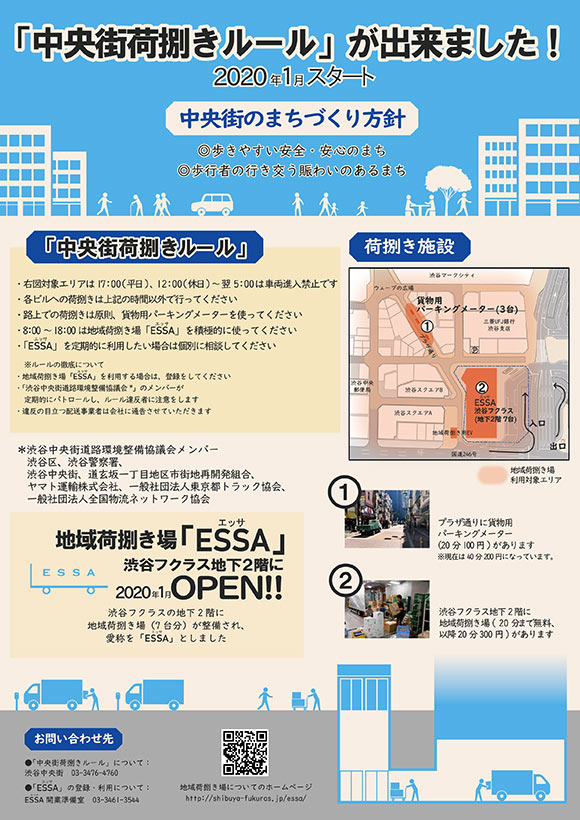 Flyers distributed during patrols, etc.
Sakairi: I think there are quite a few.
Kageyama: We're doing this through a public-private partnership that involves both Shibuya Ward and the Shibuya Police Station.
Shinozuka: We’ve participated a few times ourselves, and it’s still going on, isn’t it? By the way, how often do you conduct those patrols—like the ones to prevent soliciting at night—that you’ve been doing even longer than that?
Sakairi: Twice a month—I suppose that adds up to about 120 times in total.
Nagahata: In addition to Chuo-gai, Shibuya Ward, and the Shibuya Police Station, Tokyu Real Estate is also participating.
Sakairi: Local businesses have started helping out too, and at peak times we have a total of about 30 people—it’s quite an impressive sight (laughs). Lately, perhaps because the idea that this town is strict about keeping the area clean and following the rules has really taken hold, there are almost no unauthorized signs left.
Shinozuka: I suppose it’s precisely because local residents—starting with the people of Chuo-gai—are so committed to this effort that the government is able to cooperate. While people putting up signs or displaying merchandise on the street without permission is a common occurrence all over Japan, I don’t think the government would be able to take action without the backing of the local community.
Fujiwara: Compared to before the development, has the area around the West Exit become easier to walk through?
Sakairi: I think it’s completely different. The step between the sidewalk and the roadway is gone, and the street is wider, so I think it’s become much easier to walk on. The number of delivery trucks has also decreased significantly compared to when we surveyed the area before development.
Shinozuka: When “ESSA” opened in January 2020, the number dropped even further after they conducted patrols during a special enforcement period, didn’t it?
Nagahata: It feels like it's down to about half.
Kageyama: It might have turned into a city that people who work in cargo handling don't like (lol).
Fujiwara"How is 'ESSA' performing?"
Nagahata: We still have a long way to go, but consistency and perseverance are key, aren’t they? Something I felt very strongly through our patrol activities is that, even after carefully planning our strategy, in the end, we still have to roll up our sleeves and get to work. Each of us needs to keep working steadily at it, don’t we?
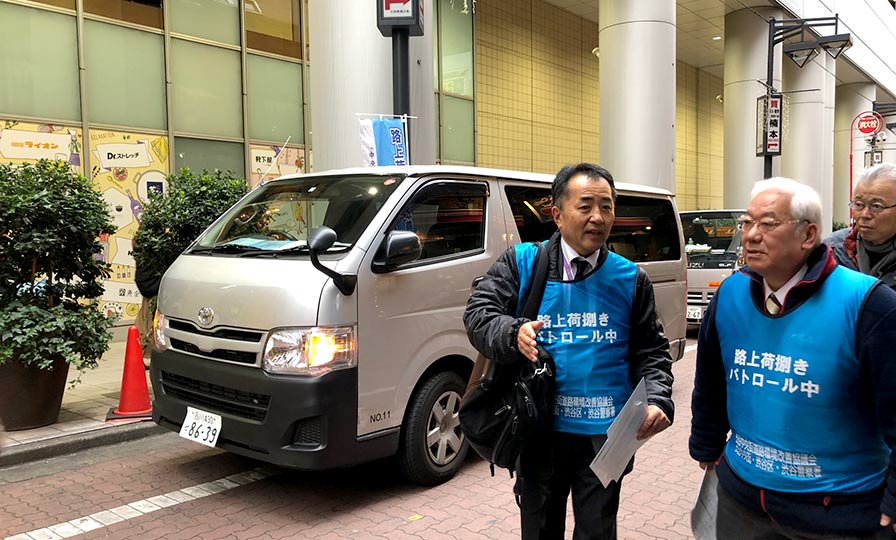 Patrol scene
The challenges ahead for the ever-changing West Exit area.
Nagahata: Now that access to the overpass on National Route 246 has improved, I feel like there are more people on the Plaza-dori side—those heading from Shibuya Mark City to National Route 246—not only during the morning commute but also in the evenings and later.
Fujiwara: There's a lot of foot traffic heading up the hill toward Shibuya Mark City, isn't there?
Kageyama: I think the fact that Tokyu Plaza has returned is a big factor, isn't it?
Nagahata: I’m not sure exactly how much I’ve contributed, but I think it’s particularly significant that Chuo-dori—the street where the Chuo-machi Gate is located—has become a striking, approximately 10-meter-wide thoroughfare thanks to the elimination of the curb height difference between the sidewalk and the road, the widening of the street, and the removal of the street trees.
Kageyama: Once the project for the entire Shibuya Station area reaches its final stage, it’ll really be much easier to get around. But it’ll still take about 10 more years to get there.
Fujiwara: The West Exit area will be undergoing infrastructure improvements, and I imagine that will lead to changes in foot traffic. So, I’d like to hear your thoughts on the future of development in the West Exit area, including Chuo-gai.
Sakairi: I feel like the plans for Nishiguchi Plaza need to move forward at a faster pace. It’s been quite a while since the idea was first brought up.
Kageyama: It's been 15 years already, hasn't it?
Nagahata: To be frank, I feel that Shibuya’s center of gravity has shifted to the East Exit, where development has progressed more rapidly. The Ginza Line was moved east, an underground plaza was built at the East Exit, and the East Wing of Shibuya Scramble Square the First Phase (East Tower) was completed.
Kageyama: Besides, there's already Shibuya Hikarie at the East Exit.
Nagahata: It seems to me that the center of gravity, which used to be in the center, has shifted significantly to the east. Don’t you think the people on the west side of the city need to give this some serious thought? I feel this even more strongly because I’ve been drilled on the idea within the company that Tokyu Plaza cannot thrive without the city’s development.
Sakairi: That’s right.There’s a major development project in the works for the southern area, where Sakuragaoka is located, and improvements to the Ōyama Kaidō—which connects Dōgenzaka and Miyamasuzaka—will likely move forward as well. Given that, we’ll have to give serious thought to our position on the west side. In that sense, I think the West Exit Plaza will be a major issue that could determine whether the western part of Shibuya thrives or fails.
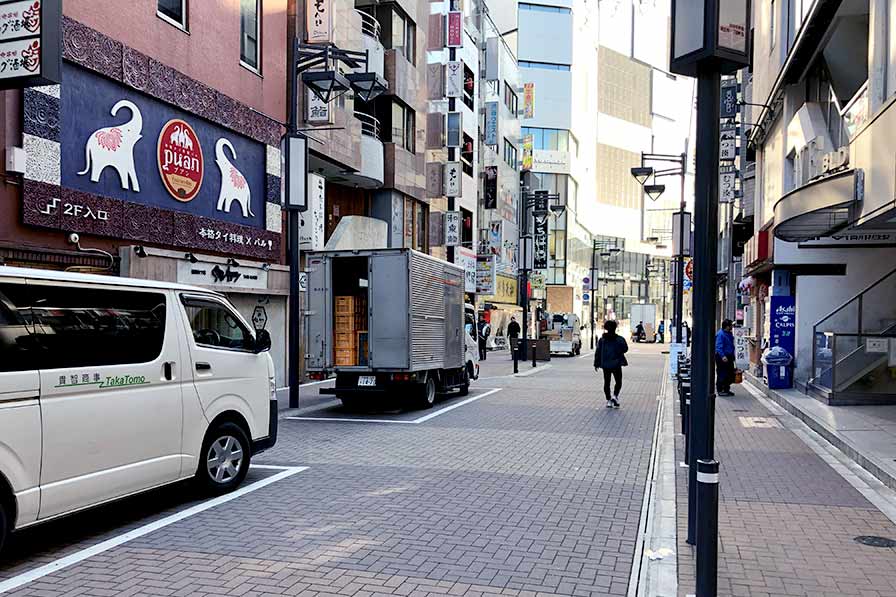 Roads that were developed in conjunction with the redevelopment
Kageyama: Ultimately, since the West Exit will essentially become a bus terminal, I think it’s important to move forward with our discussions based on how we envision it being used within that context.
Sakairi: As for Central Street, the final issue is how the exit from the plaza connects to Central Street.
Kageyama: Considering the order of development, there are some circumstances that make it difficult to implement that proposal right away... The challenge for the western side going forward is how much we can make the temporary traffic flow “people-first.” I’d like to see a more fundamental approach to that issue.
Shinozuka: Once Tokyu Department Store is demolished, people will be seen from the surrounding area moving in various directions on the deck level, with the station at the center. This, too, will become part of the new Shibuya skyline.
Fujiwara: Shibuya Furasu features an “Urban Core” that connects the ground level to the deck level, and with the development of a shared cargo handling area, Chuo-gai has been transformed into a pedestrian-friendly street that’s easy to walk through.I look forward to seeing how future developments will change the flow of people moving between the West Exit Station Plaza and Chuo-dori, and how Chuo-dori will continue to evolve.