
Toward a New Society Brought About by the Novel Coronavirus
~A Turning Point Toward Decarbonization~
Hiroaki Tanaka
(Title as of the time of publication)
SCROLL DOWN
According to an April 30 announcement by the International Energy Agency (IEA), CO2 emissions in 2020 are projected to fall by approximately 8% year-over-year due to a decline in fossil fuel consumption resulting from economic restrictions imposed during the COVID-19 pandemic. Since the decline was only 1.3% even during the Lehman Shock, this is expected to be the largest reduction on record.Although CO₂ emissions actually rose above pre-crisis levels following the rebound from the Lehman Shock, I would like to take this opportunity to share part of my vision: let’s make the most of the lessons learned from the COVID-19 pandemic and use the synergistic effects of expanding renewable energy and promoting energy conservation to accelerate our transition to a low-carbon economy.



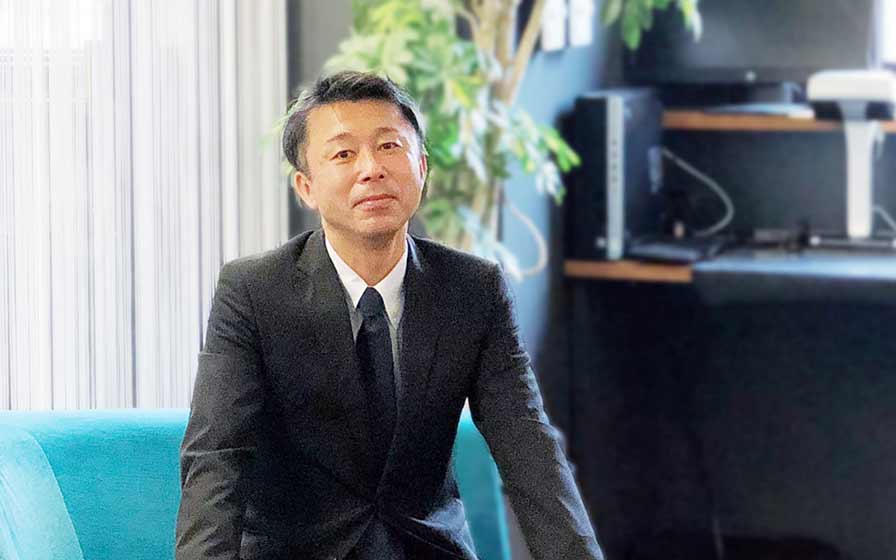 Engineering Department, Nikken Sekkei, Senior, MEP Design Group Director
Hiroaki Tanaka
(Title as of the time of publication)
Natural Ventilation and Natural Lighting That Spark New Ideas
Through self-imposed restrictions on going out and travel limitations, we’ve also come to deeply appreciate the importance of connecting with nature.By leveraging the favorable outdoor environment of the “30-minute city”—where the air is cleaner and temperatures are milder than in the city center—architecture centered on coexistence with nature is likely to grow in importance. And as this importance grows, we can expect a surge of innovative ideas for utilizing natural energy sources in functional new ways.Right now, at our office, we are taking on the challenge of developing an “innovative natural ventilation system that delivers natural breezes to people sitting away from windows and to meeting rooms enclosed by partitions.” It looks like we’ll soon be able to bring natural breezes into windowless meeting rooms. Of course, these ideas can be applied not only to suburban areas but also to buildings in city centers, provided the conditions are right.
While actively utilizing “open” technologies such as natural lighting and natural ventilation, it goes without saying that it is crucial to skillfully balance these with “closed” technologies—such as buffer spaces like balconies, sunshades to block solar radiation, and insulation in exterior walls and windows—during harsh weather conditions, such as the height of summer or winter.
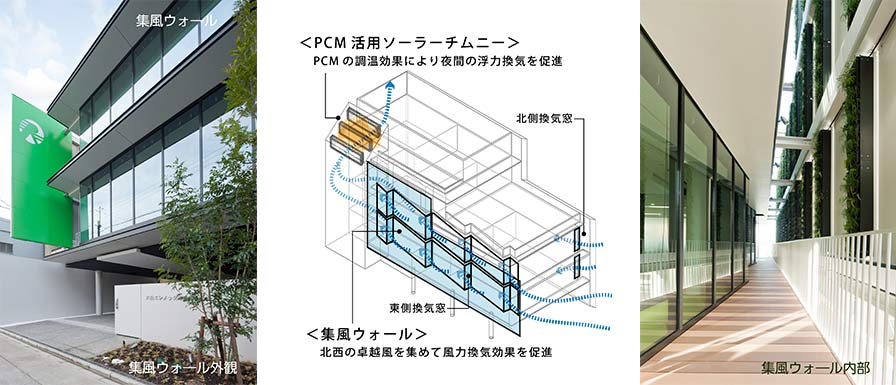 An Idea for Capturing Wind Implemented in a Small Office: Rokugo Elemech Headquarters Building (2011)
Large air-intake panels collect wind and channel it into the office, promoting natural ventilation powered by solar heat at the top of the stairwell.
"Energy Control of Time and Space"—A Key Concept
The “Cool·Warm Sofa” was developed as a localized climate control system that envelops people in cool or warm air emanating from the sofa itself, providing visitors—whether during hot summers or cold winters—with a sense of comfort in less than 10 minutes.While the concept is “achieving comfort for one person with minimal energy,” this is an approach we want to prioritize in future environmental and facility systems designed to coexist with COVID-19.
Furthermore, the “WELL & BCP Table” is a table that integrates localized climate control, indoor environmental monitoring, and disaster prevention functions into a single all-in-one package; it was designed to support energy-efficient, comfortable, and safe meeting environments.Post-COVID offices may evolve into “valuable spaces for face-to-face communication where people gather in person.” We expect this device to play a vital role in supporting such offices—where workers, meeting in person for the first time in a long while, engage in lively discussions about innovation—by ensuring they remain energy-efficient, comfortable, and safe.
The purpose of localized air conditioning is to avoid wasting energy. In the post-COVID era, we believe it will be far more important than ever to thoroughly eliminate waste through air conditioning and lighting systems that can flexibly adapt to people’s behaviors and control time and space.
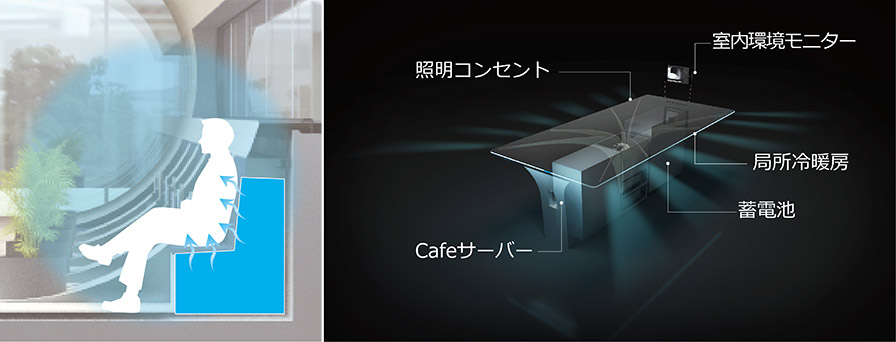 A Stylish Sofa for Any Time and Place / WELL&BCP_Table
From “Environmental Experience” to “Environmental Action”
Just as working from home made me rethink the nature of the office, watching children engage in home study and remote classes reaffirmed my belief that “the true value of school lies in experiencing things firsthand.” At Mizunami North Junior High School, we placed the highest priority on “environmental experiences” that allow students to perceive energy conservation through their five senses.We hoped that these environmental experiences at school would raise students’ awareness of energy conservation, which would then spread to their homes and communities, promoting energy conservation beyond the school grounds as well.
“Environmental experiences” help students understand the importance of living in harmony with nature and identify where energy is consumed—such as in air conditioning and lighting. Furthermore, they raise awareness of energy conservation, which will eventually lead to “environmental action.”
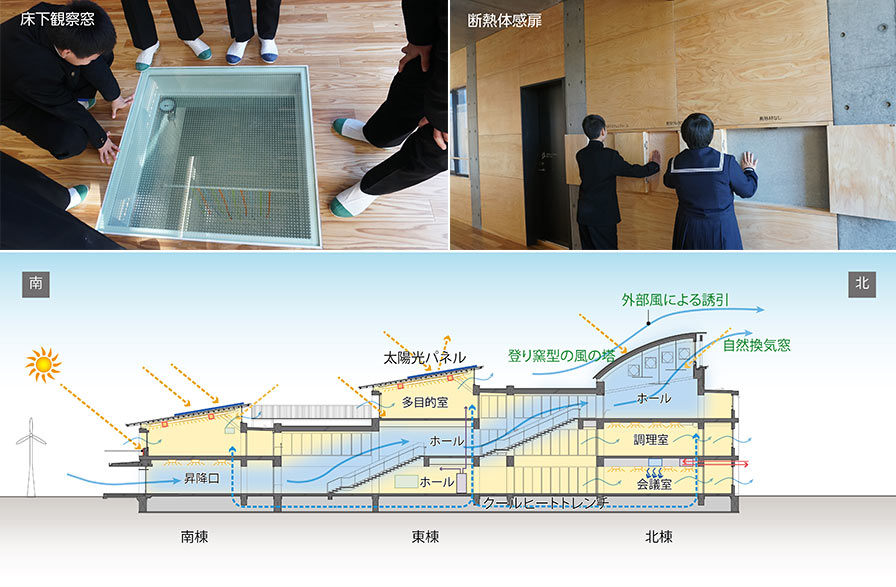 Japan’s First Zero-Energy School: Mizunami North Junior High School (2019)
Creating a healthy and open learning environment by utilizing natural wind, light, and heat.
Adaptable to a Changing Society
Toward Zero-Energy Buildings
By incorporating perspectives on health and infection prevention into our technology amid these changing conditions, and by enabling users and designers to collaboratively consider decarbonization while enjoying spaces that offer an environmental experience in harmony with nature—this is the kind of Zero-Energy Building we hope to achieve moving forward.I am committed to striving forward so that we, as architectural and environmental engineers, can play a leading role in accelerating the adoption of ZEB and ZEH at this opportune moment of shifting values. (July 17, 2020)