
Considering performance spaces from various perspectives
~A conversation with musical actor Naoto Kaiho~
SCROLL DOWN
日建設計には、建築設計事務所としては珍しく、古くから音響設計チームが存在し、これまで、社内の意匠設計者や他のエンジニアと共創して、「東急シアターオーブ 」や「フェスティバルホール」など多くの劇場・ホールなどを設計してきました
今回は、ミュージカル俳優として活躍されている海宝直人さんをゲストにお招きして、劇場やホール、ライブハウスなどのパフォーマンス空間について、弊社で音響設計を専門に行っている青木亜美とともにさまざまな視点、特に音について、語っていただきました。(対談日:2024年7月9日)
海宝直人氏PROFILE
PROFILE | NAOTO KAIHO official site



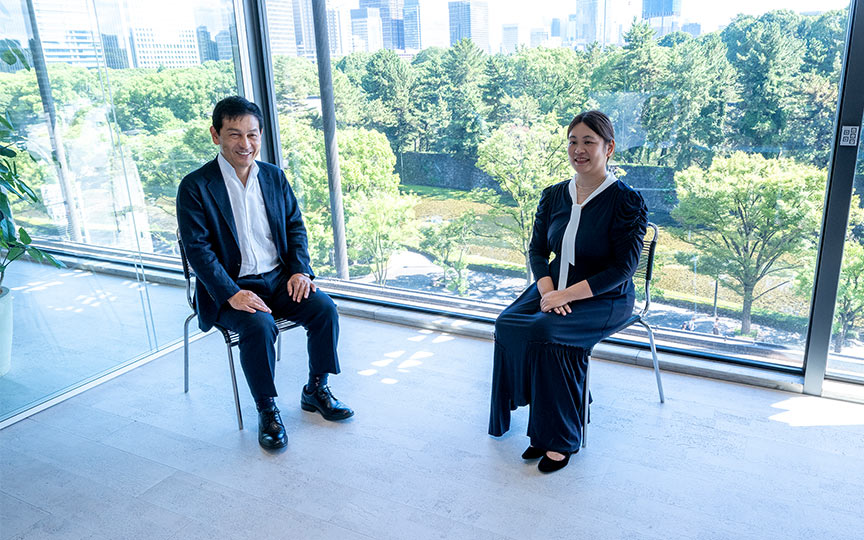
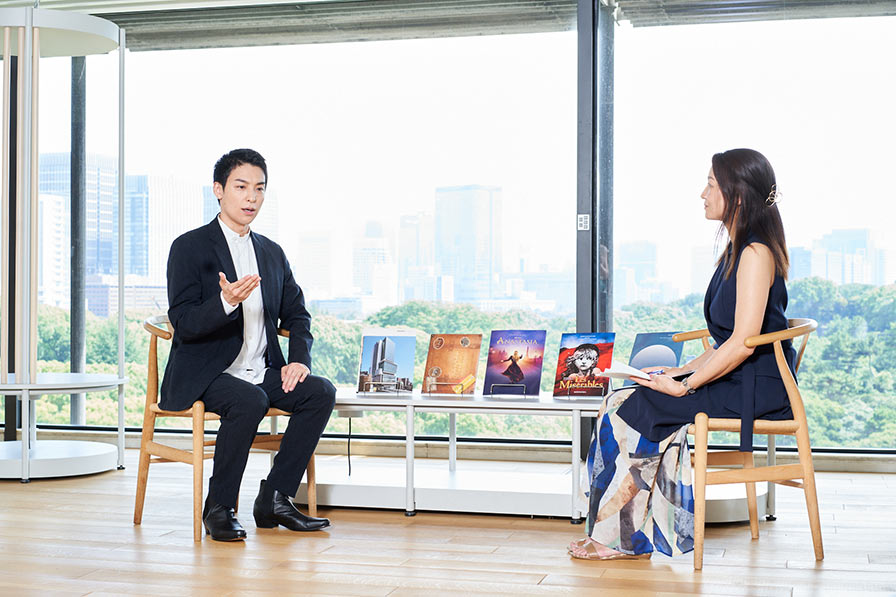
 Left: Naoto Kaibo; Right: Ami Aoki (Head of the Environmental Design Office at Nikken Sekkei Engineering Department)
Identify the characteristics of the theater and the performance, and adjust my voice accordingly.
The other day, I had the pleasure of seeing the musical *In This Corner of the World* (opening May 9, 2024, at the Nissay Theater and other venues), in which you are starring, Mr. Kaibo. Even now, several months later, it remains a wonderful production that has truly stayed with me!The venue was the Nissay Theater in Hibiya. The Nissay Theater is a masterpiece by the renowned architect Togo Murano, making it a special theater for us as architectural designers. What does the Nissay Theater mean to you, Mr. Kaibo?
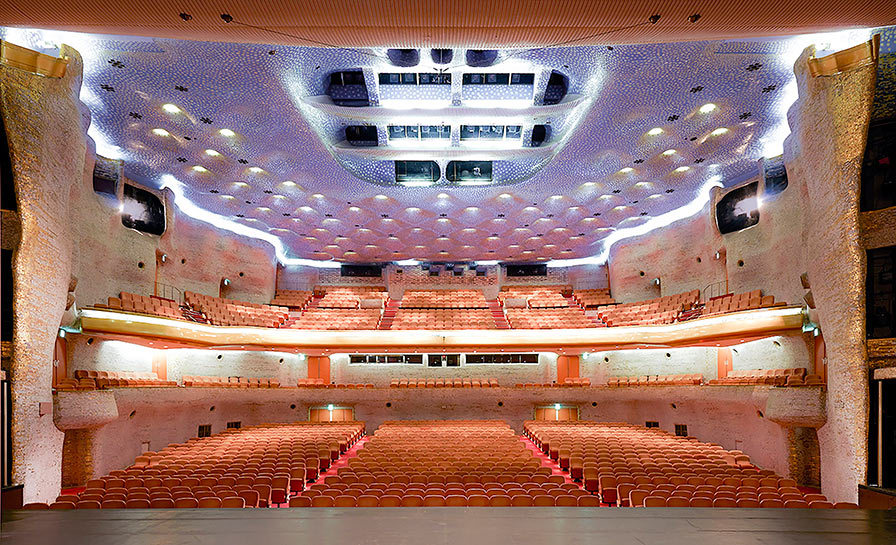 Nissay Theater (1963) Design: Togo Murano Image provided by: Nissay Theater
Just as the audience perceives a production differently depending on the venue, performers are also influenced by the space. The Nissei Theater has an organic, warm atmosphere, and I feel that both the audience and the performers can relax and immerse themselves in the world of the production.
Personally, I’ve had the privilege of performing there many times in various productions, so I have a special attachment to it. But the theater itself has deep ties to the Shiki Theatre Company, and with figures like Fukubuki Koshiji having held her “Long Recital” there, you can really feel its long history… which also makes me feel a sense of solemn responsibility. I feel truly fortunate to be able to perform in such a place.

Kaibo: Yes. During the performance, the audience is lit by the stage lights, so I can’t really make out their expressions, but I can definitely feel their breath and energy the moment the curtain rises.
Aoki: Do you rarely see—or perhaps can’t see—the audience’s expressions from the stage?
Kaibo: “In shows like *Les Misérables* and *Anastasia*, I don’t consciously make eye contact with the audience. However, depending on the show, there are scenes where I interact with the audience, so in those cases, of course, I do make eye contact.”
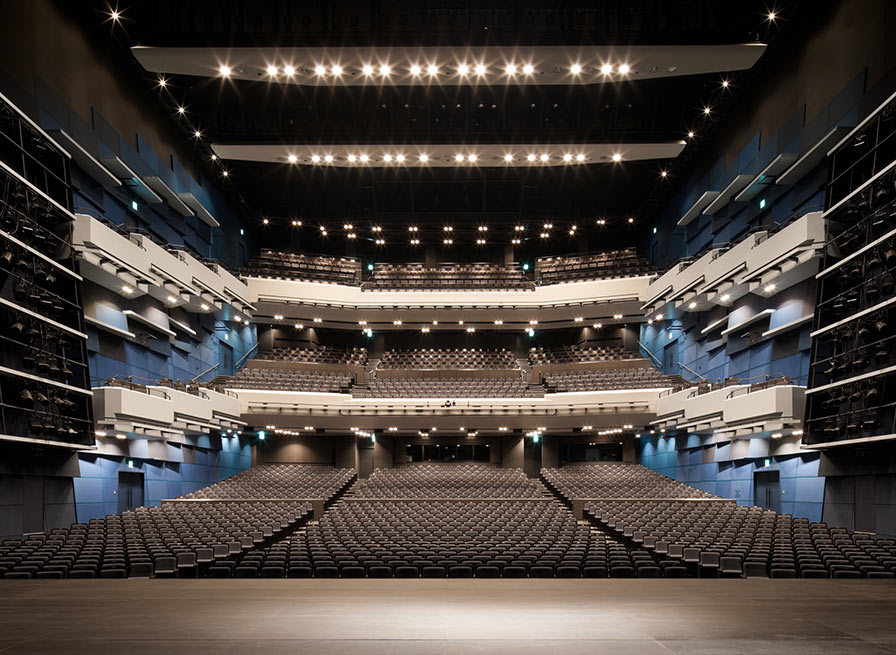 Tokyu Theatre Orb (2012) Architectural Design: Nikken Sekkei Photography: SS Co.,Ltd.
Mr. Kaibo performed on this stage in *Anastasia*.
Are there any theaters or halls that left a particularly strong impression on you?
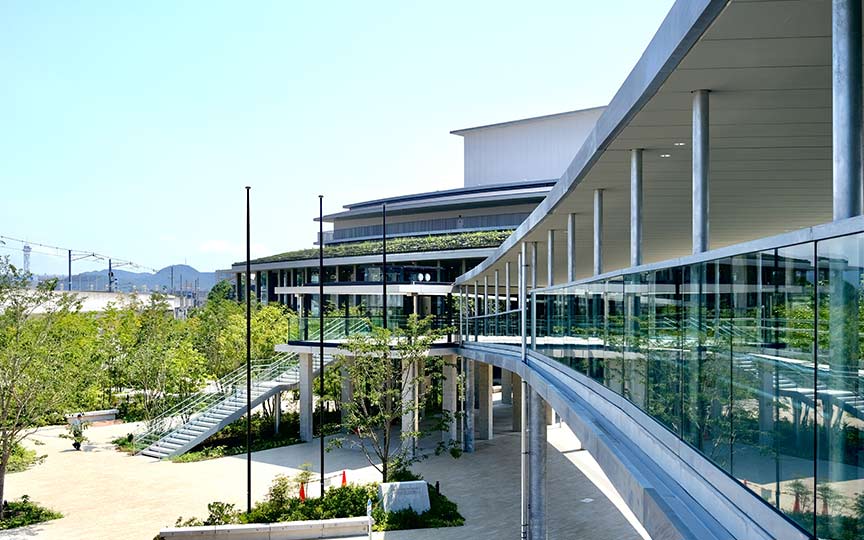
Kaibo: That’s right. The national tour actually kicked off at the Sapporo Culture and Arts Theater “hitaru,” which was designed by Nikken Sekkei. The space was so much larger, and the acoustics were completely different.I’ve performed at hitaru before in productions like *Les Misérables* and *Miss Saigon*, and the acoustics there are rich—or rather, there’s a tremendous amount of reverberation. So, we worked closely with the sound crew and the director to fine-tune the sound repeatedly.
For example, in a very “dead” venue (*a theater with little reverberation*), even in scenes with intimate dialogue, the actors don’t have to think too much about it—they can just speak at the natural conversational distance they’d use in real life.On the other hand, in a space with a lot of reverberation—where you can actually feel the reverb (an effect that adds echoes and reflections to the sound to create a sense of spatial depth and breadth)—if you speak as you would in normal conversation, it becomes hard to make out what’s being said. So, it’s better to deliver the lines in a slightly more deliberate and slower manner.
That’s why—not just for *hitaru*—we make these kinds of fine adjustments for each specific theater or hall.
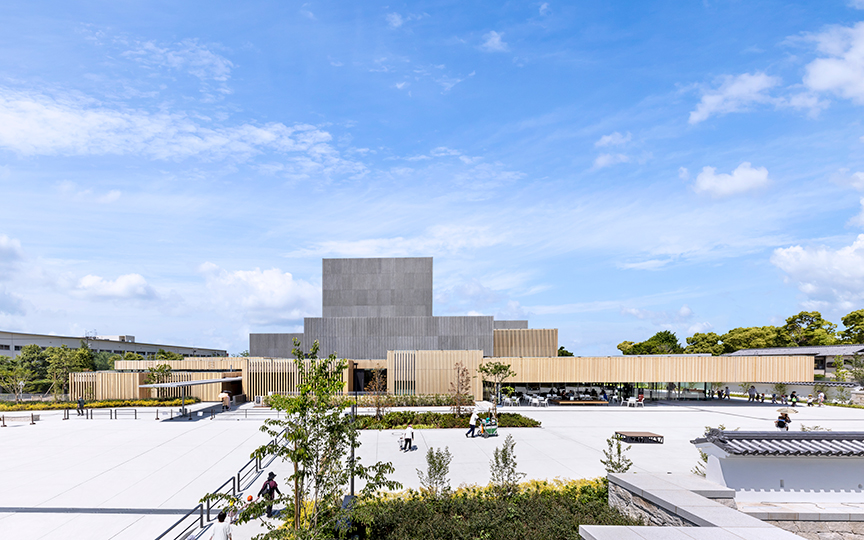
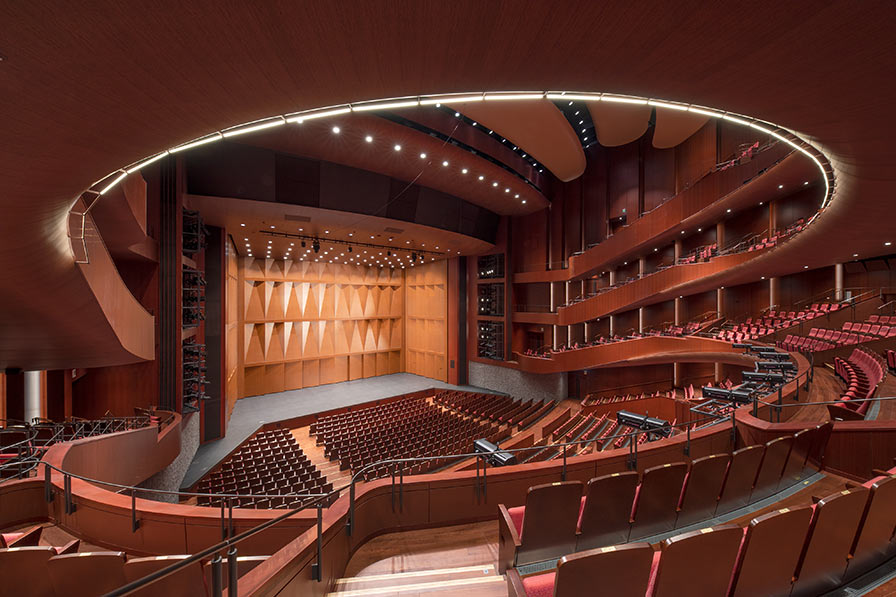 Sapporo Cultural Arts Theater hitaru (2018) Design: Nikken Sekkei Photography: Niitsu Photography
Kaibo: In *In This Corner of the World*, all performances outside the Nissei Theater lasted only 2 to 4 days, so it was a race against time, but the staff and cast worked together as a team to pull it off.

Kaibo: You’re right—that’s a tricky one. The answer would likely differ between musicals and operas, and to take it a step further, I think it would vary depending on the specific musical as well.
In *In This Corner of the World*, the production I appeared in, the setting is Japan, and the Japanese cast plays Japanese characters, so there are many scenes where the dialogue is delivered with a sense of real-life proximity. That’s precisely why a venue with a “dead” acoustic (short reverberation time) might be a better fit.However, for overseas productions staged on Broadway and elsewhere, the singing and dialogue are often scaled up, so in those cases, I think a hall with rich acoustics really brings out the best in the performance.
That said, we can’t exactly build a new theater or hall for every single production (laughs). So, both the staff and the actors need to understand the characteristics of the venue and adjust accordingly.
Aoki: In musicals performed in theaters with a capacity of over 1,000 people, it’s generally assumed that the singing will be amplified through speakers, but there are also times when performers sing with such a powerful, natural voice that they don’t even need a microphone, right?
Kaibo: For example, in London productions like *Les Misérables* and *Miss Saigon*, the music is performed by a grand orchestra. However, the international creative team wants the performance to feel as authentic as possible, with the sound directed at the actors on stage (“return”—referring to the speakers used to project sound toward the performers) kept to virtually zero.So, since the actors basically sing with almost no “return” sound, in a sense, it’s a huge help when they can sing into the space and hear the sound bounce back.
While what they seek varies depending on whether the actor comes from a theater or music background, the recent trend seems to be moving toward a more “raw” approach rather than relying heavily on PA (short for Public Address;—a sound system comprising microphones, mixers, amplifiers, and speakers—but rather to go for a more raw, live sound. I feel this is becoming particularly common in grand musicals. However, when it comes to rock musicals, the situation changes a bit, and I get the sense that the request becomes, “Give us a full-on PA!”
……I’ve spoken with some stage sound engineers before, and they say that if the acoustics of a theater or hall are beautiful, it’s easier to control the sound.There are some theaters that don’t have the best reputation; while they have natural acoustics, the sound is muddy, making it extremely difficult to control. So, they’d hang curtains to create a “dead” space that absorbs the reverberation, and then set up the PA system accordingly.
In other words, as an actor, a completely dead space is exhausting, so I think the ideal situation is to have a certain amount of natural resonance and have the sound team control it from there.
Kaibo: I think it will be different.When it comes to theater, I find that spaces where the distance to the audience is close—where the sound doesn’t reverberate too much and allows for a raw, spontaneous interaction—are easier for Private to work in. On the other hand, for concerts where instruments are played live on stage and I sing against that backdrop, the acoustics naturally become more important. That said, when singing pop or rock, it’s also nice to create the performance in a space like a live house rather than a concert hall.
Aoki: Do you ever decide on the program after seeing the venue and checking the acoustics?
Kaibo"We talk with the members about things like, 'Since this is the kind of venue we're playing at this time, it would be great to have a lot of songs like this,' or 'Since we're playing at a live house, let's play a lot of songs with a strong rock vibe.' Besides, the experience is completely different for the audience—sitting down to listen to music in a concert hall versus standing up to listen to it at a live house."
Aoki: In your concert, “ATTENTION PLEASE!,” you’ve also taken on the challenge of structuring and directing the show. Did that allow you to approach the work from various angles, rather than just from the perspective of a performer?
Kaibo: That’s right. One change I’ve noticed in recent years is that I’ve started thinking about things beyond just “acting.” When you’re solely focused on acting, you rarely have the chance to meet with staff members like the lighting designers or the orchestra; basically, we actors just adapt to the plan decided by the director.
I’ve put together the structure for my own concerts before, but since *ATTENTION PLEASE!* was structured with the first part as a play and the second part as a concert, it was a more in-depth challenge than anything I’d done before. By participating in meetings with the staff and experiencing the creative process firsthand, I feel like my perspective has broadened a bit, even when I’m performing as an actor.
Aoki: By the way, I was struck by something Mr. Kaibo said in another interview—he used the phrase “speaking the song” rather than “singing the song.” At first, I interpreted this to mean that he views the lyrics as part of the dialogue, but as I listened to him talk about various things, I came to think that perhaps he meant he’s always conscious of how to convey the sound to the audience from the stage.
Kaibo: Yes. Especially with imported works, the translated lyrics are often set to the melody, and even in Japanese musicals, strong accents can sometimes fall on parts of the language that aren’t particularly important—such as particles. When that happens, the Japanese language structure breaks down, so it’s very important to be mindful of the balance between the music and the words and to make adjustments accordingly.
When singing pop music, you might deliberately shift the timing or take a breath in between to create rhythm and groove, but with musicals, since it’s ultimately a form of theater, you have to accurately convey the intonation and expression of the words. In that sense, I say we “speak the song.”
Something like "my own life" resides in the theater.
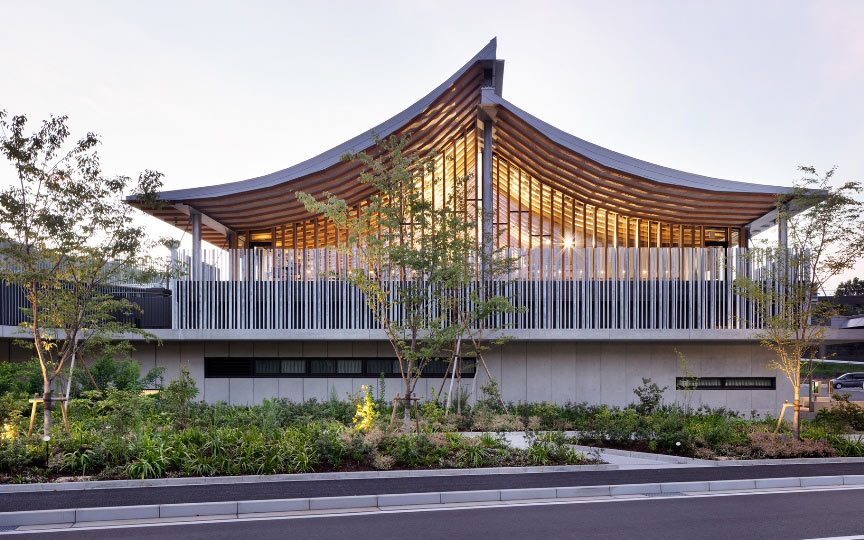
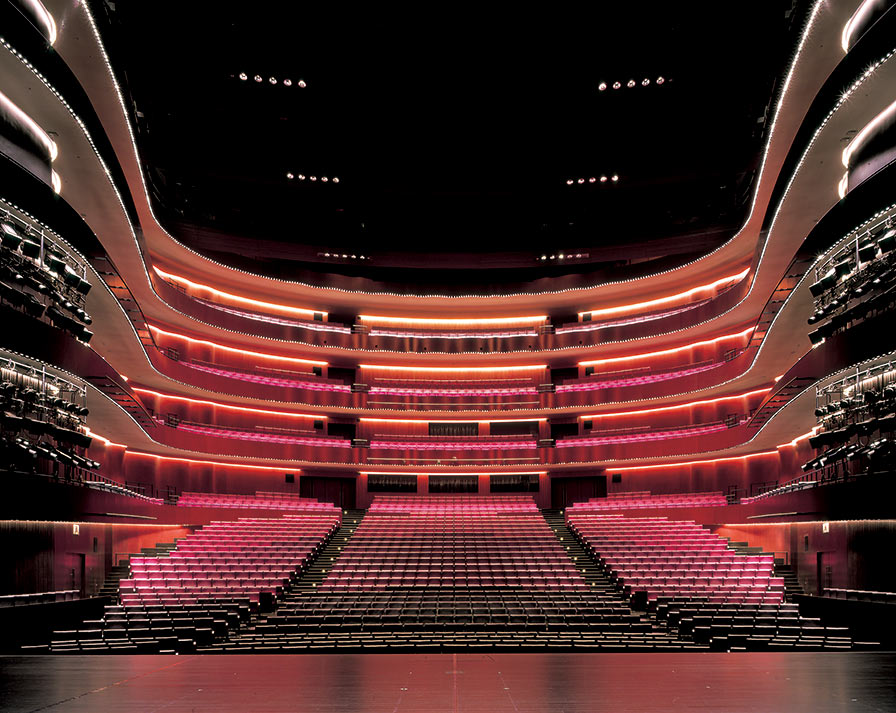 Matsumoto Performing Arts Centre (2004) Designed by Toyo Ito & Associates, Architects
Image courtesy of Matsumoto Performing Arts Centre
Aoki: The lighting on those balcony seats and the slightly mysterious interior—it really gets your heart racing the moment you open the theater doors, doesn't it!
Kaibo: That’s right. I think the theater experience begins the moment you step foot inside a theater or hall, and I believe every audience member has a favorite theater or one that holds special meaning for them.

Kaibo: In the world of “theater,” rather than sensing any particular differences, I realized that what we do and the direction we’re heading in haven’t really changed much. It made me realize that actors overseas are all thinking along the same lines.
However, when it comes to theaters, I thought Japanese theaters were very beautiful.I performed at a theater called the Peacock Theater, and while the facilities were showing their age, it was a space with a certain warmth—a space that couldn’t be defined by efficiency alone—where I could feel the history that had been built up over time. On the other hand—though this might not be limited to theaters—I got the impression that Japan has a lot of new and beautiful buildings. Perhaps that’s just because they’re so well-maintained.
Aoki: That’s an interesting story. We often renovate or rebuild theaters and concert halls, and we sometimes get requests like, “We want to update the systems—such as the HVAC and electrical—but we don’t want to change the appearance, atmosphere, acoustics, or interior design.”
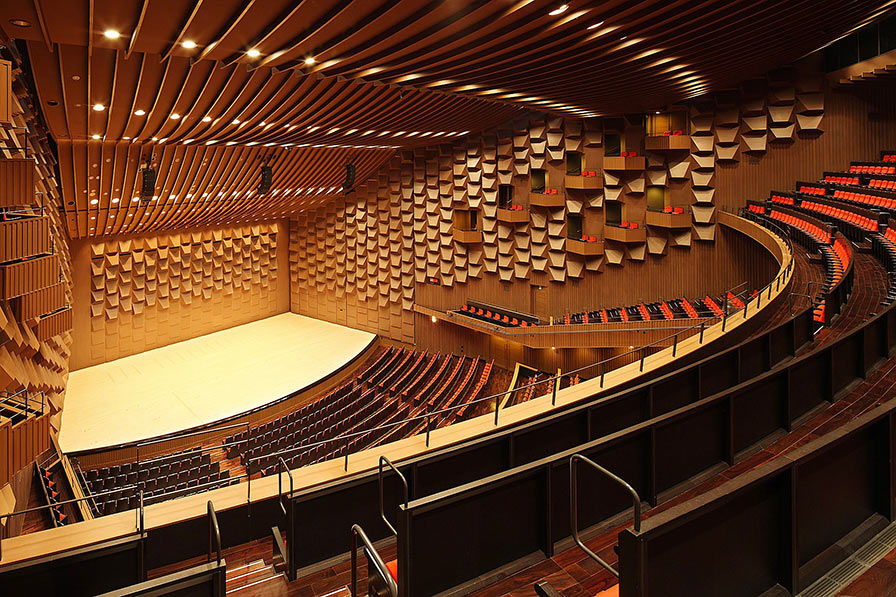 Festival Hall (Rebuilt in 2012) Design: Nikken Sekkei Image courtesy of: Takenaka Corporation
It inherits the excellent acoustic characteristics of the former hall, which was described as having “sound pouring down from the ceiling.”
Japan’s relatively new theaters are stylish, but they can also feel quite impersonal, can’t they? When performing in the style of “Private,” it’s helpful to have a space where you can feel a warm, human touch. It feels like we’re creating the play together with the space itself.
Aoki: “In harmony with space!” As someone who works in architecture, those are words that make me very happy.
Kaibo: I think all the other actors feel the same way. I’m sure everyone has their favorite theaters or theaters that hold special memories for them—theaters where they think, “I always feel at ease when I come here,” or “I’m so glad to be back.”
Aoki: It’s said that the theater is imbued with the “spirit” or “energy” of the actors who have performed on its stage over the years. Do you feel that, Mr. Kaibo?
Kaibo: That’s true.
Take, for example, the Shiki Theatre Company’s production of *The Lion King*. I had the honor of playing Young Simba during the premiere, and when I returned as Adult Simba—after the theater had been rebuilt—I felt, how should I put it?—something I hadn’t felt during the premiere: the emotions and the lingering atmosphere of all the people who had performed there over the years.
Also, since the Imperial Theater has such a long history, the atmosphere when you step into the dressing room is unique. I think the “spirit” and “energy” of all the theater artists who have performed there over the years are still present.

Kaibo: Well, it was actually a pretty rough venue, but the concert (“Baltic Neopolis Festival 2018”) was truly memorable.
It was a summer concert, and Europe was experiencing a record-breaking heatwave. Since we hadn’t anticipated such extreme heat, we ended up gathering fans from all over the venue—which didn’t have air conditioning—and singing while surrounded by a bunch of them on stage... (laughs).It was a venue that held about 500 people, and the audience was drenched in sweat too. It was incredibly hot, but the energy was off the charts.
Aoki: Really?! But there’s something truly special about how unexpected incidents can create a sense of unity between the performers and the audience.
You’ve performed in all sorts of venues, Mr. Kaibō—do you ever get the chance to sing outdoors? With a voice as powerful as yours, the neighbors might be in for a surprise (laughs).
Kaibo: They’ve been popping up more and more in Japan lately, haven’t they? I don’t have much experience with them myself, but I did once perform at a live house called “Cyanotype” that opens only during the summer on Zushi Beach in Kanagawa. It was a live house built right on the sandy beach; from the stage, we could see the ocean, and both the audience and the performers were able to relax and enjoy ourselves.
I suppose the psychological impact of the space really is significant. When the space is beautiful, elegant, and high-quality, I feel like the audience naturally shifts into “full-attention listening mode.”
Aoki: It's true—at classical concerts, for example, you might find yourself in "full-attention mode."
Kaibo: It’s often said that Japanese audiences are serious and sincere. I notice this myself when I attend theater performances abroad, and since I frequently work with international creative staff in Japan, it seems their reactions to Japanese audiences strike them as something new.
We will continue to cherish the irreplaceable time we share our experiences.
It completely overturned the preconceived notion that “the theater space must keep its doors closed and maintain silence.” I think it would be fascinating if we could extend the world of a production not just to the stage, but to the lobby, the foyer—and, to take it a step further, even to the streets.
Kaibo: Each director has been experimenting with various approaches. In the main performances, they’ve effectively utilized the hanamichi and the audience seating area, and in the case of *In This Corner of the World*, they even converted part of the orchestra pit into an acting area—all as ways to bridge the gap with the audience.For *ATTENTION PLEASE! 2*, I also wanted to make the most of the theater, so I came up with a scene where a character suddenly emerges from a door somewhere in the audience.
Oh, and speaking of the Shiki Theatre Company, they used to put on a circus in the lobby for their production of *A Dream Awoken from a Dream*, didn’t they? I, too, think spaces where you can try things like that—places with a sense of playfulness—are truly wonderful.
Aoki: When we design theaters and concert halls, we do so with the hope that people will use them in a certain way, but at the same time, there are sometimes discussions along the lines of, “Even if we spend this much money, will people actually use it?”… It’s kind of like how sometimes you buy a toy for your cat, but it never plays with it at all, right? (laughs)
Kaibo: Oh, right—actually, I like the cardboard boxes even better (laughs). I mean, I think theater people are always thinking about how to use theaters and auditoriums efficiently and in interesting ways.
Aoki: Next year marks the 30th anniversary of your debut. You’ve been active on the front lines all this time, Mr. Kaibō—to wrap up, could you tell us what keeps you going in your current work?
Kaibo: To be honest, there are moments when I think, “This is tough” or “Why am I doing this?” When I’m on set surrounded by creative and talented people, I’m acutely aware of my own lack of talent, and there are times when I feel like giving up.
But at the same time, I realize that the sense of elation created by theater spaces and performance halls—that kind of richness in life—is what gives me the strength to keep going. Whether I’m in the theater as an audience member or on stage as an actor, the time we spend sharing that experience together is irreplaceable, and deep down, I really love it.These days, it’s easy to enjoy productions and entertainment on demand, but there are things you simply can’t experience unless you’re there in person.
I feel like I’ve kept running this far because I’ve kept telling myself, “If I can contribute even a little bit to creating such wonderful moments, maybe I should try a little harder.”
Aoki: Watching Mr. Kaibo and the others perform really gave me a boost. I’ll do my best again tomorrow! As someone involved in theater and concert hall design, this was a truly valuable opportunity for me. Thank you very much.
After our conversation, she said, "I envy architectural work because it leaves a tangible result, unlike theater, which is over in an instant." I replied, "But theater stays in your heart with its freshness forever, doesn't it?" Her smile at that moment was very memorable. Despite these differences, I felt that both architecture and theater have something in common: professionals from various fields come together as a team to create something and deliver it to the audience.
The entire sound design team feels honored and humbled to think that the spaces and sounds of halls and theaters we have worked on, and will work on in the future, may become another member of the stage production team. (Aomi Aoki)
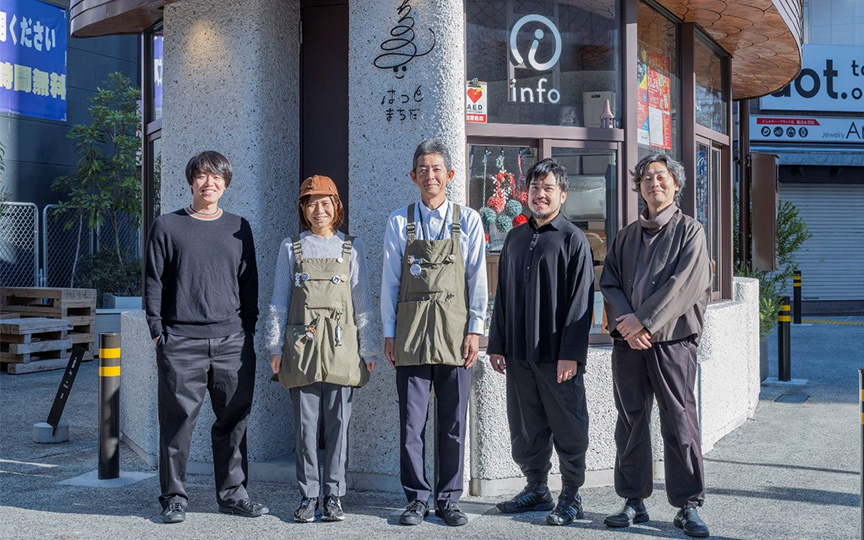
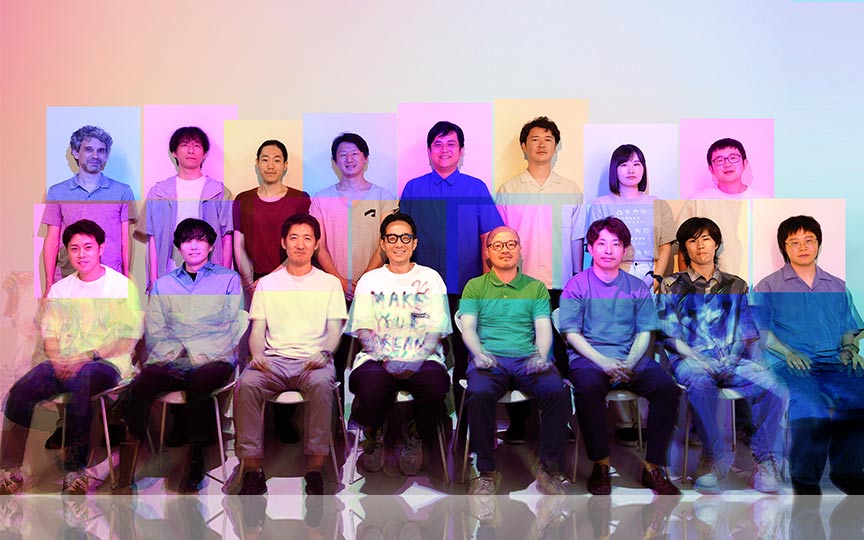
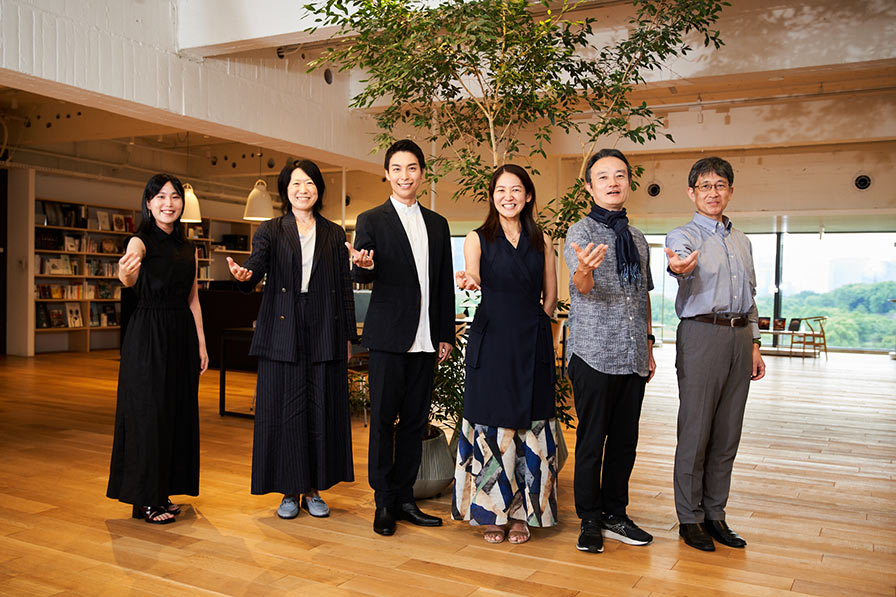 From right: Koichi Nakagawa, Yoshihide Shiba, Ami Aoki, Naoto Kaibo, Yumiko Miyasaka*, Mizuki Inoue
* Representative of the Equipment Design Group at Engineering Department
and other members of the Acoustic Design Team