
The diverse environment of Shibuya expands the group's possibilities. [Part 2]
SCROLL DOWN
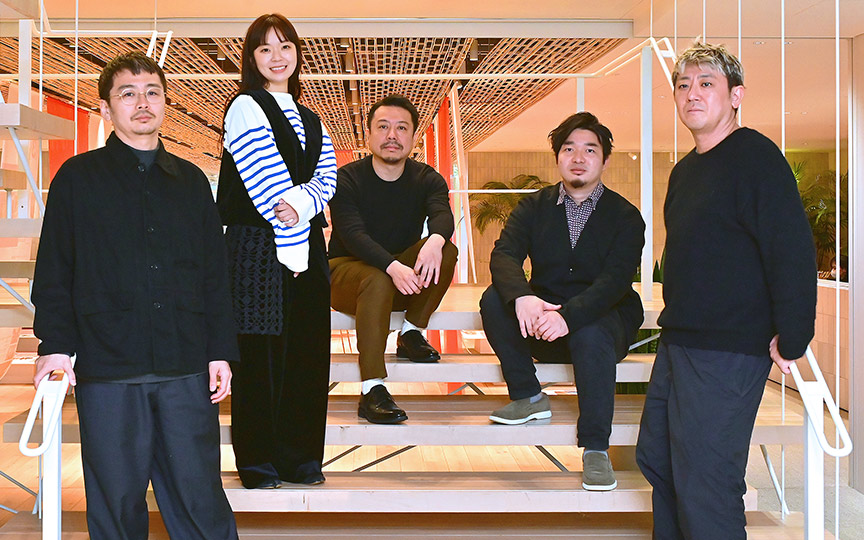
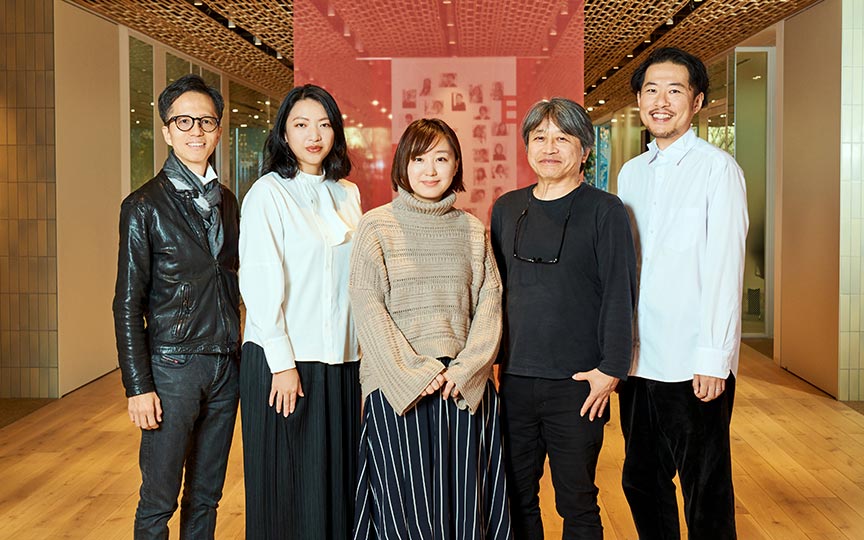
On November 1, 2019, “Shibuya Scramble Square the First Phase (East Tower)” opened as a new landmark in Shibuya, marking a major milestone in the Shibuya redevelopment project. To commemorate this, we held a roundtable discussion with members from various Nikken Group companies who have been involved in the project throughout its various phases.The participants included Masahiro Hayashi, formerly of Hokkaido Nikken Sekkei and now with Shibuya Ward; Kiyoshi Okumori from Nikken Sekkei; Yuki Watanabe from the Nikken Sekkei Research Institute, which handles urban policy planning;Ken Katayama from Nikken Space Design, which handles interior design; Kazuhiro Yokote from Nikken Housing Systems, which specializes in multi-family housing; Takayoshi Masagaki from Nikken Sekkei Civil, which oversees civil engineering; and Keiichi Uenomachi from Nikken Sekkei Construction Management.What do these seven individuals have to say about the city of Shibuya and the Nikken Group from their respective professional perspectives and positions? The facilitator is Shinobu Kang from Nikken Sekkei’s Project Development Division.



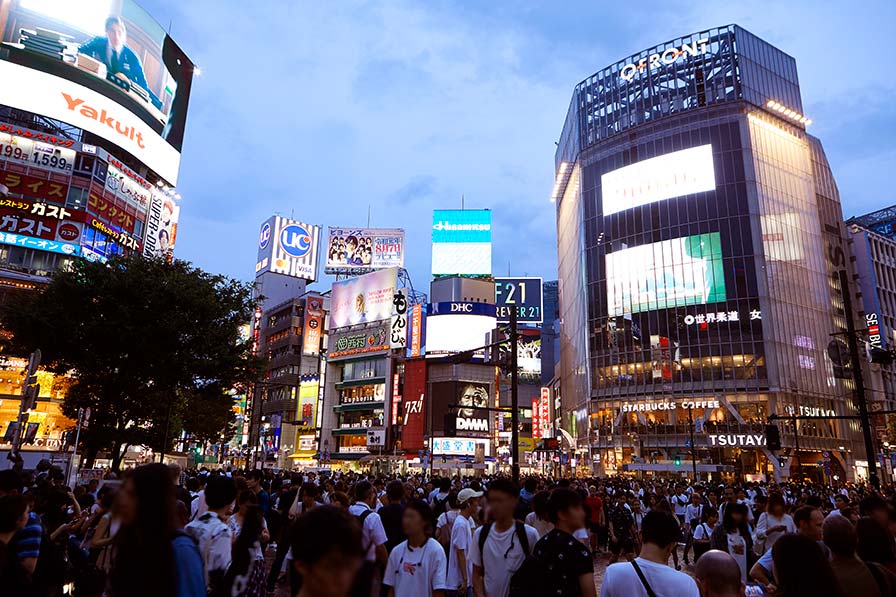
Leveraging the potential of "people" and "places" to create depth in the city.
Watanabe: I suppose it was the establishment of “Shibuya Future Design,” a general incorporated association dedicated to promoting next-generation urban development in Shibuya Ward.When creating a new organization, we started by compiling a list of the types of talent we wanted to recruit and identifying companies to approach for funding. After that, we spent two years carefully considering exactly what kinds of projects we would undertake. In other words, we worked to put the organizational structure, projects, and funding in place.
Okumori: : Nikken Sekkei is also involved in the Shibuya Future Design project, isn't it?
Watanabe: Yes. When we established Shibuya Future Design, we focused on how to bring out the best in the diverse range of people who live, work, and visit Shibuya. We decided that Shibuya Future Design would take on the role of engaging everyone connected to Shibuya to move new projects forward, and we’re just now getting started.
Ginger: What did you think of the community development master plan?
Watanabe: A master plan comes long before the actual construction phase; it’s about creating a broad vision for urban development that serves as the foundation for city planning, right? We wanted to incorporate the ideas of the people who actually live in Shibuya, so we held a series of workshops to turn their proposals into designs—and the level of creativity was truly remarkable. I felt that the very existence of such people is what makes Shibuya such an interesting place.Another important point is that the master plan covers the entire Shibuya Ward. While attention inevitably tends to focus on the area around the station, “Shibuya Ward” also includes Daikanyama, Harajuku, and Yoyogi.
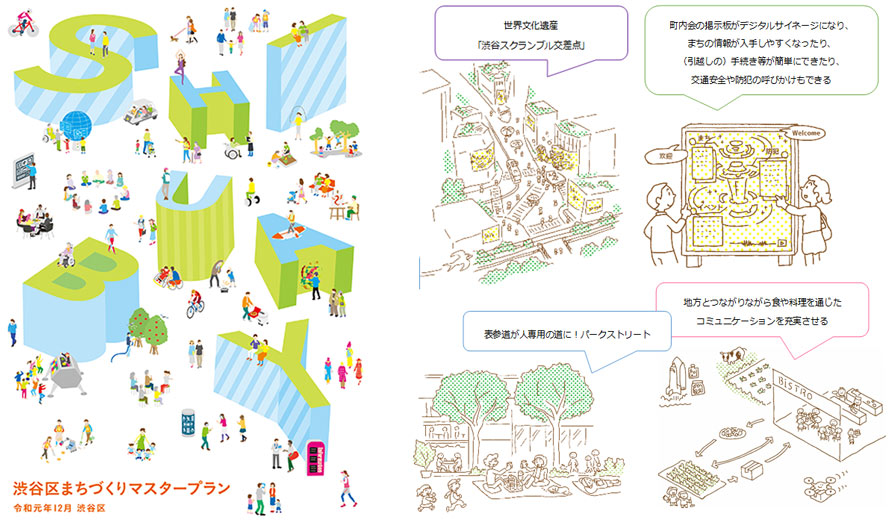 The cover of the "Shibuya Ward Urban Development Master Plan" (left) and the "Future Vision Envisioned by Shibuya Residents" (right) featured inside.
Watanabe: Well, how should I put it? Shibuya Ward has such a unique character, and the creativity of both its people and places is unmatched anywhere in Japan. And now that Mr. Hayashi will be working in Shibuya...
Ginger: You did a great job tying that together (laughs).
Hayashi: Please don't give me such a tough assignment (lol). Anyway, today I brought a drawing inspired by the baobab tree I mentioned at the beginning.
Ginger: I can really feel the energy.
Katayama: I can feel the energy, but I don't know what he's drawing (laughs).
Masakaki: You really went ahead and posted this, didn't you? (lol).
Hayashi: It was right after I started working here… That’s pretty bad, isn’t it?
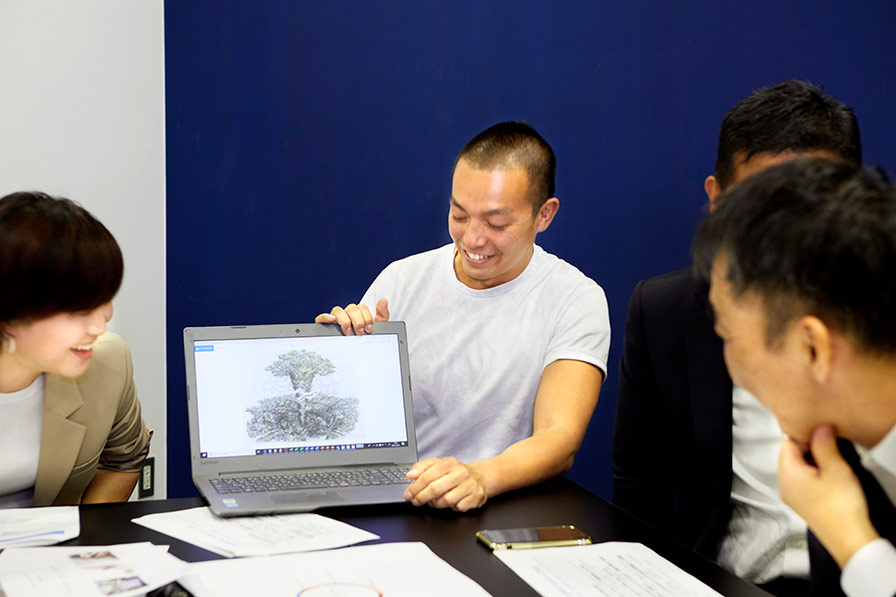
Hayashi: Yes. What I’m doing in Shibuya Ward is sharing our vision and concept. I create illustrations and PowerPoint presentations to share with everyone, and then we decide how to move forward and who to consult.Right now, the area around Shibuya Station is being heavily branded, but the surrounding parks and rivers are still lagging behind. Even though the River Act, the Road Act, and the Park Act have all been amended—creating an environment where private companies can undertake projects—they haven’t been able to take the plunge yet. I was tackling exactly this kind of challenge at Nikken Sekkei in Hokkaido, so it’s a natural progression for me to take on this challenge in Shibuya now.
Watanabe: The topic of public spaces is also included in the master plan.
Hayashi: Mr. Katayama mentioned the office situation earlier, but now there are shared offices and coworking spaces popping up even in areas far from the station, and foreigners are working there as a matter of course. When I asked them about it, they said something like, “It’s cool to connect with the world while surrounded by greenery in a quiet spot away from the station.” With the city center at the heart and unique attractions surrounding it, branding the area as a whole creates depth—and I think that’s how Shibuya will move on to the next stage. Mr. Watanabe views the city from the outside with a broad perspective, but I hope to be right in the thick of it, coordinating to connect the government, businesses, and local residents.
Watanabe: Shibuya is a place where entertainment, creativity, business, and culture are thriving, but that’s mainly true of the area around the station. Looking at Shibuya Ward as a whole, as Mr. Hayashi mentioned, there are parks and rivers, as well as residential areas—it’s incredibly diverse. Within that context, the approaches to enriching public spaces are completely different between the area around the station and the rest of the ward, aren’t they?
From the city center to the outskirts, from inside the organization to outside
Okumori: : Listening to your talk, I was struck once again by the variety and breadth of the Nikken Group’s work in Shibuya—from infrastructure to building interiors to coordination. And by how fascinating Shibuya is as a place where all of that can unfold.Mr. Katayama likened Shibuya to a blank canvas, but that kind of perspective rarely emerges in other cities. I think this city’s tremendous diversity has made it a field where various ideas can be brought to life, and it’s precisely because of its openness that such a wide range of proposals could be made. Of course, there must have been plenty of challenges when it came time to actually implement them.
Uenomachi: There were times when I almost lost my way, but perhaps it was precisely because of that foundation that I was ultimately able to come up with a good solution. While there’s the approach of tailoring things to each company’s brand, I think this approach had its own unique appeal. I’m an optimistic person, after all (laughs).
Okumori: : The terrain—being at the bottom of a valley—must have made things difficult. But if you look at it from a positive perspective, it becomes interesting.
Uenomachi: That’s right. Part of it is due to the topography, but another part of Shibuya’s charm lies in the way it developed through a spontaneous chain of events—with the opening of PARCO and then 109, which created a flow of foot traffic and drew people together. Furthermore, I feel that our role—coordinating among the various stakeholders from a neutral standpoint through construction management—is what gives our work meaning.
Okumori: : That's a good point (lol).
Uenomachi: We don’t usually have much interaction with Nikken Sekkei Civil, but while there are differences between the cultures of architecture and civil engineering, there were aspects of this project that couldn’t be resolved without the two working together as one, so I really felt the Group’s collective strength.
Masakaki: You can’t make it work unless you look at the whole picture—the underground, the above-ground, and the buildings. We also had the goal of making it fun for the general public to see Shibuya while it was under construction, but that wasn’t something we could achieve through architecture and civil engineering alone.
Okumori: : A while back, they set up a video display in the walkway at Shibuya Hikarie to show the progress of the construction work, didn't they? It's really fascinating to see everyone working together in a place like Shibuya.
Yokote: It was a really great experience for us at Nikken Housing Systems as well. To begin with, in redevelopment projects near major stations in the city center—like Shibuya—it’s not all that common for apartment buildings to be included, is it?
Okumori: : There aren’t many terminal stations surrounded by upscale residential neighborhoods, are there? It might be precisely because Shibuya has residential areas like Nanpeidai and Shoto that they were able to include residential buildings in Sakuragaoka as well. I don’t think it’s just a coincidence.
Yokote: That's certainly true. Talking like this really helps me realize a lot of things all over again.
Watanabe: My role in launching Shibuya Future Design was “organizational design,” and I feel that it gave me the opportunity to take on a challenge that wasn’t about architecture or urban planning.Shibuya is a field that broadens the scope of our design—including initiatives such as Nikken Sekkei taking on the management of Chatan Park. The companies participating in Shibuya Future Design are also aiming to first test their ideas in Shibuya and then share them with the world. After all, it’s the city with the greatest influence in Japan.
Okumori: : The Nikken Group is also planning to promote this redevelopment project, isn’t it? Furthermore, many projects are getting underway in the Shibuya area, creating an environment that makes it easier to take on new challenges. In that sense, while there will certainly be individual challenges, there will also be opportunities for collaboration—and, to take it a step further, I think we’ll see an increase not only in initiatives within the Group but also in collaborations with external partners.
Yokote: As an architectural firm, we’d like to think that, through the medium of architecture, we’re able to provide Shibuya with a gateway, a foundation, and a space for collaboration.
Hayashi: I think Shibuya Ward is also very conscious of the importance of partnerships. Precisely because it values diversity and is beginning to take a cross-functional approach rather than a siloed one, it’s easier to envision the future of Shibuya.
Katayama: The Shibuya Scramble Square the First Phase (East Tower) office building is home to a diverse range of companies, primarily IT firms. The 15th floor also houses SHIBUYA QWS (QWS), a co-creation facility, and you can really sense that something new is finally about to emerge from Shibuya in earnest. Finally, speaking for ourselves, we think it would be great if, for example, Nikken Space Design were to take on park design projects in addition to interior design.
Okumori: : By blurring the boundaries between us and blending with the outside world, organizations become stronger and produce better results. I hope we can have more discussions in the future that help bridge the gaps between organizations here in Shibuya.