
Façades Enriching the Lives of People and Cities
~The world’s one and only “face” of architecture innovated by engineering~
SCROLL DOWN
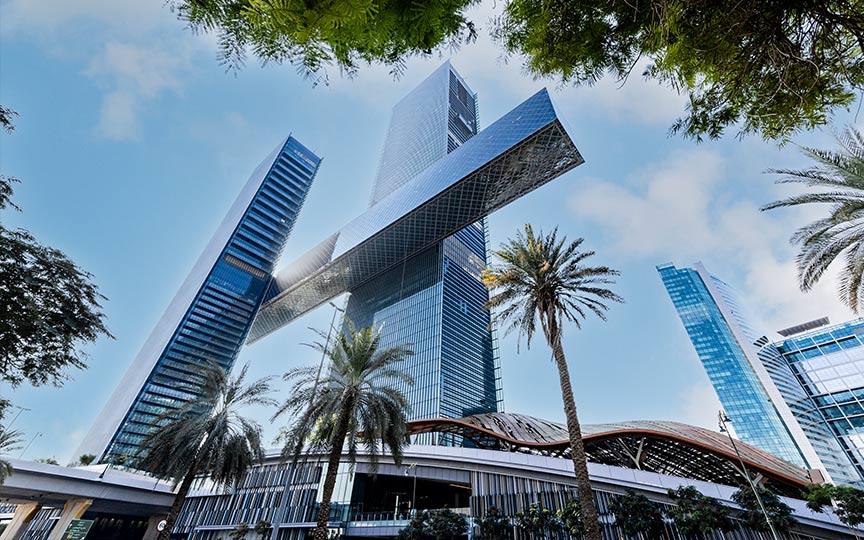
Since ancient times, architecture has demanded strength, utility and beauty. Split into the areas of structure, facilities and design, the expertise in each of these segments has grown. In this modern age, the elements required of architecture, such as environmental and disaster prevention performance, have become even more diversified and specialized. As we turn our eyes outward, we are beginning to see challenging and complex architectural designs taking shape, with unprecedented free-form façades. But, with anything new comes risk.
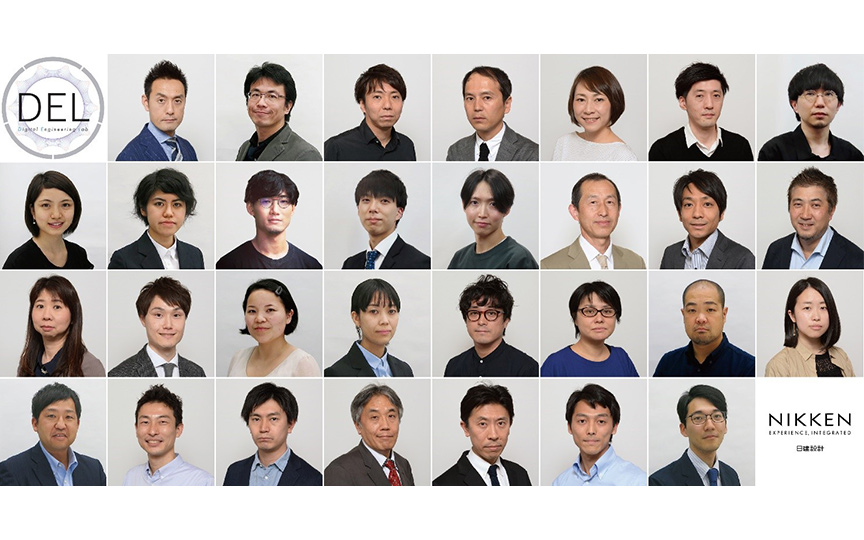
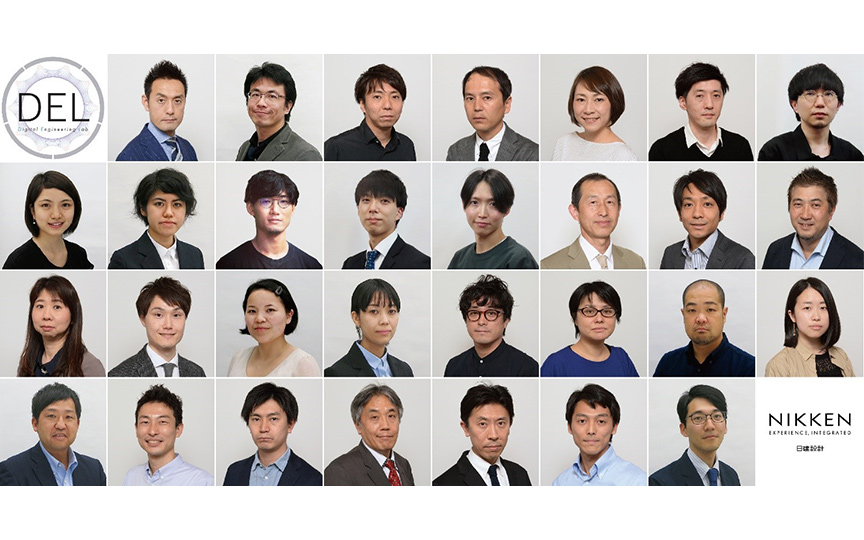
To ensure flexible responses to these kinds of demands from society, Nikken Sekkei established a Façade Engineering Department in 2016 to simultaneously create free-form architectural expressions tailored to different buildings and guarantee safety using the knowledge from various specialties.



Façade engineering: Connecting disciplines and benefiting all
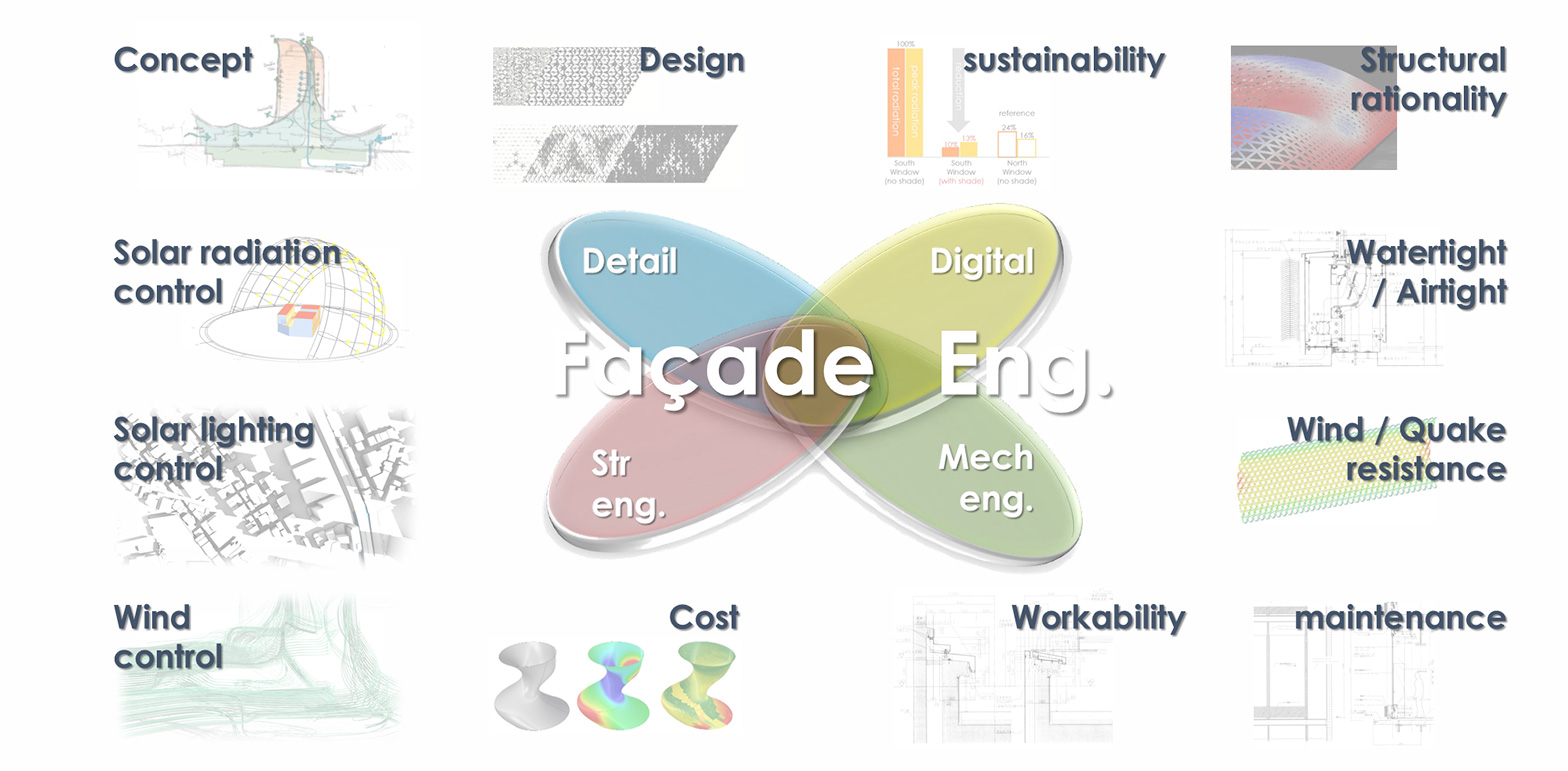 Different elements involved in architectural façades and the makeup of the Façade Engineering Department
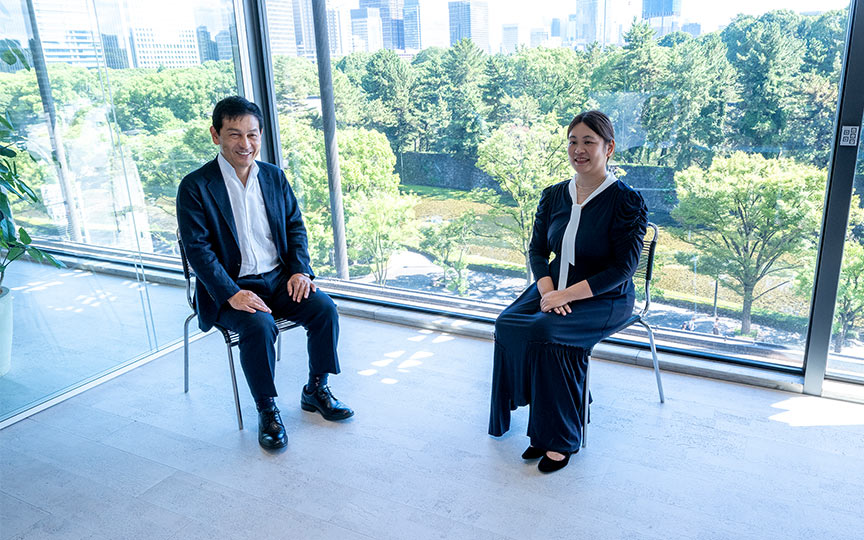
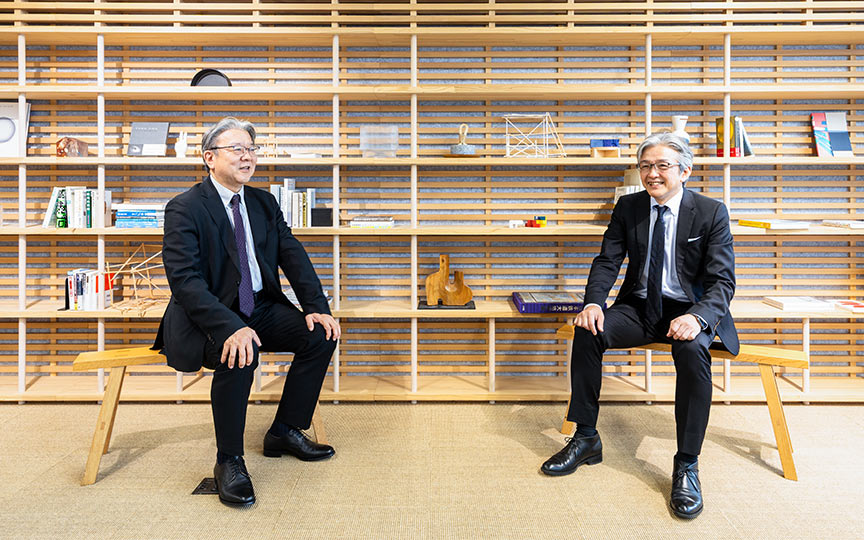
Hiroaki Murakami, Director of the Façade Engineering Department, describes the team’s role as one “connected to the creation of something tangible arising from conceptualization to simulation and analysis to strengthen rationality, verification of details, and selection of materials”. Murakami’s own area of expertise is in structural engineering, for which he has received the Japan Structural Design Award and the JSCA Award.
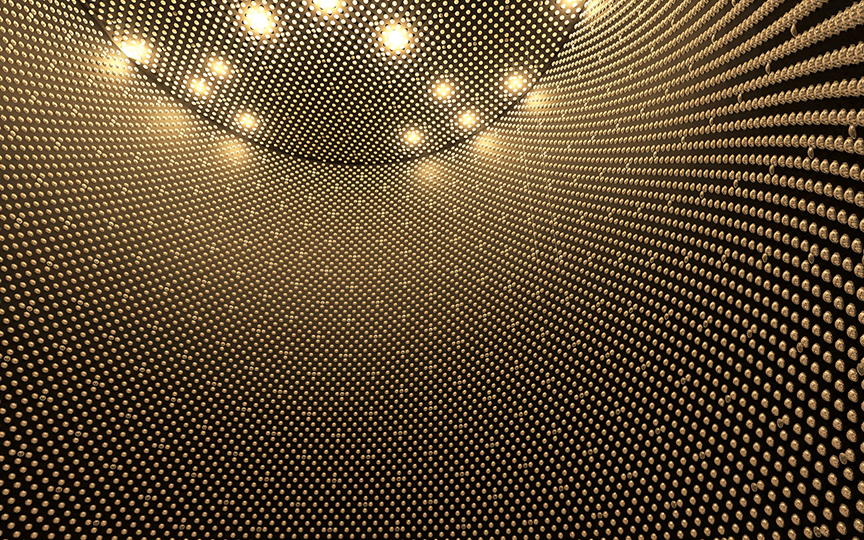
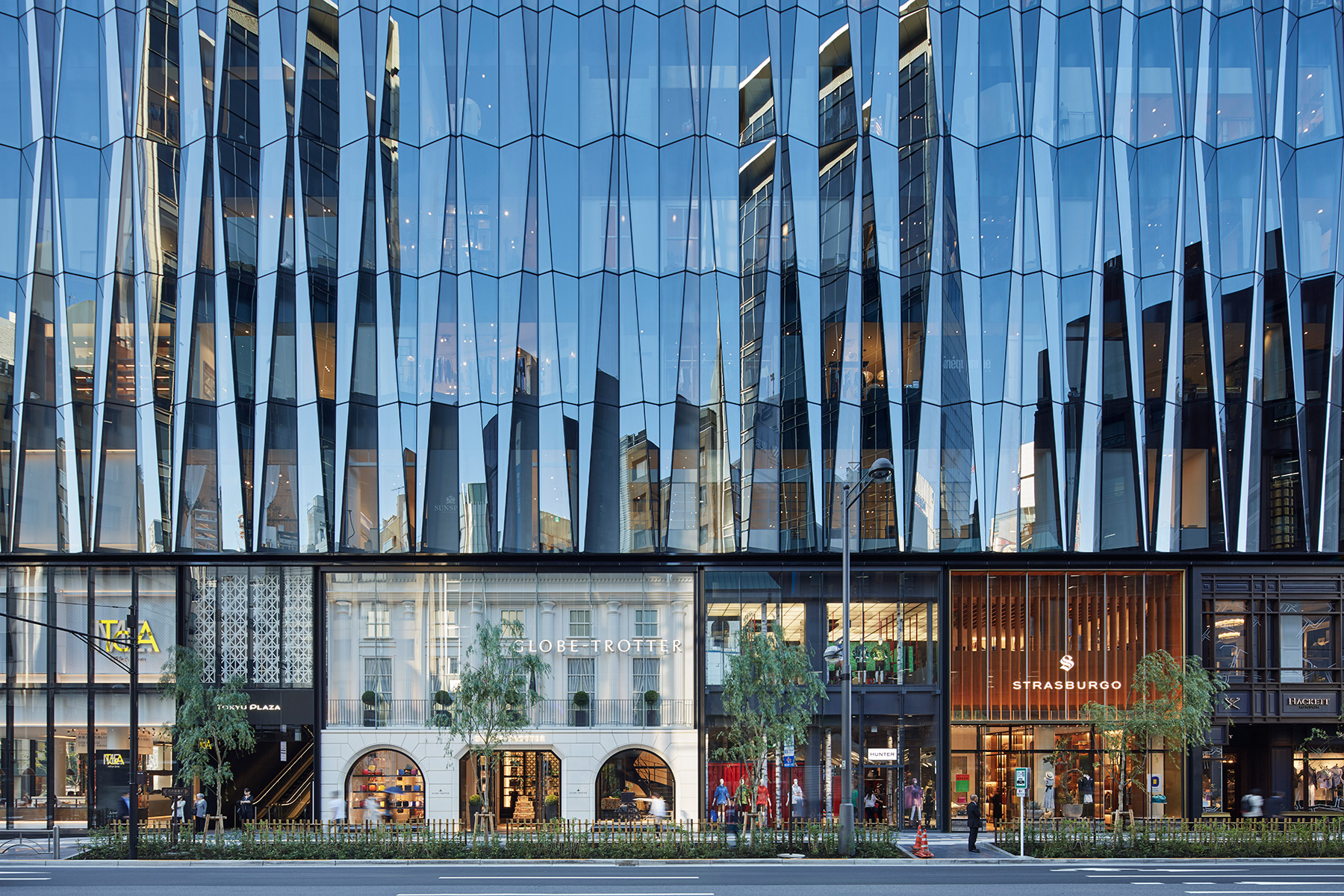 A unique façade sets the city aglow. (Tokyu Plaza Ginza, 2016; photo by Nacasa & Partners Inc.)
Orienting architecture from a total perspective using advanced information technology
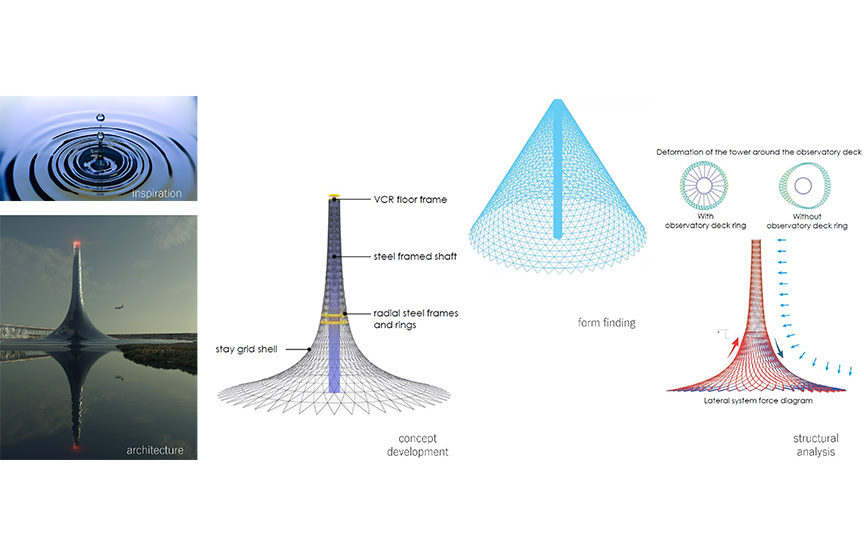
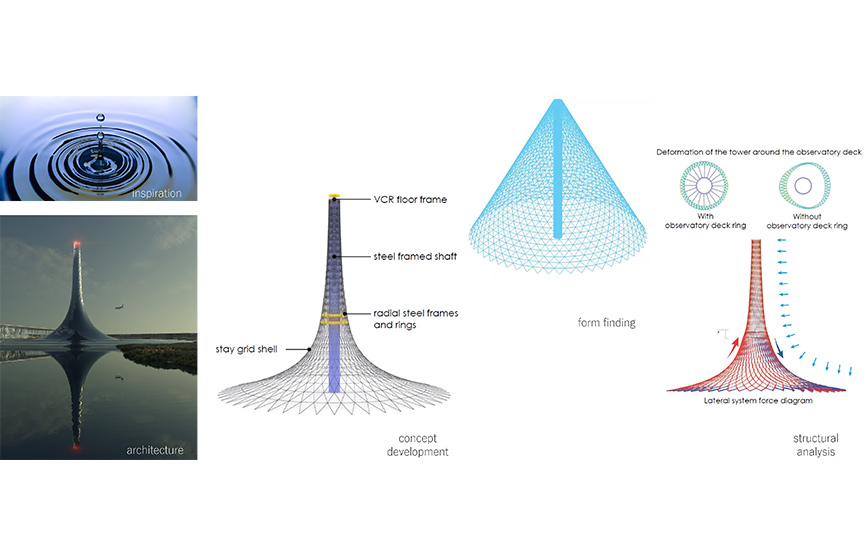
Let’s say, for example, that you would like to place a large roof over a sizeable lot. How would you decide on the shape? In years past, the main trend was for architects to come up with an idea for the shape and for structural engineers to analyze and provide feedback on the form. However, in the Façade Engineering Department, it is possible to simulate solutions for both form and structure, and even the amount of steel and glass.
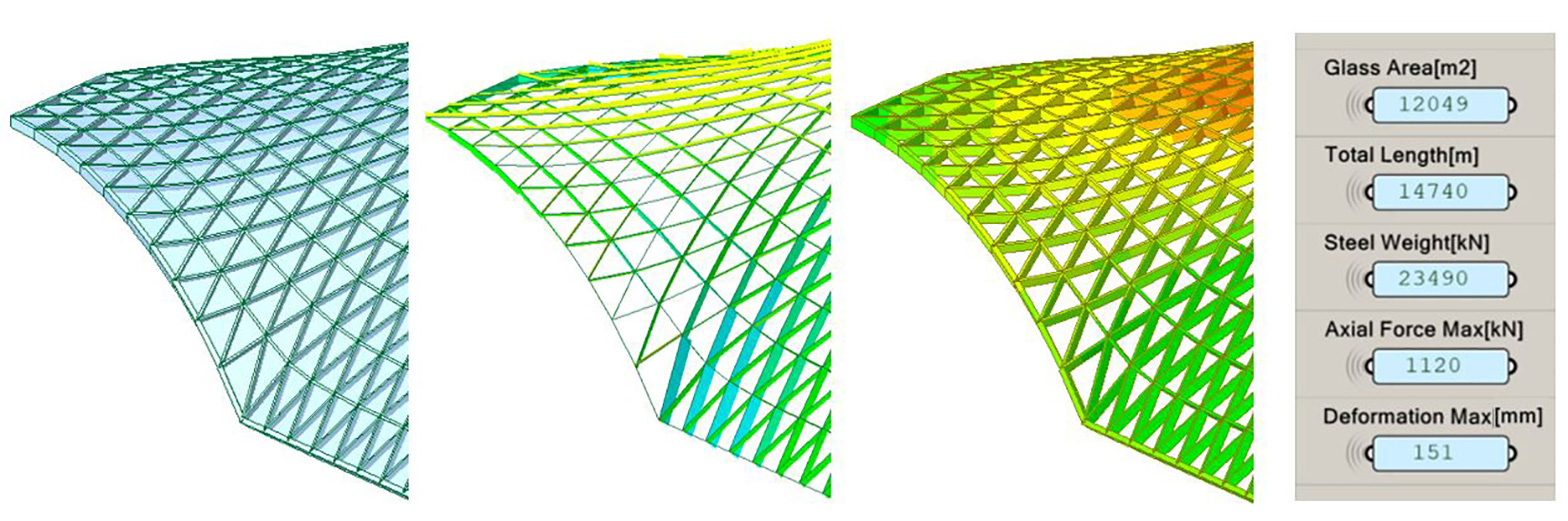 Simultaneous investigation into the structure and quantity of components for a roof
The design can be examined from a variety of perspectives, including simulations of the relationship between the shape of louvers for the façade and solar radiation to reduce the heat load, as well as the impact of the shape of a roof on the wind environment of the surrounding area. Simulations are also developed for each project depending on conditions, such as reverse studies to derive the most suitable shape using the movement of the sun throughout the year and the shade of surrounding buildings as parameters.
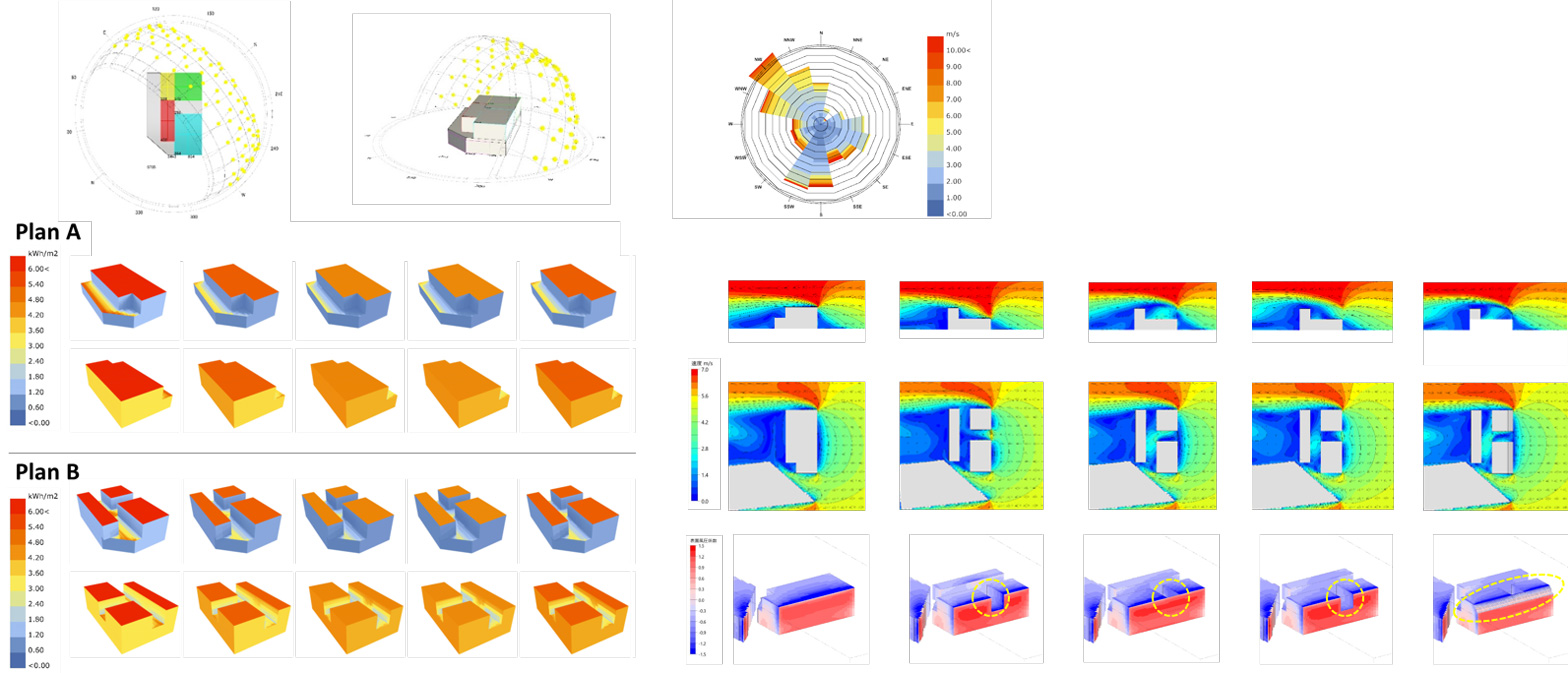 IT makes it possible to confirm the performance and impact of façades, taking time and the movement of the sun into account.
Keishiro Tachi, a façade engineer specializing in environmental engineering, says, “It is important not to optimize a design based on the values of a single area of expertise, but to make decisions based on a hierarchy of parameters after sharing evaluations from various areas and perspectives. We design structures with an awareness of perspectives that fall outside of our own areas of expertise.”
Mr. Murakami adds with some amusement, “Architecture is complex. The interesting thing about façade engineering is how to determine when the number of parameters increased.”
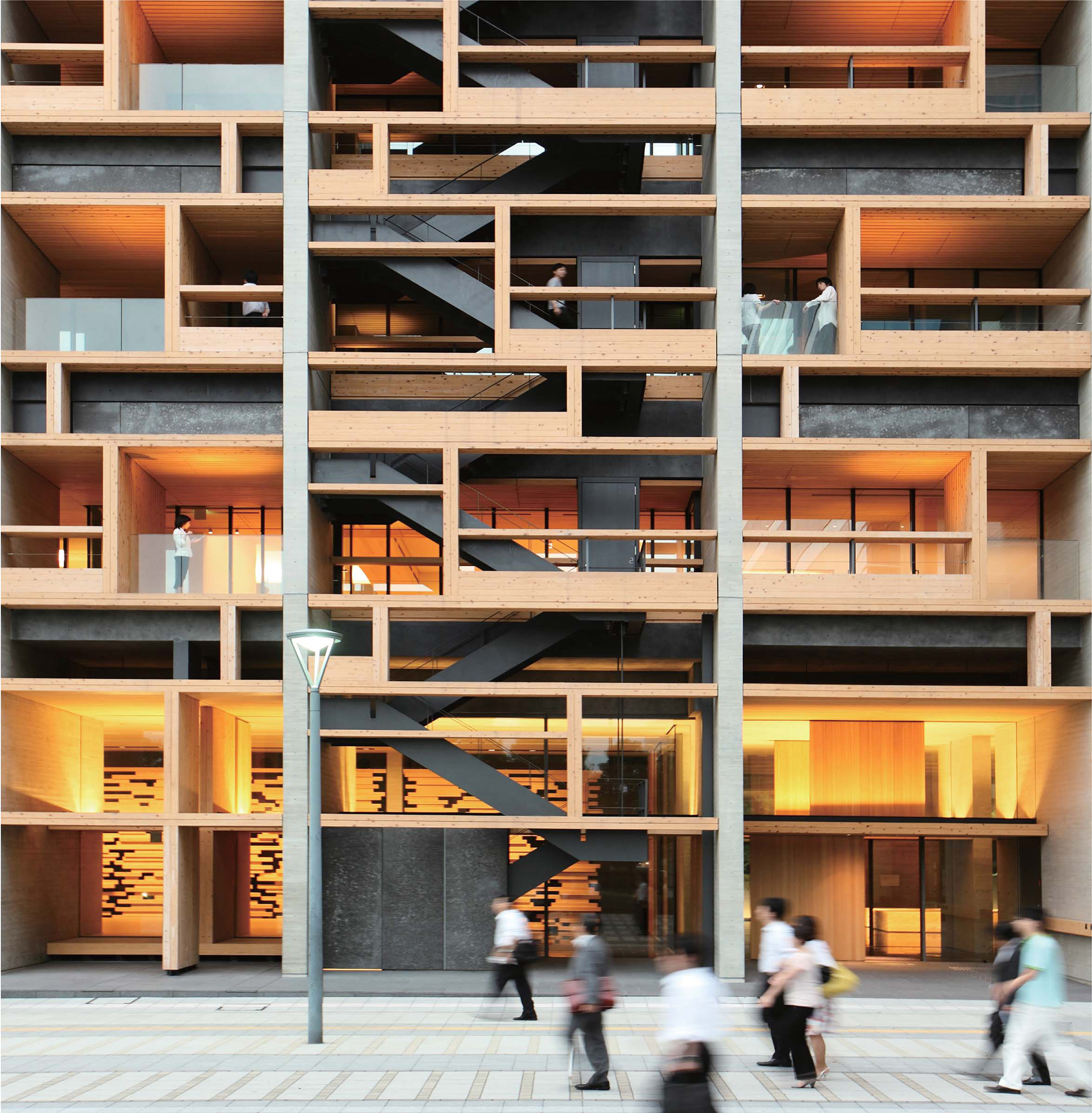 Façades, which function both as the face and shelter of a building, are designed rationally across a variety of specialized areas.
(Mokuzai Kaikan, 2009; photo by Harunori Noda [Gankosha])
Façades, which function both as the face and shelter of a building, are designed rationally across a variety of specialized areas.
(Mokuzai Kaikan, 2009; photo by Harunori Noda [Gankosha])
Taking shape
For example, when considering designing a building with a complex curved form, the shape may be different in all places when curved sections are broken down into parts. In this case, a computer can analyze and fine-tune curved surfaces to reduce the type of parts and construct a surface with parts that are more workable, which in turn, makes it easier to construct. This is also one of the jobs of a façade engineer.
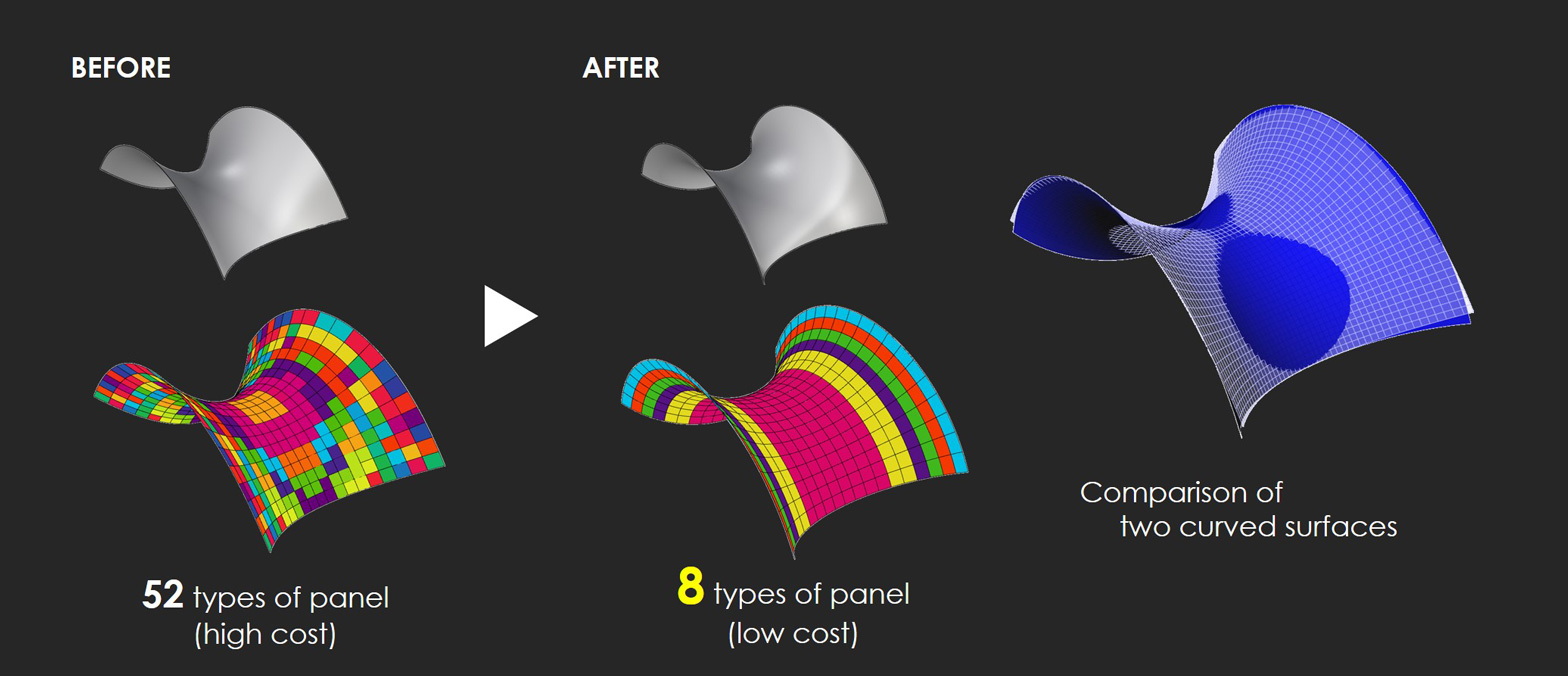 Costs and workability can be rationalized by reducing the pattern of components while maintaining the shape of the curved surface as much as possible.
“Our team wants to act as a catalyst to successfully coordinate the various disciplines in Nikken Sekkei that have extensive specialized expertise”, says Murakami. The Façade Engineering Department is a hub that uses IT to rationally integrate ideas together from a variety of perspectives and expand the range of architectural possibilities.
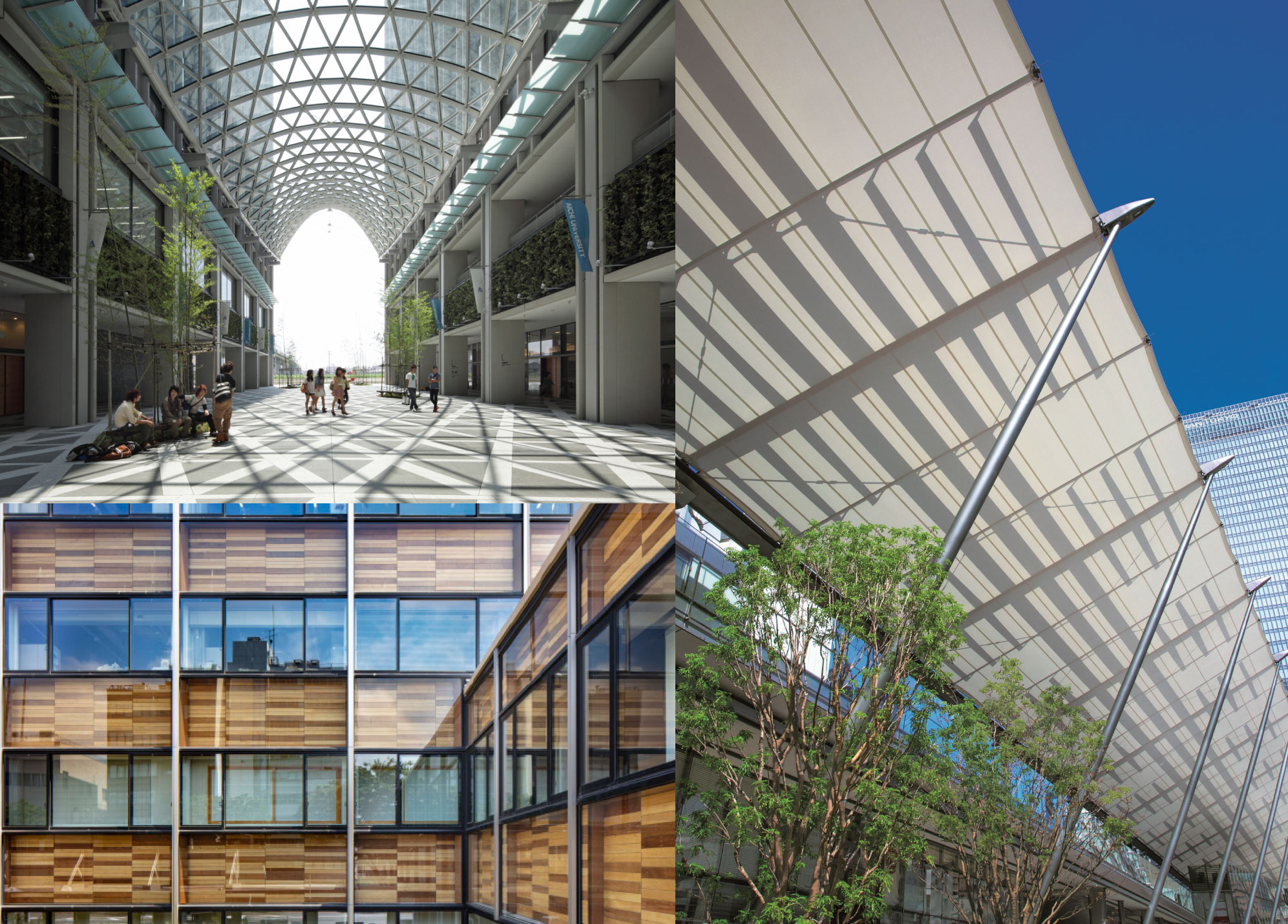 Façade engineering is used in a number of different situations, including in renovations of intimate exterior spaces and historical buildings.
(Top left: Aichi University Nagoya Campus, 2012; photo by SS Co., Ltd. / Bottom left: Renovation of Aomori Prefectural Office, 2018; photo by Kindaikenchiku-sha / Right: Tokyo Station Yaesu Development - GranRoof, 2013; photo by Koji Horiuchi [Shin Shashin Kobo])
Façade engineering is used in a number of different situations, including in renovations of intimate exterior spaces and historical buildings.
(Top left: Aichi University Nagoya Campus, 2012; photo by SS Co., Ltd. / Bottom left: Renovation of Aomori Prefectural Office, 2018; photo by Kindaikenchiku-sha / Right: Tokyo Station Yaesu Development - GranRoof, 2013; photo by Koji Horiuchi [Shin Shashin Kobo])